Politics
POST-MORTEM: How Peter Obi’s allies lost out in NDC primaries

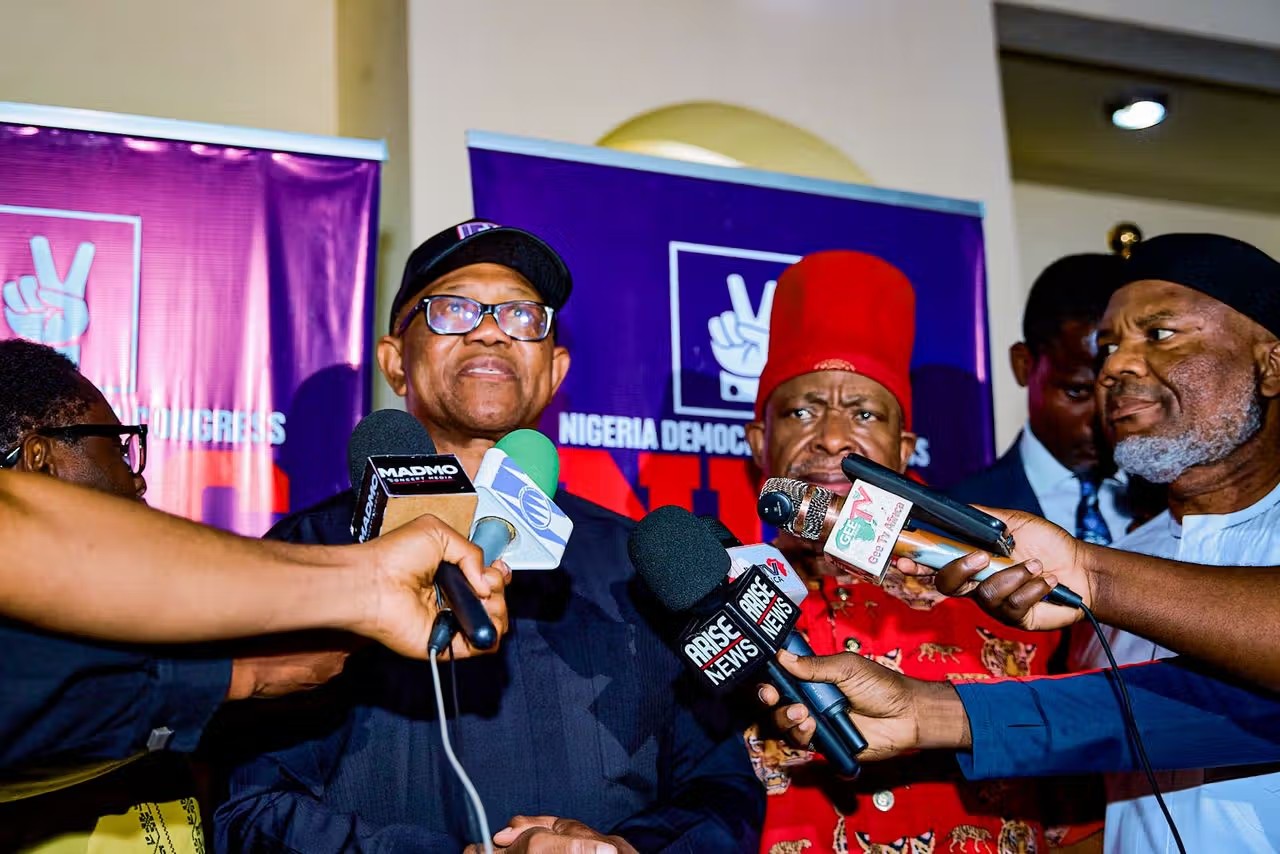
The Nigeria Democratic Congress (NDC) may have emerged from its presidential primaries largely united behind Peter Obi and Rabiu Kwankwaso, but the party’s lower-tier contests exposed tensions between the Obidient movement and the party’s pre-existing structures.
While Obi secured the party’s presidential ticket with little resistance, several of his allies and supporters encountered a more difficult reality during the primaries held in late May.
For many of them, the contests became a test of whether grassroots popularity and loyalty to the Obidient movement could overcome established party networks, local alliances and internal power blocs.
AISHA YESUFU’S FAILED SENATE BID

The most prominent case was that of Aisha Yesufu, activist and leading figure in the Obidient movement.
Yesufu sought the NDC ticket for the FCT senate seat but lost the contest amid allegations of irregularities.
On May 6, Yesufu declared interest in the race after joining the NDC from the African Democratic Congress (ADC), adding that her decision was informed by the leadership experience she had garnered in the ADC.
However, there were speculations that the party ceded the FCT senate ticket to Amanda Pam, another aspirant who had been in the party before Yesufu joined.
Party leaders subsequently revealed that both Obi and the NDC leadership had preferred Yesufu for the AMAC/Bwari federal constituency seat in the house of representatives.
According to Ikenna Enekweizu, the party’s national secretary, and Seriake Dickson, national leader of the NDC, several meetings were held with Yesufu in an attempt to build consensus around the lower-chamber ticket. However, she insisted on pursuing the senate seat.
Following her defeat, Yesufu accused party leaders of conducting a flawed process and alleged that the outcome had been predetermined in favour of another aspirant.
She later maintained that she did not voluntarily abandon her ambition but withdrew after losing confidence in the integrity of the process.
The NDC leadership rejected the allegations and urged aggrieved aspirants to utilise the party’s internal dispute-resolution mechanisms.
EMEKA IKE TAKES PROTEST TO INEC
Emeka Ike, Nollywood actor, also emerged as one of the most vocal critics of the primary process after losing the contest for the AMAC/Bwari house of representatives ticket.
Following his defeat, Ike led supporters to the Independent National Electoral Commission (INEC) office in Abuja, where he protested what he described as a lack of transparency.
The actor alleged that the venue details were not adequately communicated and accused party officials of manipulating the exercise.
Videos from the protest showed Ike visibly upset as he challenged the conduct of the primary. Despite his grievances, he reiterated his support for Obi and the NDC’s presidential ticket.
KEN PELLA’S SETBACK IN THE DELTA NDC GOVERNORSHIP PRIMARY
Ken Pella, a prominent ally of Peter Obi and a leading figure in the Obidient movement in Delta state, suffered a setback in his bid to secure the Nigeria Democratic Congress (NDC) governorship ticket for 2027.
Pella, who defected from the Labour Party after finishing third in the 2023 governorship election, was widely seen as a frontrunner for the NDC ticket after helping to build the party’s structure in the state.
However, he lost the party’s primary election to Chris Iyovwaye amid reports of intense internal consultations and competing interests within the party.
Following the outcome, Pella thanked his supporters, congratulated Iyovwaye, and pledged support for the party’s candidate. He said the collective goal of delivering a better Delta and national renewal remains more important than personal ambition.
The development underscores the challenges facing Obi-aligned politicians as opposition parties continue to reposition ahead of the 2027 elections.
A BROADER PATTERN
Beyond Yesufu, Ike and Pella, several aspirants linked to the Obidient movement reportedly failed to secure NDC tickets in various states.
Among them were Randy Peter, who lost his primary election, and Christian Asaga in Ebonyi central senatorial district, where supporters protested the emergence of another candidate.
Similar outcomes were recorded in Anambra and other parts of the south-east, where Obidient-aligned aspirants lost out in competitive primaries.
The development sparked criticism from some supporters of the movement, who alleged that new entrants into the party were being sidelined by established interests.
However, NDC leaders have rejected the claims, arguing that constituency-level contests differed significantly from the consensus process that produced Peter Obi and Rabiu Kwankwaso as the party’s presidential ticket.
According to party officials, the NDC had existing structures, aspirants and political arrangements before the coalition leaders joined the platform.
They added that many of the lower-level contests were determined through zoning arrangements, negotiations and competitive primaries, with some constituencies recording more than 20 aspirants vying for a single ticket.
THE CHALLENGE OF INTEGRATION
The controversies surrounding the primaries underscore the challenges facing a relatively young party attempting to integrate a large political movement.
Since Obi’s emergence as the NDC presidential candidate, thousands of Obidient supporters have gravitated toward the party, bringing energy, visibility and grassroots mobilisation capacity.
But their arrival has also created friction with existing party structures that have spent years building local networks and political influence.
For the NDC leadership, balancing the expectations of new entrants with the interests of long-standing members may prove critical ahead of the 2027 elections.
Dickson and Enekweizu have repeatedly urged disappointed aspirants to avoid public confrontations and embrace internal reconciliation processes.
Obi has adopted a similar position, calling on party members to accept the outcomes of the primaries in good faith and focus on the broader objective of challenging the ruling APC.
Whether those appeals will be enough to calm discontent remains to be seen. What is clear, however, is that the NDC’s first major internal test has revealed the complexities of transforming a popular movement into a disciplined political machine capable of competing for power at the national level. (TheCable)
-

 Politics24 hours ago
Osun election: 10 battleground LGs that may decide Adeleke, Oyebamiji race
-
Politics24 hours ago
BREAKING: Police summon APC senator over threat to ‘kill Accord members’
-
News24 hours ago
‘It’s a crime’ — NCAA to investigate blockage of Lagos airport airside by bus
-
News24 hours ago
Fubara, lawmakers battle stalls Rivers N1.85tn budget
-
Sports24 hours ago
Mikel trolls Arsenal over Vinicius signing
-
Business24 hours ago
Tinubu unveils framework to unlock $50bn offshore investment
-
World News24 hours ago
July was hottest month in US since 1895, says NOAA
-
Sports23 hours ago
Ronaldo Finally Marries Long-Term Partner, Georgina Rodriguez