Opinion
Put a price on terror: Why Nigeria should place bounties on bandits

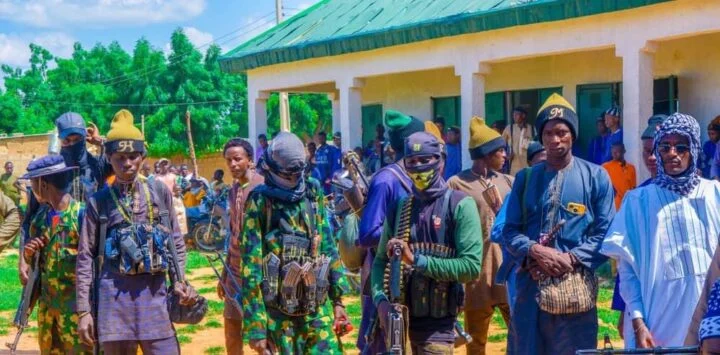
Nigeria has fought banditry and terrorism for years through military offensives, air strikes, and increased troop deployments. While our security forces have recorded significant successes, one uncomfortable truth remains: no terrorist or criminal organisation survives without a support network.
Bandits do not grow their own food. They do not refine their own fuel. They do not manufacture medicine or ammunition. They rely on a web of suppliers, transporters, informants, financiers, and sympathisers. Every criminal camp has a logistics chain, and every logistics chain is vulnerable.
The question is simple: why are we not giving those people a compelling reason to talk?
History has repeatedly demonstrated that intelligence, not firepower alone, wins counterinsurgency campaigns.

When coalition forces searched for Saddam Hussein for months, it was ultimately information from someone within his trusted circle that led to his capture. During the wars in Afghanistan and Iraq, coalition forces also relied heavily on local intelligence and reward programs. Thousands of Taliban and al Qaeda operatives, facilitators, bomb makers, financiers, and commanders were identified because local residents provided actionable intelligence in exchange for financial rewards and protection. In many instances, relatively modest payments produced intelligence that saved countless lives and dismantled terrorist cells.
The lesson is simple. Insurgencies are often defeated from within.
Nigeria should establish a structured national bounty program targeting bandits, kidnappers, terrorist commanders, logistics coordinators, financiers, and informants. Rewards should range from ₦1 million for actionable intelligence leading to the arrest of lower-level operatives to substantially higher amounts for intelligence resulting in the capture or elimination of high-value targets.
This is not a call for vigilantism. Citizens should never be encouraged to confront armed criminals. Instead, rewards should be paid only for verified intelligence that enables security agencies to conduct lawful operations.
A successful bounty program should include:
Anonymous reporting channels.
Witness protection and relocation for informants and their immediate families.
Immediate payment once intelligence is verified.
Strong legal oversight to prevent abuse and false accusations.
A regularly updated national “Most Wanted” list with clearly advertised rewards.

Some argue that bandits already possess enormous wealth from kidnapping and extortion, making rewards ineffective. While that concern has merit, criminal organisations are built on greed, fear, and distrust. Money does not buy absolute loyalty. Every insurgency eventually develops internal fractures, and a well-designed reward system exploits those weaknesses.
The situation differs somewhat from South American drug cartels, where organisations often control billions of dollars in narcotics revenue and can spend millions maintaining loyalty and intimidating communities. In Nigeria, however, many of those supporting terrorist and bandit networks live in extreme poverty. A financial incentive, coupled with guaranteed anonymity and protection, may be sufficient to persuade them to provide life-saving intelligence.
However, a bounty program alone will not solve Nigeria’s insecurity. It must be part of a broader national strategy that includes security sector reforms, financial intelligence operations to disrupt terrorist funding, border security, modern surveillance technology, improved intelligence fusion, and uncompromising accountability.
No counterinsurgency campaign can succeed in an environment of impunity. Anyone within the security services found collaborating with terrorists or criminal organisations must face swift investigation and prosecution. Public trust is essential, and informants must have confidence that their identities will remain protected.
Counterinsurgency is ultimately a battle for information. Every bandit camp exists because someone knows where it is. Every kidnapping succeeds because someone provides intelligence. Every terrorist survives because someone supplies food, fuel, medicine, or ammunition.
The government cannot know everything, but the people often do.
The challenge is creating an environment where helping Nigeria becomes more rewarding than helping the bandits.
A professionally managed bounty program will not eliminate terrorism overnight, but it can weaken criminal networks, generate actionable intelligence, save the lives of security personnel and civilians, and hasten the restoration of peace.
Sometimes, the most powerful weapon against terrorism is not another bullet. It is the right piece of information from the right person at the right time.
Yinka Ogunsanya, MBA, MA, a defence and counter-insurgency expert, is a US Army veteran who has been stationed in Iraq, Afghanistan, and Southeast Asia
-

 World News23 hours ago
I’ll Be Impeached If I Lose The Midterms- Trump
-
News23 hours ago
Even Enemies Will Testify Lagos-Calabar Highway Is Tinubu’s Best Gift — Umahi
-
Politics14 hours ago
Why Tinubu Pulled Back Campaign Council List
-
Politics23 hours ago
2027: If ADC Can’t Perform, Don’t Vote For Us – Amaechi Tells Nigerians
-
Politics23 hours ago
“We Won’t Beg Govt Again, They’ll Know Our Stand At Election” – Ekiti Commuters
-
News23 hours ago
You can’t Impeach someone who resigned – Lawyers blast Edo Assembly
-
Politics6 hours ago
APC reopens membership registration exercise August 31
-
Celebrity Gist6 hours ago
London court confirms Poco Lee to appear for assault trial September 15