News
Oversight failures by national assembly, federal agencies enabled PFIPC scandal – Waziri Adio

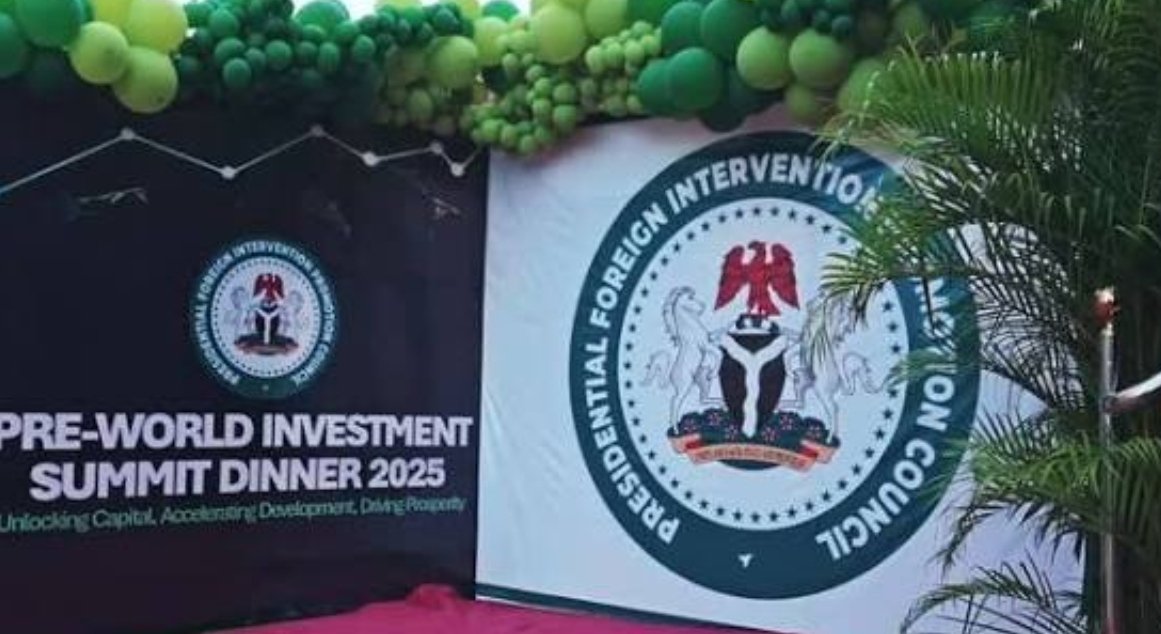
Waziri Adio, founder and executive director of Agora Policy, a Nigerian developmental think tank, says oversight failures by the national assembly and federal government agencies enabled the scandal around the purported Presidential Foreign Intervention Promotion Council (PFIPC).
The former executive secretary of the Nigeria Extractive Industries Transparency Initiative (NEITI) put forward his position in his latest column, titled “Oversight Gaps and PFIPC’s Royal Mess”, published on the back page of ThisDay newspaper on Sunday.
Adio described the controversy as “a monumental mess”, which should have been prevented through institutional safeguards.
“There should be adequate checks and controls in place to nip this sordid saga in the bud and to spare the current administration and the whole country the needless blushes,” he wrote.

The policy analyst said these checks already exist and are backed by processes, circulars, laws and the constitution, but they failed because they were undermined “by the patronage cum subservient character of our politics and public administration”.
‘AVOIDABLE DISGRACE’
Adio said the “disgrace was avoidable” and warned that similar cases could emerge unless authorities understand why the protocols failed and take deliberate steps to close the gaps.
While noting that he had his own theory about what transpired, Adio said he would not go into details because the matter is before the court.
“I do not intend to go into the weeds of the PFIPC issue or namecheck anyone because the matter is sub judice. We should all allow the courts to do their job,” he said.
He, however, urged the government to conduct an open and thorough investigation to determine what went wrong, block identified administrative gaps and ensure that all those involved, “actively and passively, face the music”.
QUESTIONS THAT WERE NEVER ASKED
Adio referenced the N1.3 billion allocated to the council in the approved 2026 budget and the account it opened with the Central Bank of Nigeria (CBN), noting that the process involved a six-step procedure through the office of the accountant-general of the federation (OAGF).
He also pointed to the office space allocated to the agency at the federal secretariat and the waiver granted by the office of the head of service in August 2025 to recruit 300 staff members.
He said several questions should have been raised during the budget proposal, defence and approval process, as well as during the opening of the CBN account, the issuance of the employment waiver and the allocation of office space.
“The questions should not just be about whether the FEAC/PFIPC is validly created but whether it is necessary at all and the conditions that should be met for it to draw money directly or indirectly from the public purse,” he said.
He argued that these questions were not asked either because those responsible stood to benefit, deferred to higher authorities or were already part of the arrangement.
Adio said there should be a defined process for establishing government institutions, including presidential committees, adding that the Budget Office of the Federation, the permanent secretary, State House, and especially the national assembly, should have questioned the need for the PFIPC and why it deserved budgetary allocation.
“If all those on the executive side were unable or unlikely to ask what the agency stands for and what it is supposed to do, those on the legislative side have no excuse for not asking,” he wrote.
He added that there were no public reports of lawmakers, including members of the opposition, raising such questions during the budget process.
PFIPC/PEAC: ANOTHER OVERLOOKED RED FLAG
Adio said the similarity between PFIPC and the Presidential Economic Advisory Council (PEAC), established by former President Muhammadu Buhari in 2019, should have been another red flag for legislators.
“What is the relationship between economic advisory council and foreign intervention promotion council?” he asked.
“Who are the members of these council(s) and what are their professional antecedents and personal pedigree?
“Are the two agencies the same or separate? Is the allocation for one or the two of them? What is the rationale for having a budget code for co-joined institutions tagged as PEAC/PFIPC?”
The author said asking these questions could have helped to surface key issues in the ongoing controversy.
According to him, another major question that should have been asked is why a new agency would need 300 staff members when the Nigerian Investment Promotion Commission (NIPC), a statutory body created in 1995 with a similar mandate, had only 158 staff on its nominal roll as of August 2025.
“The budget office that included N803 million as allocation for personnel for this new agency in the proposed budget and the National Assembly that approved the same should have asked why a new agency would need 300 hands at take-off,” Adio argued.
He added that beyond identifying infractions, punishing those responsible and strengthening oversight mechanisms, changing the entrenched mindset towards public office and public resources remained “the real and the most difficult work”.
BACKGROUND
The controversy surrounding PFIPC began on June 11 when Femi Gbajabiamila, chief of staff to President Bola Tinubu, issued a public disclaimer disowning the appointment of Adeniyi Adeyemi as the head of the contentious council.
Adeyemi challenged the disclaimer and urged the president to establish an independent panel to investigate the matter.
The debate intensified on July 1 after the presidency issued a statement backing Gbajabiamila and accusing Adeyemi of forging an appointment letter and falsely presenting himself as a presidential appointee.
The Nigeria Police Force (NPF) has filed an eight-count criminal charge against Adeyemi, according to Bayo Onanuga, presidential spokesperson.
In his statement challenging Gbajabiamila’s disclaimer, Adeyemi alleged that the disagreement was triggered by his refusal to part with 48 percent of the agency’s take-off grant.
He also claimed to have paid N400 million to secure his appointment, with a remaining balance of N200 million. (TheCable)
-

 News11 hours ago
Lab test showed my wife’s fresh orange juice unfit for consumption – Osinbajo
-
Politics12 hours ago
Atiku’s Lobbyist Deletes Post On Purported Trump Commission Appointment
-
Politics11 hours ago
World Igbo Congress warns politicians against threatening Igbos over support for Obi
-
Politics11 hours ago
I am confident I will become Lagos governor next year – NDC gov candidate, Doherty
-
Metro11 hours ago
Nigerian-British businessman dies after penis enlargement procedure in Thailand
-
Business11 hours ago
Nigeria’s syndicated loans jump 21-fold to $2.86bn
-
Politics11 hours ago
Tinubu’s policies improving student welfare, says NANS
-
News12 hours ago
Our struggles keeping children in school – Parents