News
Stop Pardon, Rehabilitation Of Repentant Boko Haram Members, Other Criminals – Senate Tells FG

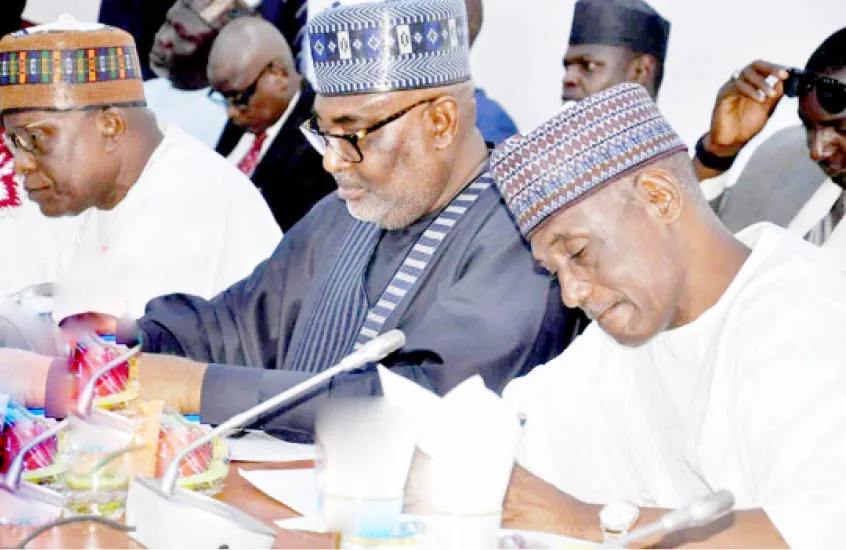
The Senate on Tuesday called on the Federal Government to stop its policy of rehabilitation and reintegration of repentant Boko Haram members and other insurgents into society.
The call followed a motion on escalating attacks, abductions and killings of serving and retired military personnel, including former Director of Defence Information, Retired Major General Rabe Abubakar.
The motion was sponsored by the Chairman of the Senate Committee on Army, Senator Abdulaziz Yar’Adua (APC, Katsina), during plenary.
The Senate condemned the rehabilitation of Boko Haram insurgents, bandits, kidnappers, and other criminals under the government’s deradicalisation and rehabilitation programmes.

Some lawmakers linked the unending insurgency crisis in the country, particularly in northern Nigeria, to the constant release of “repentant” criminals back into society.
The Senate also expressed deep concern over the worsening security situation in the country, warning that the recent abduction and killing of retired military officers signals a dangerous shift in Nigeria’s security challenges.
The Red Chamber also highlighted what it described as a disturbing pattern of attacks on serving and retired military personnel.
It cited several incidents recorded between January 2023 and May 2026, including the killing of retired Major General Richard Duru in Owerri after a $50,000 ransom was reportedly paid and the murder of retired Brigadier General O.M. Harlord Udokwere in Abuja.
Others are the 56-day captivity of former NYSC Director-General, retired Brigadier General Maharazu Tsiga and the death in captivity of retired Major Aja in Kogi State.
The lawmakers warned that the growing trend poses a serious threat to national security, as many of the victims previously occupied sensitive intelligence, operational and command positions.
It stressed that insecurity now extends beyond individual victims, carrying severe implications for national unity, democratic stability, and public confidence in the government.
The Upper Chamber observed a minute of silence in honour of late Major General Rabe Abubakar and all Nigerians who have lost their lives to terrorism, insurgency, banditry, kidnapping and other forms of violent criminality across the Federation.
It urged the Federal Government to ensure that perpetrators of these deadly acts are arrested and made to face the full wrath of the law.
It called on all security and intelligence agencies to significantly strengthen intelligence gathering, intelligence sharing, surveillance operations, threat assessment mechanisms and early warning systems to prevent attacks and improve response effectiveness.
The lawmakers called on the Federal Government to accelerate the deployment of modern security technologies required to combat terrorism, banditry and kidnapping.
Deradicalisation programme for repentant terrorists
Daily Trust reports that in 2016, the federal government launched a programme for former Boko Haram combatants tagged Operation Safe Corridor (OSC).
According to the Defence Headquarters at the time, the programme aimed to process defectors who voluntarily surrendered.
It was initially meant for the ravaged North-East region before it was extended to some North-Western states.
So far, Nigerian officials said Operation Safe Corridor has been instrumental in the fight against insurgency in the North-East.
Thousands of former insurgents who surrendered or defected were reportedly reintegrated into society.
The initiative was built on five pillars: disarmament, demobilisation, deradicalisation, rehabilitation, and reintegration.
As of 2017, official figures indicated that nearly 10,000 former Boko Haram fighters had been reintegrated into society.
During the same period, authorities in Borno State reported that about 9,680 ex-fighters had gone through the government-backed programme focused on rehabilitation, deradicalisation, and reintegration, which was designed to encourage militants to lay down their arms and return to civilian life.
While the programme has been relatively successful in the North-East region, concerns have been raised about recidivism, with reports of some rehabilitated individuals returning to terror groups.
Consequently, some of the lawmakers who spoke at the plenary on Tuesday called for the complete cessation of the deradicalisation and reintegration initiative—a position that was unanimously adopted by the Senate.
Senate’s resolution counterproductive – Security expert
A security analyst and Associate Professor at the University of Namibia, Dr Babayo Sule, faulted the Senate’s resolution to halt the rehabilitation of repentant terrorists.
He described the move as “unfortunate” and potentially counterproductive.
Speaking to Daily Trust, Sule argued that the programme was introduced only after successive military and security strategies failed to bring lasting peace to the country.
“The information or the news I’m just seeing on the resolution of the Senate that the federal government should stop the rehabilitation and deradicalisation policy against violent armed groups in Nigeria, including Boko Haram and bandits, is an unfortunate suggestion.
“To me it seems like there is no security expert in the Senate, or if there is, he might be overwhelmed,” he said.
According to him, rehabilitation, reconciliation, disarmament and deradicalisation are recognised components of Nigeria’s counter-insurgency framework and cannot simply be discarded through a Senate resolution.
He said the federal government only adopted the programme after exhausting conventional military options.
“The Nigerian government will not have opted for the choice of deradicalisation except that Nigeria’s security architecture is overwhelmed by the multi-pronged and multidimensional challenges of insecurity across the country,” he said.
Sule recalled that before the establishment of Operation Safe Corridor in 2017, the government had relied on military offensives, the Joint Task Force, the Multinational Joint Task Force and support from the African Union, but “almost all the processes adopted by the government failed.”
He, however, acknowledged that the programme had recorded shortcomings.
“Our research, which lasted almost five years, showed that something is wrong and it is not heading toward the anticipated results.
“But that notwithstanding does not in any way mean that it should be abandoned or abolished. I think it is not a wise choice,” he said.
Rather than scrap the programme, Sule urged lawmakers to summon security chiefs to explain the country’s worsening security situation and identify operational challenges.
“Let the security chiefs narrate their dilemma, then let the Senate intervene and ensure that all the necessary logistics required are provided promptly.
“That may ameliorate the situation and, in the short run, lead to the restoration of peace and tranquillity across the country,” he said.
He also called for an oversight investigation into Operation Safe Corridor and similar reconciliation initiatives implemented by Borno, Zamfara, Sokoto and Katsina states.
According to him, evidence suggests that states implementing reconciliation initiatives have recorded relatively better security outcomes.
“What needs to be done is to look at what is wrong, how to amend it and how to make it better. It is even better to expand the programme rather than discard it,” he said.
Sule further dismissed suggestions that the rehabilitation programme was responsible for the resurgence of attacks, insisting that available research found “no connection between pardon and deradicalisation and the increased insecurity.”
Instead, he attributed the worsening security situation to “politicisation, negligence, obsolete security infrastructure, corruption and other related issues.”
He warned that abandoning the programme could further worsen insecurity.
“If the government stops deradicalisation and rehabilitation, it means even the little pathway that has been achieved in terms of peace will be broken.
“Since there is no capacity so far to overwhelm the terrorists and peaceful negotiation is being discarded, insecurity will escalate further, and we will witness worse than what we are witnessing today,” he said. (Daily trust)
-

 News24 hours ago
Gbajabiamila-Adeyemi Saga: Why National Assembly appropriated ₦1.3bn for fake agency – Senate spokesperson
-
News21 hours ago
Kwara: Abducted Worshippers Regain Freedom After 105 Days In Captivit
-
News21 hours ago
I deposited billions in cash for Emefiele – Witness tells court
-
World News20 hours ago
UK lawmaker Nigel Farage resigns over £5 million gift controversy
-
News22 hours ago
Nigeria’s recovery faces its biggest test yet
-
News13 hours ago
EFCC hands over 1,452 recovered items to Unity Schools
-
News21 hours ago
Court adjourns trial of six alleged coup suspects until July 20
-
News13 hours ago
Tinubu building 100 housing units per LGA for vulnerable Nigerians, says Aide