Politics
2027: Can the opposition end Tinubu’s three-decade Lagos reign?

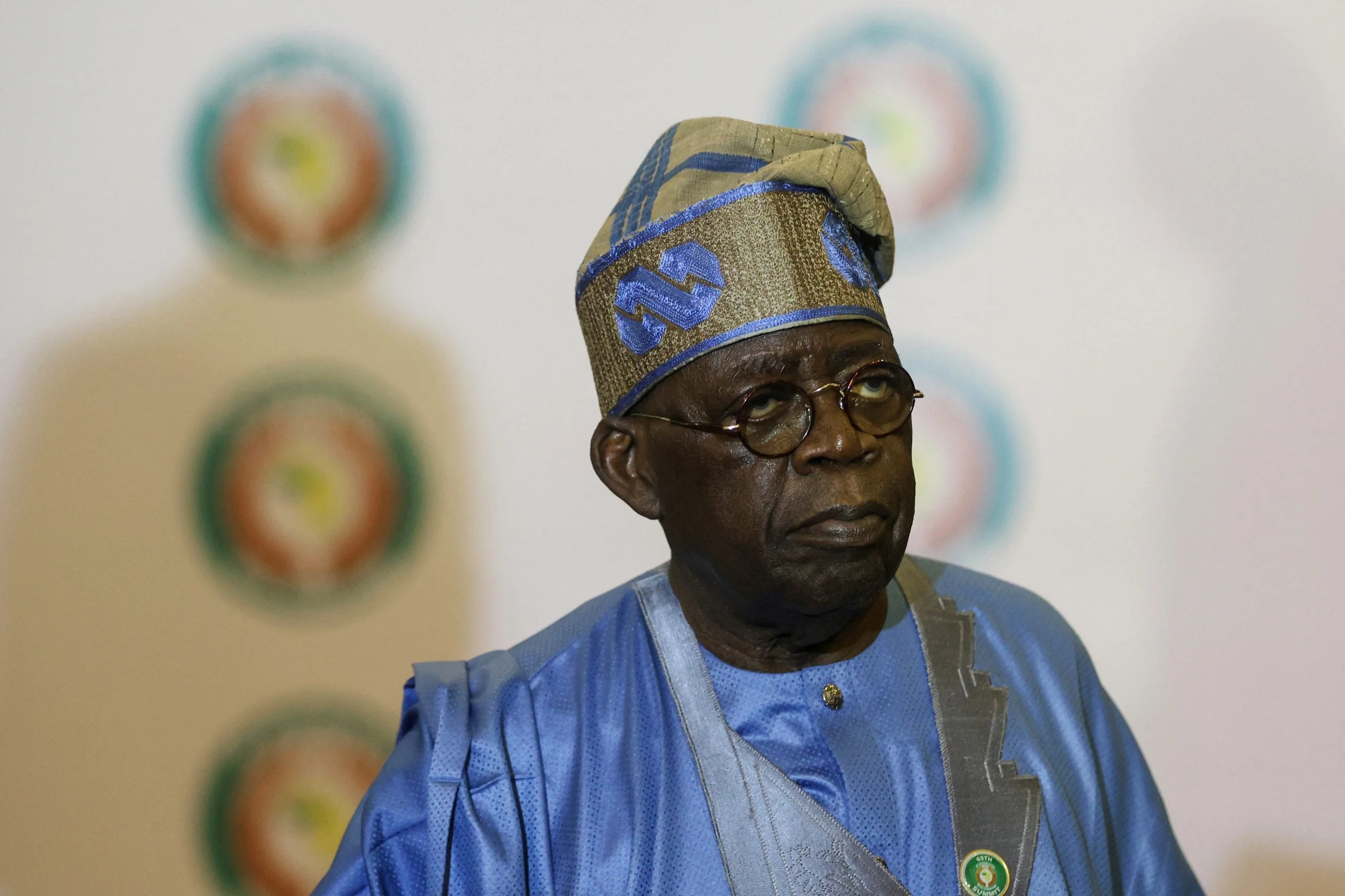
Ahead of the 2027 Lagos governorship election, opposition parties are mounting their most crowded challenge yet to President Bola Tinubu’s grip on Lagos politics, a dominance that stretches from his election to the Senate in 1992, through the NADECO struggle, to his governorship after Nigeria’s return to democracy in 1999.
Despite intra-party tussles, ranging from state to national leadership crises, the People’s Democratic Party (PDP), Nigeria Democratic Congress (NDC), and African Democratic Congress (ADC) have all fielded candidates to challenge All Progressives Congress (APC) candidate Kadri Obafemi Hamzat, Tinubu’s candidate.
Heading into the governorship election, several opposition parties led nationally by prominent presidential contenders have fielded candidates. Unlike past elections, which largely became a contest between the APC and one credible challenger, analysts say the anti-APC vote could be split across multiple parties, potentially benefitting the ruling party.
Political analyst Gboyega Oyewo says while public dissatisfaction with government may create opportunities for political challengers, the Lagos State opposition lacks cohesion. “History has shown that fragmented opposition parties often struggle to mount effective challenges against entrenched ruling parties,” he says.

Lagos: Tinubu’s darling
Tinubu entered active politics in 1992 as a senator in Lagos. After the military annulled the 12 June 1993 election and dissolved the Senate, he went into exile during General Sani Abacha’s rule, and returned after Abacha’s death in 1998.
When Tinubu became Lagos State governor in 1999, he declared that Lagos, despite being Nigeria’s commercial hub, was “a jungle”. As he pursued sweeping economic reforms, he also built a political succession network that would become an almost impregnable one as he expanded his influence across the South West region.
Lagos is Africa’s second-largest city economy after Cairo, with a purchasing power parity GDP of about $259bn. Despite its small landmass, the state accounts for roughly 30-35% of Nigeria’s GDP. Home to more than 20 million people, with the population growing at around 2.5% a year, it remains the country’s commercial centre and one of West Africa’s leading economic hubs.
“I initiated and implemented policies that launched Lagos to the city it is today,” says Tinubu in 2022 on a national television programme. “As a leader with a vision, you must surround yourself with a team of visionary people so that you will not lose your legacy,” says Tinubu, referring to the network of his successors.
The opposition’s struggle
Since 1999, opposition parties have attempted to end Tinubu’s political machinery, and even though elections became competitive with more aspirants, his camp held firm. In 2003, while the PDP swept every other Alliance for Democracy (AD) state in the South West, Tinubu held Lagos, cementing his reputation as a formidable political strategist.
That dominance has continued in every governorship election since 2007, as Tinubu-backed candidates have won under different party banners following mergers or rebrandings after Tinubu stepped down at the end of his second tenure. In local elections, opposition parties have either suffered crushing defeats or boycotted the polls, arguing they were predetermined, a claim consistently denied by pro-Tinubu groups.
The kingmaker has shaped the fate of allies as well as opponents. In 2018, former Governor Akinwunmi Ambode lost the APC ticket after falling out with Tinubu, ending his reelection bid. Tinubu said Ambode had “departed from this plan without a compelling reason” and was too detached from the party structure.
In the 2023 presidential election, Peter Obi narrowly defeated Tinubu in Lagos, raising hopes that Governor Babajide Sanwo-Olu could lose his reelection bid to the Labour Party’s Gbadebo Rhodes-Vivour. Sanwo-Olu ultimately won amid allegations of voter intimidation from the opposition, but the election exposed the vulnerability of Tinubu’s political dominance.
“And that’s the irony,” says public affairs analyst Ajani Kayode. “The 2023 election showed Tinubu could be defeated in Lagos, but the opposition is heading into 2027 divided by contentious primaries and internal rifts,” he says. “They may have more candidates, but they appear too fractured to seriously challenge a much stronger and united APC.”
Lagos 2027: The challengers
1. African Democratic Congress (ADC)
Rhodes-Vivour, an architect and activist who finished second in the 2023 Lagos governorship election as the Labour Party candidate on the back of Obi’s Obidient movement, is the ADC’s 2027 governorship candidate. His candidacy has drawn objections from some party officials, who claim he did not win the primary. At the national level, the party has also faced leadership disputes, court cases and defections.
Nevertheless, on challenging Tinubu’s political structure in Lagos, Rhodes-Vivour argues that his 2027 bid is built on years of grassroots organising rather than the momentum that fuelled his 2023 campaign. “We are standing for the people,” he said during a national television interview.
2. Nigeria Democratic Congress (NDC)
The NDC’s Lagos governorship ticket remains disputed. Funso Doherty, an investment banker and the ADC’s 2023 governorship candidate, left the ADC for the PDP in 2024, returned to the ADC in April 2026, then defected to the NDC in May 2026, citing division among ADC leaders as his reason – before formally accepting the NDC’s nomination for the 2027 election in June.
But rival aspirant Naheem Balogun, a former PDP House of Representatives candidate, rejected the outcome, saying results from the primary showed he defeated Funso. Balogun maintains he is the party’s rightful candidate and is challenging the decision through the party’s internal processes.
3. Peoples Democratic Party (PDP)
Adedeji Doherty, an engineer and South West zonal chairman of the PDP faction aligned with FCT minister Nyesom Wike, emerged as the party’s consensus governorship candidate for Lagos in May 2026.
While his candidacy has not faced any serious challenge in Lagos, the PDP remains divided nationally by a prolonged leadership crisis, with rival factions locked in disputes over the party’s leadership and the fallout from its 2025 convention.
“This is probably my fourth or fifth time running for the position of governor,” says Adedeji. “I wouldn’t want to say too much today, but I want to let you know that we will challenge the sitting government in Lagos,” he adds.
4. Accord Party
Sowore Robert emerged as the Accord Party’s Lagos governorship candidate in June 2026. While his candidacy in Lagos has not faced any public dispute, the party has dealt with internal disagreements at the national level over its presidential ticket, prompting its leaders to publicly reaffirm Gbenga Olawepo-Hashim as the party’s presidential candidate. (The Africa Report)
-

 News14 hours ago
Fake Presidential Council Scandal: Controversial DG fights back, implicates more MDAs
-
News14 hours ago
Despite billions spent, over 6,500 PHCs still non-functional
-
News14 hours ago
Abandoned projects: Fed Govt bars ministries from awarding unfunded contracts
-
Business13 hours ago
43 Insurers Scale NAICOM Recapitalisation Hurdle
-
Business12 hours ago
Abuja Infrastructure Boom Pushes Up Rent
-
 Metro13 hours ago
Lagos CP Probes Viral Video Of Police Officers Assaulting Gold Seller
-
News12 hours ago
N10trn investments in 13 years fail to lift power supply
-
Politics13 hours ago
2027: Fresh Debate Over Tinubu’s Qualification