News
The Malami case: How Nigeria’s corrupt elites lose their mansions but keep their freedom

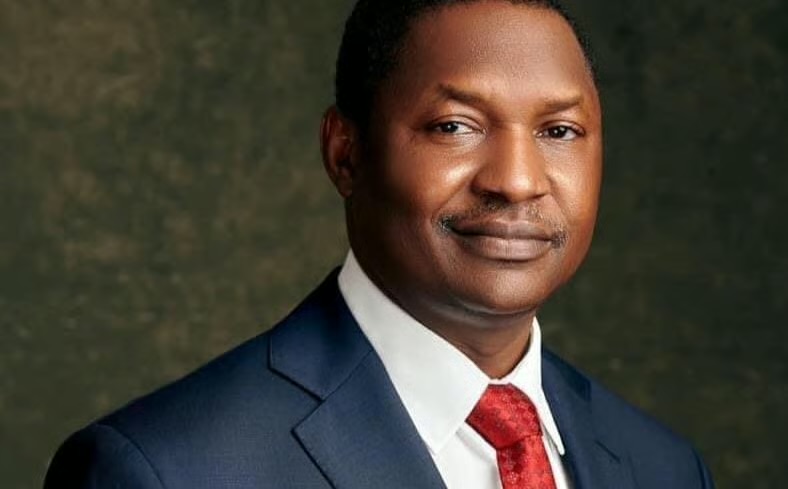
When a federal court ordered the final forfeiture of 48 properties linked to former attorney-general Abubakar Malami in July, the ruling gave Nigeria’s anti-corruption authorities a result that a criminal prosecution might take years to deliver.
The assets – including hotels, residential buildings, commercial sites and a university – were valued at about ₦180.4bn ($132m), based on figures submitted by the Economic and Financial Crimes Commission (EFCC). The court released another nine properties after finding that the commission had not established a sufficient link between them and unlawful activity.
Malami and other claimants had argued that the assets were acquired lawfully and that the EFCC had relied on suspicion rather than proof. The judge disagreed over 48 of them, finding that the claimants had failed to rebut the suspicion that they were bought with unlawful proceeds.
The ruling did not amount to a finding that Malami was criminally guilty. He is separately facing money-laundering charges and has pleaded not guilty. But that distinction captures a wider change in Nigeria’s anti-corruption strategy: rather than waiting for a criminal conviction, agencies are increasingly pursuing the property itself.

“When a high-profile case is being prosecuted, we target both conviction and forfeiture of assets,” EFCC spokesman Dele Oyewale tells The Africa Report. “It is a two-way approach. It is easier to secure the forfeiture of assets.”
Two tracks, two standards
Nigeria’s anti-graft agencies are not abandoning criminal prosecutions. In May, a court convicted former power minister Saleh Mamman of laundering ₦33.8bn connected to government-funded hydroelectric projects. He was sentenced in absentia to 75 years in prison – a rare conviction of a former senior official.
Nor is the EFCC short of convictions in aggregate. It reported more than 4,000 in 2024, alongside the recovery of nearly $500m in cash and 975 properties. But the headline number does not reveal how many cases involved politically exposed people, how many convictions survived appeal, or how long the largest prosecutions took to complete.
The record in elite cases is far weaker. A study drawing on EFCC and Independent Corrupt Practices and Other Related Offences Commission data examined 20 high-profile cases filed between 2007 and 2018. It found that securing a conviction took between one and 12 years, with an average of almost five years. Six defendants were acquitted, and six cases were still underway when the research was conducted.
Convictions do not always settle a case. The Supreme Court nullified former Abia Governor Orji Uzor Kalu’s conviction in 2020 because the judge who completed the trial no longer had the authority to sit as a Federal High Court judge. It ordered a retrial. Former governors Joshua Dariye and Jolly Nyame, whose corruption convictions had survived appeals, were pardoned by President Muhammadu Buhari in 2022 and released after serving only part of their sentences.
Other cases have stretched across several governments. The result is an enforcement system in which a criminal case can outlive the administration that brought it – and sometimes the political relevance of the defendant.
Civil forfeiture offers the agencies another route. Rather than establishing an individual’s guilt beyond reasonable doubt, the state asks a court to determine whether particular assets are probably connected to unlawful activity.
“Prosecuting suspects and securing convictions is highly technical,” says Ifedayo Adedipe, a Lagos-based senior advocate. “But if you proceed through civil forfeiture, the chances of success are much higher.”
The 2022 legal turning point
Nigeria has used non-conviction-based forfeiture for years under laws such as the Advance Fee Fraud and Other Fraud Related Offences Act, which was used in the Malami case. The Proceeds of Crime (Recovery and Management) Act of 2022 created a broader and more coherent framework for tracing, preserving, forfeiting and managing suspected proceeds of crime.
Under the Act, an enforcement agency can first seek a preservation order to prevent property from being sold, transferred or dissipated. It must then give interested parties notice of an application for final forfeiture and allow them to oppose it or seek the exclusion of their interest.
The critical difference from a criminal trial is the evidential standard. A court can make a forfeiture order on the balance of probabilities where it finds that property is reasonably suspected to represent the proceeds of unlawful activity, to have facilitated such activity or to have been intentionally used for it. The validity of the order does not depend on the outcome of a related criminal investigation or trial.
That makes the process faster and helps prevent suspects from enjoying or disposing of contested wealth while criminal proceedings drag on.
“The conviction process may continue for years,” Oyewale says. “It would not be appropriate to wait until a conviction is secured before confiscating assets. What is more important around the world is asset tracing and asset recovery.”
The approach is producing assets on a scale that cannot be dismissed as cosmetic. In December 2024, the EFCC secured the final forfeiture of an Abuja estate containing 753 housing units linked by the agency to former Central Bank governor Godwin Emefiele. The estate was transferred to the housing ministry in May 2025. Emefiele later sought to challenge the order, arguing that he had not received adequate notice of the proceedings.
In a separate case this July, the Supreme Court affirmed the final forfeiture of seven properties, $2.045m and share certificates linked to Emefiele, reversing an appeal-court ruling that had ordered the matter to be heard again.
The EFCC said in October 2025 that it had recovered 1,502 non-monetary assets since 2023, comprising 402 properties in 2023, about 975 in 2024 and 125 during the first part of 2025. It also reported recovering ₦566bn and $411m over the period.
Recovery without accountability?
The same features that make civil forfeiture effective also make it contentious.
Because the action is directed at property rather than the person who owns it, the state can secure a final order without proving the owner’s criminal guilt. In practice, once an agency has established sufficient grounds for suspicion, the claimant may have to provide credible evidence showing how the asset was acquired.
Legal analysts at Nigerian law firm Templars have questioned whether the expanding use of non-conviction-based forfeiture gives sufficient weight to the constitutional presumption of innocence and property rights. They argue that enforcement powers must be balanced against safeguards for owners and third parties.
The Malami ruling illustrates both sides of the argument. The court forfeited 48 assets after finding that the claimants had not adequately explained the source of the acquisition funds. But it released nine others because the EFCC had failed to establish a sufficient connection to unlawful activity.
That judicial scrutiny is important. An interim preservation order is not a final recovery, and an agency’s valuation is not the same as cash realised by the government. Some orders are challenged, discharged or overturned. Properties can also deteriorate while litigation continues.
There is a second problem. Recovering money and punishing corruption are not interchangeable.
Adedipe argues that returning the proceeds may offer the state more value than imprisoning offenders. “Keeping people in prison will cost the government more money,” he says. “If they return the proceeds of crime, isn’t that a better outcome?”
But that presents an incomplete choice. Asset recovery can deny people the economic benefit of suspected wrongdoing and restore resources to the state. A criminal conviction serves different purposes: public accountability, deterrence, imprisonment and, in some cases, disqualification from office.
If powerful officials lose part of their wealth but face no finding of guilt, imprisonment or lasting political sanction, forfeiture risks becoming a substitute for a functioning criminal justice system rather than a complement to it.
Who watches the recovered assets?
The next test is what happens after the government takes control.
Oyewale says the EFCC has established an integrated Proceeds of Crime Management Department. Once property is finally forfeited, he says, valuers can be engaged to lease it, with the income paid into a designated account at the Central Bank of Nigeria.
The 2022 law requires cash and money raised through the sale or management of forfeited assets to be placed in a Confiscated and Forfeited Properties Account at the CBN. The head of each relevant enforcement agency manages its account and reports to the finance minister.
The government also unveiled a central database of forfeited and recovered assets in May 2025, promising that it would be opened to the public to allow greater oversight. Yet an ICPC policy paper published three months later said work was still underway to make the database fully publicly accessible.
Until such information is readily available, it remains difficult to establish how much the government has actually realised, which properties have been leased or sold, how valuers and managers were selected, and what maintenance and legal costs were deducted.
Nigeria has become better at preventing people accused of corruption from retaining contested assets. That is a genuine advance. But court orders and headline valuations are only the first stage.
A credible anti-corruption system must pass three separate tests: preserve suspected criminal wealth, convict powerful offenders where the evidence supports it, and account publicly for every building and every naira recovered. Nigeria is making progress on the first. It has yet to show that it can consistently deliver the other two. (The Africa Report)
-

 Metro15 hours ago
My wife miraculously woke up after six months in coma – Akpabio
-
Politics15 hours ago
Presidential Campaign Council: We don’t need your validation – OK Movement replies NDC
-
Politics15 hours ago
2027: Remo group warns sons against breaking Ogun zoning pact
-
Sports15 hours ago
Haaland Makes EPL Record As Manchester City Overcome Sunderland In 8-Goal Thriller
-
News21 hours ago
Tinubu Confirms Absence From UNGA, Asks Shettima To Lead Nigeria’s Delegation
-
News15 hours ago
Former Kogi governor Ibrahim Idris dies at 77
-
Politics15 hours ago
2027: I’ll Never Spend Holidays Abroad If Elected – Obi
-
News15 hours ago
Niger govt unaware of miners’ arrest before deaths in NSCDC custody — Bago