News
Attack on Catholic Bishops is attack on entire Church – PFN fumes

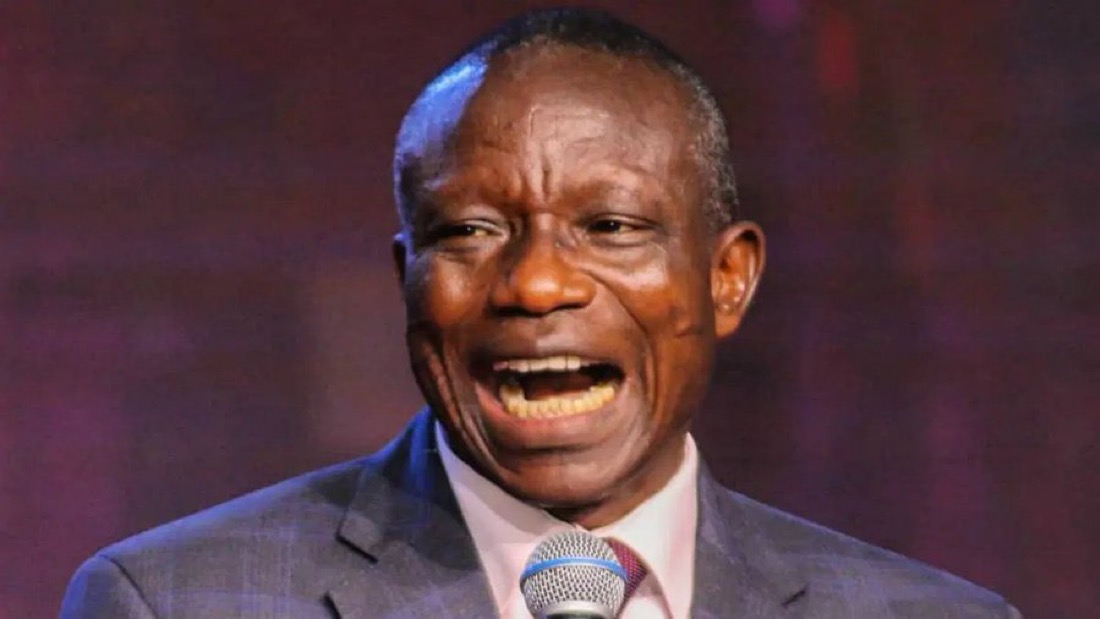
The National President of the Pentecostal Fellowship of Nigeria, PFN, Bishop Wale Oke, has thrown the full weight of the Pentecostal body behind the Catholic Bishops Conference of Nigeria, declaring that any attack on the Catholic bishops is an attack on the entire Body of Christ.
Speaking during an interview monitored by Sunday Vanguard, Bishop Oke endorsed the remarks made by John Onaiyekan during the recent visit of the Catholic Bishops Conference of Nigeria, CBCN, to President Bola Tinubu, where the group told the President that “Nigeria is bleeding.”
“Are we not bleeding? Are we not bleeding in Benue? Are we not bleeding in Southern Kaduna? Are we not bleeding in Gwoza, in Borno State? Are we not bleeding in Kwara? Are we not bleeding in Oyo State?” Oke queried, reiterating the Cardinal’s words verbatim.
The PFN President challenged the government’s pushback against the bishops, insisting that speaking the truth to power is not a political act but a moral imperative.

“Should anybody attack a Catholic bishop for saying that? That is the obvious truth,” he stated firmly.
Bishop Oke dismissed attempts to isolate the Catholic bishops, emphasising Christian unity across denominations.
“The Church of Jesus Christ is one. There may be many denominations, but we have one faith, one Lord, one baptism. The Church is one. If they attack the Catholic bishops, they are attacking the whole Church,” he declared.
Plateau, Benue
The PFN leader used the platform to condemn what he described as the government’s silence in the face of escalating violence against Christians, citing ongoing killings in Plateau, Southern Kaduna, Benue, Taraba, and recent incursions into Oyo, Kwara and Edo states by violent groups he linked to Islamic extremism.
On the controversy surrounding the proposed amendment to the FRSC Act that would fine bus preachers ¦ 50,000, Bishop Oke was unequivocal. Despite the Senate’s clarification that the provision had existed since 2007 and was merely re-itemised, Oke insisted it must be expunged entirely.
“We will break that law. Dear Senate of the Federal Republic of Nigeria, we will rather obey God than man,” he declared, adding that he has preached in buses since 1975 without causing any accident or distraction.
“If you want to imprison us for preaching the gospel, we are ready. If you want to make all the stadiums in Nigeria prisons, we are ready. We would rather obey God than man,” he said defiantly.
OIC withdrawal
Beyond the bus preaching ban, Oke called on the National Assembly to address more fundamental issues, including Nigeria’s membership of the Organisation of Islamic Cooperation (OIC), which he said the country entered under military rule without the people’s consent.
“The Senate should deal with that and pull Nigeria out of the OIC,” he demanded.
He also renewed calls for a review of the 1999 Constitution, alleging it is skewed in favour of Islam.
“In that Constitution, Islam is mentioned hundreds of times. Christianity is mentioned once. And Christians in Nigeria are a little over 50 per cent of the population,” he argued, insisting that the document was imposed by the “military jackboot” and does not represent the will of Nigerians.
Genocide
Bishop Oke doubled down on allegations of Christian genocide, accusing the government of spending billions to lobby against such claims in the United States while the killings continue. He distinguished between the primary targeting of Christians and the secondary killing of liberal Muslims who oppose extremist ideologies.
“The Senate should invite the Church for a talk. Nigerians are being killed. You are sitting there making evil laws. We will break that law,” he concluded, reaffirming that the PFN is making private overtures to the Presidency even as it speaks publicly, though he declined to disclose details of those engagements.
Timing
Also, Pastor Seyi Osuntayo, Area Superintendent of The Apostolic Church Nigeria, Igbein Area, weighed in on the controversy, expressing concern about what he termed the “altercation” between the Presidency and the Catholic bishops.
“The timing of the Catholic Bishops Conference of Nigeria’s advice could be suspicious and be seen as partisan,” Pastor Osuntayo told our correspondent. “I feel the Catholic Bishops should have been talking about governance ab initio, not at the time of the electioneering campaign,” he noted.
The cleric, who maintains that Christian leaders should not be involved in “political roforofo” but should focus on governance, cited the biblical instruction in 1 Timothy 2:1–4, urging Christians to pray for leaders regardless of their performance.
“Our leaders need prayer, whether we agree with their views and leadership style or not. We may not get to choose our leader or their position on the issues we care about, but we can choose to be obedient to the Lord and cover them in prayer,” Osuntayo said.
He cautioned against the increasing trend of Christian leaders creating media content or participating in news coverage to criticise the government, arguing that such actions only add to the political heat.
“Instead of complaining or criticising, we can surrender our emotions and let the power of prayer take over. We never saw Jesus calling people to activism or rebellion against the Roman leaders who would ultimately kill Him,” he added.
Political hypocrisy
However, Ben Charles-Davies, a journalist and author, dismissed what he described as the government’s attempt to divert attention from the real issues.
“My simple response to the verbal exchange between the Presidency and the Catholic Bishops Conference of Nigeria is that it is unnecessary. The government is trying to divert attention from the main issue, which is poverty in the land,” Charles-Davies stated.
He pointed to what he called “rank hypocrisy” in the government’s response, recalling that in November 2014, the CBCN, under the same Cardinal Onaiyekan, spoke against then-President Goodluck Jonathan’s administration’s handling of the economy. At the time, the opposition All Progressives Congress, APC, applauded and celebrated the cleric for being the voice of the voiceless.
“Today, the APC government is angry because the same bishops informed them that Nigerians are going through socio-economic hardship and they are unhappy. That’s hypocrisy,” Charles-Davies asserted.
He challenged government spokespersons to be more circumspect in attacking statesmen who hold contrary views, emphasising that “Nigeria belongs to all of us, not just those in government.”
He further questioned the sincerity of government officials, asking: “Who in government, among ministers and advisers, can boldly tell the President the true situation of things in the country? Daily killings, kidnapping for ransom, food inflation, high transportation costs, collapsed health services, etc.? Not one. All of them are struggling to impress the President. Everything is going well. Nigerians are happy with the reforms.”
He added that Cardinal Onaiyekan had simply expressed the feelings, pains and suffering of most Nigerians, regardless of their faith.
Allegiance
Ugoji Maximillian, a speaker, author and entrepreneur who was raised Catholic and attended a seminary, offered a more political analysis of the situation.
“The Catholic bishops are a strong body. But they are highly political. They know how to play politics and can intimidate and threaten a politician using their structures,” Maximillian said.
Maximillian, who claimed extensive knowledge of Catholic Church politics, gave a more controversial perspective, accusing the bishops of playing politics and attempting to intimidate the President.
He traced the Church’s political influence across various states, citing examples of how Catholic clerics have shaped political outcomes in Enugu, Anambra, Imo, Benue and Kaduna states.
“In 2023, they made a wrong move. That wrong move backfired. They put their eggs in one basket. They went all out for Peter Obi. They showed clearly that they disliked Tinubu. But they masked it by saying they were against the Muslim-Muslim ticket,” he added.
The commentator argued that the bishops were “simply pursuing and supporting a candidate they felt was their boy, who would listen to them,” adding: “It pains influential men to be ignored by the one who rules their domains.”
Economic progress
On his part, a former Commissioner for Physical Planning in Lagos State, Mr Toyin Ayinde, offered a more nuanced perspective, suggesting that Nigerians have unrealistic expectations of change.
“Politicians visiting a politician, and you want me to comment, especially when the former had openly shown, before the 2023 election, that they were pitched against the latter?” Ayinde questioned.
He pointed to what he described as tangible economic progress, noting that his naira ATM card, which was previously unusable for online transactions, could now be used for purchases abroad.
“I have, in the course of this year, made an online payment of about £4,500 using my naira ATM card, and while in Canada, I used my naira ATM card for most of my purchases. I didn’t need to use the dollar card.”
Ayinde cautioned that “Nigerians don’t understand process, so everything must happen at microwave speed,” adding that the country is “heavily soaked in the culture of shaming.”
“Rather than contribute advice for a guided way forward, we look for what to talk about in a disrespectful way to shame the other party,” he said.
-

 News9 hours ago
Lagos-Calabar highway is worth commending despite procurement concerns – Ojudu
-
News9 hours ago
Bala Wunti, ex-NNPC official, appointed CEO of World Energy Council Nigeria
-
Politics9 hours ago
Osun election: Adeleke campaign council asks IGP to redeploy police commissioner over ‘partisanship’
-
News9 hours ago
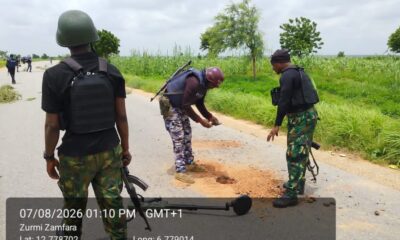
Troops Nab Suspected Terrorists’ Logistics Supplier, Defuse IED In Zamfara
-
Sports9 hours ago
‘Outright falsehood’ — NFF denies backing calls for FIFA president to resign
-
News9 hours ago
Nigeria’s public debt hits N159.3trn — up by N9.9trn in one year
-
News9 hours ago
85-Year-Old Community Leader Shot Dead In Edo
-
News9 hours ago
Why Kano Govt Spent N1.5bn On Mass Wedding – Gov Yusuf