Business
Why Nigerians despise Tinubu’s economy

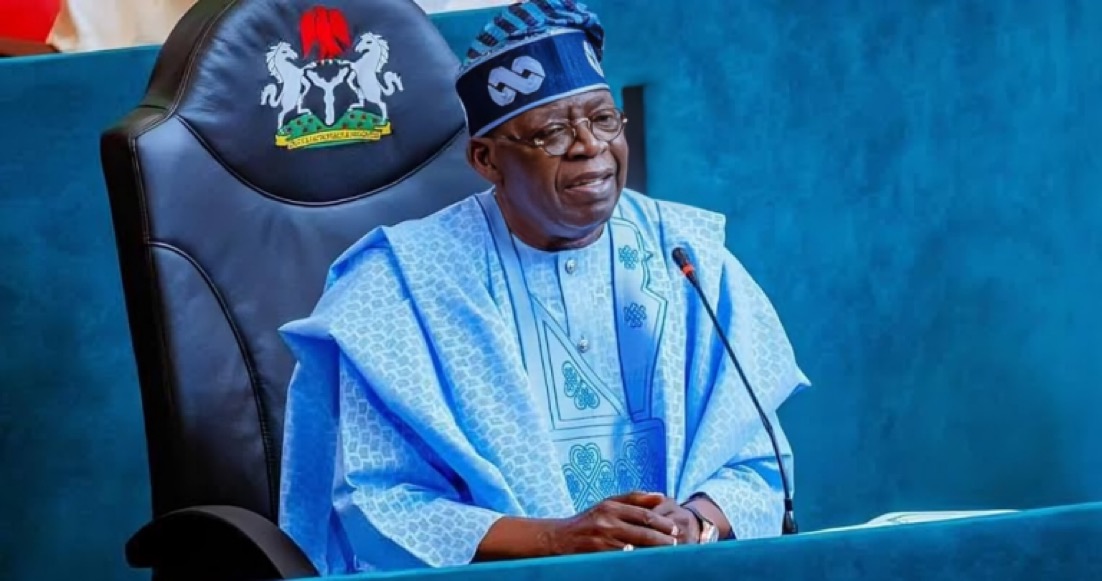
President Bola Ahmed Tinubu’s economic reforms have triggered widespread criticism among Nigerians, with concerns over the rising cost of living, inflation, poverty and the social impact of policies introduced since he assumed office.
In a shocking move, even to his close aides, Tinubu used his inauguration speech to abolish the highly controversial fuel subsidy, a decision that has caused a lot of pain and hardship to Nigerians.
This was subsequently followed by the unification of the foreign exchange market.
The administration’s reforms, including the removal of the fuel subsidy, foreign exchange reforms, tax and fiscal policy changes, banking sector recapitalisation and monetary policy tightening, have attracted contrasting assessments from economists and businesses.

However, over three years into this administration’s tenure, Nigerians remain sharply divided over the government’s direction and impact.
While supporters argue that Tinubu has confronted economic problems previous administrations avoided and taken steps to stabilise public finances and increase revenue, critics say the reforms have imposed severe costs on households and businesses without adequate social protection.
What they are saying
Economists and business analysts who spoke on the reforms said the direction of some policies may have been necessary, but raised concerns about their speed, sequencing and the absence of adequate measures to cushion their impact on Nigerians.
- Dr Muda Yusuf, founder and Chief Executive Officer of the Centre for the Promotion of Public Enterprise (CPPE), said, “One of the things that I think we need to improve upon is to address this cost-of-living crisis, especially the welfare issues that have arisen as a consequence of the reforms.”
- Yusuf said, “The reforms are good, but it came with very huge social costs. So, we have not been able to elaborate policies to effectively address the social costs of the reforms.”
- ‘’Because reform was very inflationary by nature. And you know what inflation does to the ordinary people? It really aggravates poverty. So, those issues that have to do with affordability of basic things like food, like transportation, like health- How we can now harvest the benefits of the reform to improve on those things.’’
- ‘’I think for me, that is the biggest concern that I have. Because it is affecting even the legitimacy of the reform itself. Because when you talk to people, they believe that you are just talking theory.’’
- Dr Olu Olajemgbesi, an economic lecturer at the University of Abuja, said, “My biggest criticism is not necessarily the direction of reform, but the speed and sequencing of adjustment without sufficiently strong compensatory mechanisms.”
- Olajemgbesi said, “For an import-dependent economy like Nigeria, that quickly fed into inflation.”
He also picked holes in the manner of the exchange rate reforms, noting that naira’s sharp adjustment and uncertainty about the rules of the forex market significantly increased the local currency cost of imports and foreign obligations.
Yusuf said the inflationary impact of the reforms had aggravated poverty and was affecting the legitimacy of the reforms because many Nigerians were struggling with the affordability of basic needs such as food, transportation and healthcare.
More Complaints
A former Chairman of the Nigerian Electricity Regulatory Commission (NERC) and Director of Abuja School of Social and Political Thoughts, Dr Sam Amadi, said the reforms had negatively affected human capital development and sustainable economic growth.
Amadi said the subsidy removal had reduced Nigeria’s economic growth potential, while SMEs were struggling and the energy crisis was affecting businesses.
- He said, ‘’The problem with Tinubu’s policies is that the real outcomes are bad for human capital development. They are also bad for sustainable economic growth. For example, the subsidy removal has reduced Nigeria’s economic growth potential. We’ve seen SMEs struggling. The energy crisis affects SMEs. Households are not able to consume.’’
He added that Nigeria now has a lower GDP per capita than in 2023.
Amadi also said the removal of the subsidy and the floating of the naira were not backed by adequate structural cash transfers to vulnerable communities.
- ‘’The removal of subsidy and floating of the naira were not backed with mainstream structural cash and transfer to vulnerable communities,’’ he added
Yusuf also raised concerns about food imports, saying lower food prices may benefit consumers but could hurt agricultural producers when domestic prices fall sharply.
An auto entrepreneur and Managing Director of Stockmotorcars Limited, Bassey Esu-Duke, said only a select few rich people are benefiting from the reforms and still buying cars, noting that the benefits are not trickling down.
He said young people, market women, and low- or middle-income earners are no longer buying cars like before.
- Esu-Duke said, “Just from the sales point of view, it’s just the select few. It’s just the rich people that are buying cars.”
- “Opportunities are concentrated. The reforms are not flowing down to other people. So people are not really enjoying the benefits of the reforms for now.”
He said he was not seeing low-income or middle-income earners buying cars as they did before, describing this as an indicator of the lack of“percolation.”
- Esu-Duke said, “Everything has gone up. All the salaries… Feeding is like four or five times. Before, I could give my wife N400,000 for feeding in a month. Now you have almost N700,000 to feed in the house.”
From the household point of view, Esu-Duke said everything had gone up, with his monthly feeding cost for his family increasing from N400,000 to about N700,000.
Also, some civil society organisations and labour groups have been very critical of President Tinubu’s economic reforms – notably the removal of fuel subsidy and the floating of currency, stating that this has triggered severe hardship, a high cost of living and rising poverty level.
A coalition of civil organisations, in a statement earlier this year, said these reforms, which had led to an increase in government revenue, had not translated into improved living conditions for citizens
The organisations include ActionAid Nigeria, BudgIT Foundation, Centre for Democracy and Development, Socio-Economic Rights and Accountability Project, Yiaga Africa and Amnesty International Nigeria.
- Their statement partly reads, ‘’Nigeria is on the brink of collapse. We, the undersigned Civil Society Organisations (CSOs), acting as non-partisan advocates for democracy, human rights, and good governance, issue this urgent plea for responsible leadership and collective action to save our nation from escalating insecurity, rising poverty, and moral decay in public life.’’
A 400-level Mechatronic Engineering student at the Federal University Oye-Ekiti, Alagbe Toheeb Olawale, said the downside of the reforms was the increase in transportation costs and the cost of living, making it difficult for students to maintain a balanced diet.
Another student of Benue State University said he hates Tinubu because of the cost of living, which has become expensive and difficult, as well as insecurity, which he said had become worse.
Heavy reliance on taxation, borrowing
Olajemgbesi criticised the Federal Government’s reliance on taxation and borrowing while productive capacity remains constrained.
He said raising taxes when businesses are already facing high energy costs, expensive credit, infrastructure deficiencies and exchange-rate uncertainty could discourage investment if reforms are not carefully sequenced.
Olajemgbesi raised concerns about monetary-fiscal coordination as the Central Bank maintains tight monetary conditions to fight inflation and stabilise the naira.
He said fiscal expansion and substantial government borrowing could continue to put pressure on interest rates.
He warned that government borrowing could crowd out private-sector credit and make financing prohibitively expensive for businesses.
He said strong private-sector-led growth would be difficult to achieve if businesses continued to face expensive financing.
Yusuf also advocated expenditure reforms, including changes to the entire budgetary process, to ensure that government revenues are better optimised.
What you should know
The criticism of Tinubu’s economic reforms comes against the backdrop of the Federal Government’s argument that the administration inherited significant economic distortions that required urgent action.
- NRS Chairman Zacch Adedeji recently identified an unsustainable fuel subsidy, an opaque foreign exchange market, an underperforming oil sector and a small tax base as four major distortions inherited by the administration.
- Adedeji said these conditions contributed to a trade deficit, negative FAAC inflows and ways and means liabilities of about N23 trillion.
- He said the administration had to address the four mutually reinforcing distortions affecting the economy.
- Adedeji has also argued that Nigeria’s fiscal condition is improving as a result of the reforms.
The contrasting views highlight the central debate around Tinubu’s economic policies: whether the long-term gains from the reforms will be sufficient to offset the immediate hardship experienced by households and businesses. (Nairametrics)
-

 News12 hours ago
Government official smuggles 14 family members into salary payroll, another collects 13 salaries
-
Entertainment12 hours ago
Wizkid To Headline 2026 Detty December Fest
-
Politics10 hours ago
I ignored warnings before backing Gbenga Daniel for Senate in 2023 – Abiodun
-
Sports12 hours ago
Super Falcons Miss Out Of 2027 World Cup After Defeat To South Africa
-
Politics12 hours ago
Osun Polls: INEC Records 1.9 Million PVC Collections
-
African News10 hours ago
Xenophobia: No request yet from S’Africa on repatriation costs — FG
-
Politics12 hours ago
US report vindicates Atiku on Tinubu govt’s fiscal transparency – Media Office
-
World News12 hours ago
US sets up task force to end birth tourism, revokes over 600 visas worldwide