• Israel blames APC defeat on division, weak reconciliation, poor mobilisation
• Bamidele urges APC to turn Osun loss into 2027 strategy
• Situation Room alleges N50,000 vote-buying, flags BVAS challenges
• UK flags vote-buying, voter interference, BVAS challenges
• INEC dismisses ghost, hired voters claims, says BVAS prevents such voting
• Yoruba Ronu demands INEC independence, stronger democratic institutions
• Observers, INEC differ over Osun poll as 2027 concerns mount
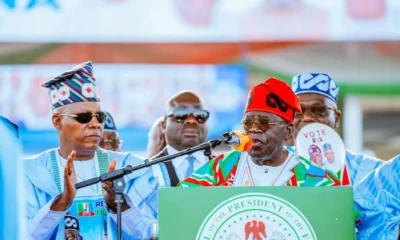
The defeat of the All Progressives Congress (APC) in Saturday’s Osun State governorship election has triggered early soul-searching ahead of 2027, exposing internal divisions, weak reconciliation, mobilisation gaps and wider concerns over the electoral process.
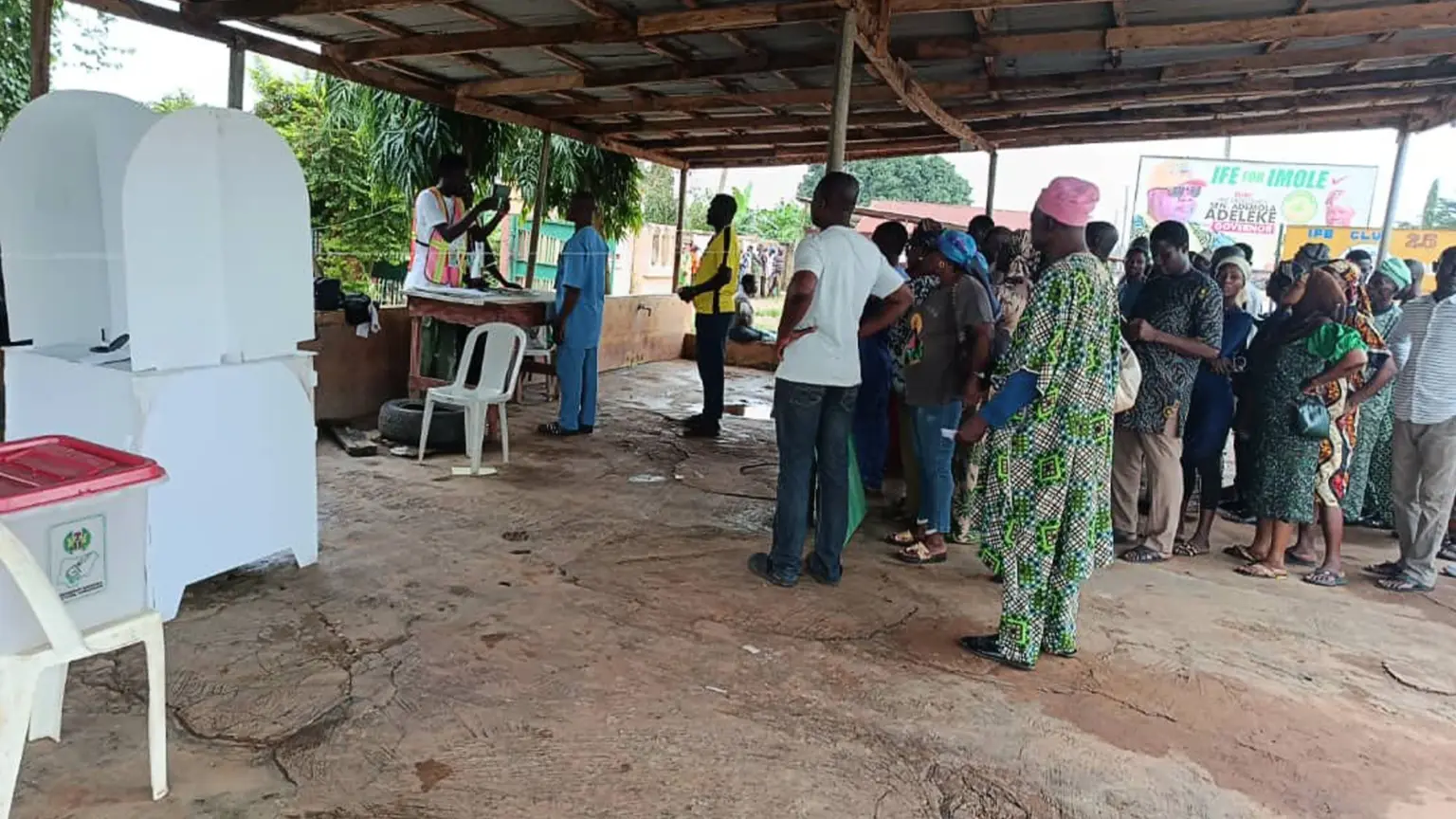
The development has also opened a fresh debate over the integrity of Nigeria’s electoral process, with the Nigeria Civil Society Situation Room and the British High Commission flagging alleged vote-buying, voter interference and technical challenges during the poll, even as the Independent National Electoral Commission (INEC) defended the conduct of the election.

APC National Youth Leader, Dayo Israel, said the defeat should compel an honest assessment of the party’s organisational weaknesses rather than resort to blame-shifting or excuses.
He acknowledged the pain of the loss but said the party must respect the decision of the electorate, congratulating Governor Ademola Adeleke and the people of Osun State while commending the APC candidate, Bola Oyebamiji, as well as party members, agents and volunteers.
According to him, the latest defeat reflected some of the same problems that contributed to the party’s poor performance in the 2022 Osun governorship election, particularly divisions within the party and inadequate reconciliation of aggrieved members and political leaders.
Israel recalled his experience during the 2022 election, saying efforts were made to reconcile members across political divides, including engagement with former party leaders who had broken away from the APC.
“Four years later, some of those lessons remain unlearned,” he said, stressing that no political organisation could consistently win statewide contests while disregarding internal cohesion and its established structures.
The APC youth leader also criticised what he described as the sidelining of the party’s constitutionally recognised youth and women structures during campaigns.
He said the National Youth Wing should not be activated merely to fill stadiums, while the Women’s Wing should not be reduced to ceremonial participation. Rather, he argued that both structures should be strategically integrated into campaign planning and grassroots mobilisation.
Israel further faulted the party’s failure to sustain structured engagement and oversight during the Osun campaign, noting that the National Working Committee did not formally meet to review progress, assess strategy and recalibrate its direction after the campaign council was inaugurated.
He warned that such weaknesses could have serious implications for 2027 if left unresolved.
According to him, the APC must embrace genuine reconciliation, accommodate different interests and rebuild trust among members and political stakeholders.
Bamidele urges APC to turn defeat into 2027 strategy
SIMILARLY, Senate Leader, Opeyemi Bamidele, urged the All Progressives Congress to treat its defeat in the Osun governorship election as a strategic lesson ahead of the 2027 general elections.
Bamidele, in a statement yesterday, acknowledged Governor Adeleke’s re-election and urged all contestants to accept the verdict of the electorate and work together for the development of the state.
He said the outcome had demonstrated that the ultimate power in a democracy rests with the people, urging political actors to respect the electorate’s decision.
According to him, the APC should work towards achieving at least 60 per cent voter turnout across South-West states in 2027 and target 10 million votes for Tinubu in the region by building a broader political coalition and strengthening engagement with voters.
He described the target as achievable if the party learnt the right lessons from Osun.
Bamidele also called for an overhaul of the party’s campaign strategy, saying future engagement must move beyond conventional political rallies.
He urged the APC to intensify engagement with artisans, traders, farmers, entrepreneurs, youths, women, labour unions, civil society organisations, community leaders, traditional rulers and the private sector.
“Our engagement approach, more than any time in our recent history, must be all-encompassing, and it must not leave any person or interest behind,” he said.
He said the party must communicate more effectively with Nigerians on the policies and achievements of the Tinubu administration, particularly in fiscal reforms, security, democratic development and economic growth.
Bamidele said the APC should not regard itself as the ultimate loser in the election, urging the party’s candidate, Bola Oyebamiji, to personally congratulate Adeleke and offer policy ideas that could assist him in governing the state.
“For me, the APC did not lose the election,” Bamidele declared, citing Adeleke’s previous membership of the APC and his support for President Bola Tinubu.
Situation Room alleges N50,000 vote buying, voter inducement
MEANWHILE, the Nigeria Civil Society Situation Room has raised concerns over alleged voter inducement during the governorship election, alleging that politicians offered as much as N50,000 per vote.
The coalition also reported that jollof rice and drinks were shared at a polling unit in Isokan Local Government Area, an incident it said caused disorderliness.
The Co-Convener of the Situation Room, Mma Odi, disclosed this yesterday in Abuja while presenting the coalition’s final statement on the Osun governorship election.
Odi, who described the level of vote trading as worrying, said, “They took vote trading to another level. N50,000 per vote.”
The coalition said it deployed observers across all 30 local government areas of Osun State, while partner organisations, including CLEEN Foundation, the Centre for Democracy and Development and Kimpact Development Initiative, deployed more than 300 accredited observers.
According to the Situation Room, its observers recorded various forms of voter inducement across the state, ranging from food and drinks to alleged direct cash payments and the collection of voters’ details by party agents.
It said the sharing of jollof rice and drinks was observed at Polling Unit 008, Ward 6, Isokan Local Government Area, where the development reportedly caused disorderliness.
The Situation Room’s final statement cited several other incidents of alleged vote buying and voter inducement across the state.
At Alapomu 1, Odo-Osun Health Office, Polling Unit 006, Isokan Local Government Area, party agents reportedly called voters to a corner after they had voted and ticked their names on a voters’ list.
In Irepodun Local Government Area, Ward 2, Polling Unit 7, vote buying was also reported, with observers alleging that voters wrote their names with certain party agents after casting their ballots.
Similarly, at Modakeke 1, Ward 08, Ife East Local Government Area, at a polling unit located at Community Grammar School, Toro Road, the coalition reported alleged vote trading across party lines.
According to the Situation Room, after voting, some voters reportedly displayed signs indicating their preferred parties, following which party agents recorded their names and telephone numbers and provided them with tags.
The coalition said the incidents demonstrated the continued threat posed by vote buying to the credibility of elections, describing the practice as a direct assault on voters’ freedom of choice.
Odi warned that the development should not be overlooked ahead of the 2027 general elections, saying political actors seeking to manipulate the electoral process could learn from the weaknesses exposed during the Osun election and devise new strategies.
“The election should not make us sleep because people who want to rig will go back to the drawing board to see how they can manipulate the process ahead of the 2027 election,” she said.
UK flags vote-buying, voter interference in Osun election
ALSO, the British High Commission raised concerns over isolated incidents that generated tension before and during the election, including voter interference and vote-buying across party lines.
It identified continued challenges with access for people with disabilities and elderly voters, as well as overcrowding linked to the speed and limited provision of Bimodal Voter Accreditation System (BVAS) devices for accreditation.
In a statement signed by the British High Commission in Nigeria, the High Commission said it had met with a range of stakeholders before election day and deployed its own team of accredited observers.
It said that, based on its observations and consistent with the findings of credible independent observer groups with wider deployments across the state, there were several encouraging signs of a positive democratic process.
These included the opening of polls as scheduled in many locations, the commitment of security personnel to maintaining order and the effective implementation of electoral procedures by officials of the Independent National Electoral Commission.
“Most of all, we were encouraged by the patience, resilience and participation demonstrated by voters throughout the day,” it said.
The High Commission, however, said the reported incidents and challenges should be carefully reviewed by relevant institutions.
“We encourage the relevant institutions to review these issues carefully and to draw lessons, including from the recommendations of credible organisations such as the Nigeria Civil Society Situation Room that strengthen public confidence, transparency and accountability,” it said.
It congratulated Governor Ademola Adeleke on his re-election and commended the people of Osun State for their peaceful and active participation in the election.
Yoruba Ronu seeks stronger institutions, INEC independence after Osun poll
REACTING, the Yoruba Ronu Leadership Forum called for stronger democratic institutions and an independent electoral commission, saying electoral integrity remains critical to the survival of Nigeria’s democracy.
The group, in a statement signed by its President, Akin Malaolu, said recent political developments, particularly the outcome of the Osun State governorship election, had underscored the need to strengthen the country’s electoral processes and institutions.
Yoruba Ronu said the resilience of Nigeria’s democracy depended on the integrity of its electoral processes and the ability of state institutions to operate independently.
It identified the independence of the Independent National Electoral Commission, elimination of what it described as “federal might”, criminalisation of certificate forgery and continuous strengthening of democratic institutions as essential pillars of sustainable democracy.
On INEC’s independence, the group said the electoral body must be allowed to operate as an unbiased umpire, free from financial, legal and political manipulation.
“Democracy dies when the electoral body is subjected to the whims of the executive or political elites,” it said, insisting that INEC must be sufficiently independent to ensure that the will of voters was reflected in election results.
The group also called for an end to the use of state resources, security agencies and the influence of the Federal Government to intimidate voters or manipulate electoral outcomes.
According to Yoruba Ronu, the deployment of “federal might” has no place in a modern democracy, stressing that elections should be determined by voters rather than coercion.
It said, “The people must be allowed to choose their leaders without fear of reprisal from the central government.”
The organisation further called for stricter enforcement against certificate forgery and falsification of credentials by political office seekers.
It argued that the integrity of public office required candidates to present genuine and verifiable credentials, adding that certificate forgery should be treated as a serious criminal offence rather than a minor infraction.
The group said the experience of the Osun election should serve as a warning to political actors who believed that the deployment of federal power could determine electoral outcomes.
INEC dismisses claims of ghost, hired voters in Osun election
THE Independent National Electoral Commission has dismissed claims of ghost and hired voters during the Osun State governorship election, saying the Bimodal Voter Accreditation System made such voting impossible.
The Chief Press Secretary to the INEC Chairman, Dayo Oketola, also urged Nigerians to be wary of unverified information and videos circulating online after the election.
Speaking on Arise News yesterday, Oketola said voters could only participate after being registered and accredited for the specific polling unit where they were registered.
“We are in an age of AI, misinformation, and disinformation. Not everything you see is true. With BVAS in play for any election in Nigeria, there is no room for ghost voters or hired voters.
“You cannot vote in an election unless you have been registered and accredited for that specific polling unit. Be careful what you believe, particularly in an election driven by information management and mismanagement,” he said.
Oketola said the election recorded 50.116 per cent voter turnout, which he described as higher than that of other recent off-cycle elections.
“Regarding voter apathy: yes, we know voter apathy is a major problem in Nigerian elections. Apathy does not reward poor governance; it enhances it. When people do not turn out to vote, they give their voice to the minority.
“However, Osun broke a number of records. Since 2015, across major off-cycle elections in recent years, there was none where we had the kind of turnout recorded in Osun.
“According to our records, we had a 50.116 per cent voter turnout in that election. It is better than other off-cycle elections that have been conducted. This shows that when solid preparedness meets collective resilience on the part of the electorate, people turn out. The lesson is to plan very well, get your planning and logistics right,” he said.
Oketola added that the figure was based on the number of Permanent Voter Cards collected and voters accredited for the election.
“As the Independent National Electoral Commission, our official voter turnout record is 50.116 per cent.
“That is based on the number of PVCs collected and the number of voters accredited.
“Voter turnout in that election was well above 50 per cent, which is higher than the overall average,” he said.
He said the peaceful conclusion of the election, despite tensions before the poll, reflected what he described as a consistent level of maturity in Nigeria’s democracy.
“Despite the fearmongering and the tension-soaked campaign in the run-up to the election, the Osun election has come and gone, and a winner has been declared. For me, this marks a consistent level of maturity for Nigeria’s democracy,” he said.
Oketola said the commission remained focused on conducting elections within the legal framework.
“Our concern before, during, and after any election is to conduct a free, fair, credible, and inclusive election guided by the legal framework, the Constitution, the Electoral Act, and our regulations.
“The legal framework allows for legal steps to be taken by candidates who may be dissatisfied with the outcome. That is not a source of concern for us because the law provides for it. Naturally, INEC will be a party to the suit, because we acted as the referee in the match,” he added.
On the 2027 general elections, Oketola said recent off-cycle polls had served as test runs for INEC’s preparedness.
“Our mandate is to conduct credible elections for Nigerians. Recent off-cycle elections serve as test runs for 2027.
“INEC is prepared to deliver free and fair elections, but we require the cooperation of all stakeholders.
“Political parties must refrain from practices like vote-buying. When security agencies manage threats effectively and INEC is allowed to operate without unnecessary interference, standard electoral processes can be maintained,” he said. (Guardian)