Opinion
Beyond The Subsidy Argument: Correcting Reform Without Returning To The Bazaar

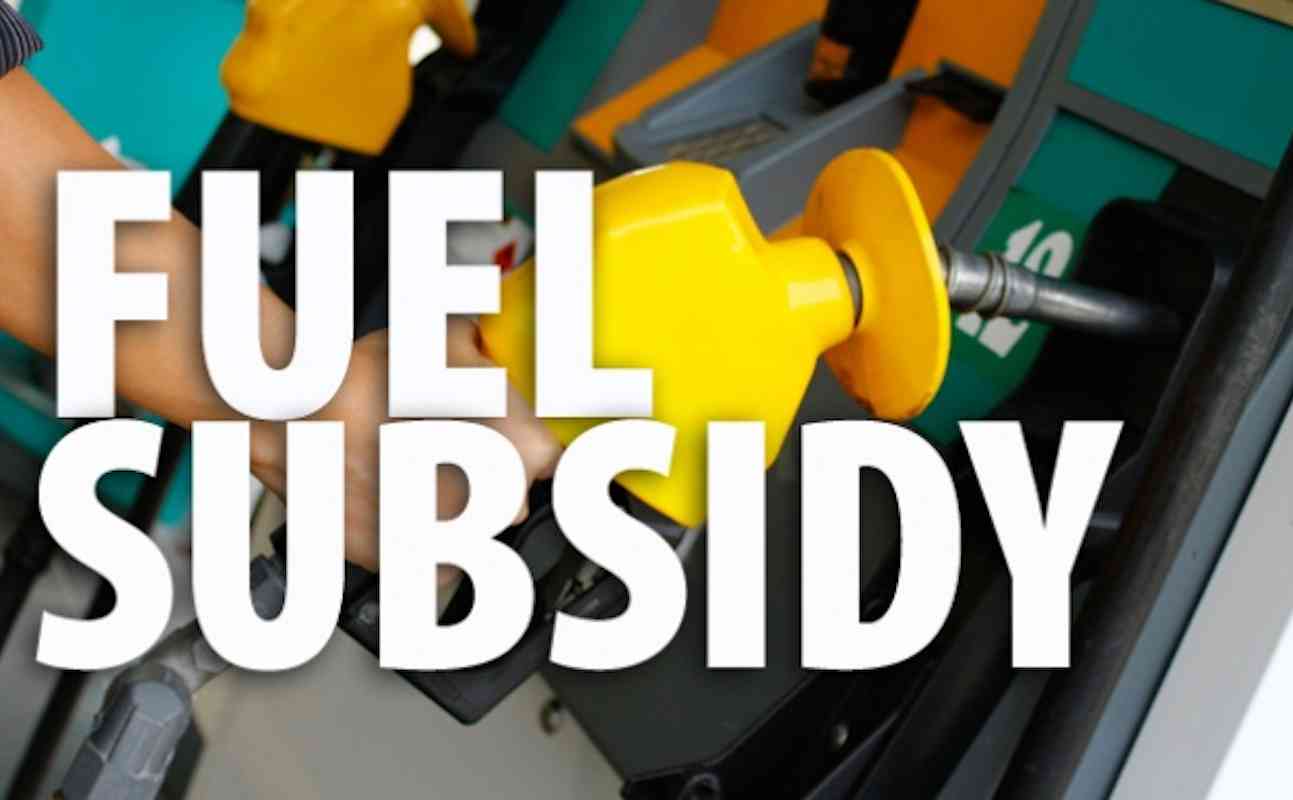
Nigeria’s petrol subsidy debate has returned as it usually does with plenty of heat and very little light. On one side are those who insist that removing the subsidy was an act of courage that must never be questioned. On the other are those who say the hardship that followed is enough reason to bring it back.
The argument has now been reduced to two slogans: “Subsidy is gone” and “Bring back subsidy.”
Unfortunately, neither slogan is an economic policy.
Let us begin with the obvious. The old petrol subsidy had become a national bazaar. Nobody could say with confidence how much petrol Nigerians actually consumed, how much crossed our borders or how many subsidised litres existed only in invoices.

The system rewarded waste, encouraged smuggling and created a special class of businessmen who appeared capable of turning paper into petrol and petrol into private fortunes.
It had to end.
But saying that the old system was bad does not mean that the manner of its removal was perfect. A driver may choose the correct destination and still take a road so rough that half the passengers arrive without their luggage.
The subsidy was removed before Nigeria had enough public buses, dependable social protection or sufficient domestic refining capacity. Then the naira weakened. The price of petrol rose. Transport fares followed. Food prices joined the procession. Before long, almost everything became more expensive.
Macroeconomic reform had arrived. Unfortunately, it did not come alone.
Government revenues improved. The states began receiving larger allocations. The enormous pressure of the old subsidy on public finances was reduced. These are real gains and should not be dismissed.
But a healthier government account is not automatically the same thing as a healthier citizen.
Government may receive a larger allocation while the family receives a smaller portion at the dinner table. Citizens cannot eat fiscal consolidation. They cannot board improved foreign reserves to work. At some point, the gains recorded in Abuja must become visible in the market, on the farm, in public transport, in the clinic and in the household.
That is where the present debate should begin.
Nigeria should not return to the old universal subsidy. It was wasteful, unfair and too easy to abuse. The owner of three large cars naturally consumed more subsidised petrol than the family travelling by bus. The largest benefits therefore went not always to the poorest Nigerians, but often to those with the biggest fuel tanks.
If government wants to help ordinary people, it should begin with the bus not the private fuel tank.
Support public transportation and insist on lower fares in return. Put more buses on busy routes. Help genuine transport operators convert their vehicles to gas where practical. Make the arrangement public, measurable and easy to monitor.
The same principle should apply to food. Petrol prices become especially painful when they increase the cost of moving tomatoes, rice, yams and other produce from farms to markets. Assistance can therefore be directed towards recognised farmers’ cooperatives and verified food transport routes.
That way, public money would reduce the cost of moving people and food, rather than quietly subsidising weekend traffic in luxury vehicles.
Nigeria must also encourage domestic refining but with its eyes open.
Producing petrol at home is clearly better than depending almost entirely on imports. It can conserve foreign exchange, create jobs and improve energy security. But we must not assume that every litre refined in Nigeria will automatically be cheap. An expensive litre does not become affordable merely because it has a Nigerian birth certificate.
Any government support for refiners must therefore come with clear conditions. It should be open to every qualified refinery, tied to actual petrol supplied to the Nigerian market and reflected in the price paid by consumers.
Government must not subsidise the producer while the citizen continues to pay the full market price. That would mean everyone is smiling except the person standing at the filling station.
There may also be occasions when world oil prices or exchange rates rise so sharply that temporary government intervention becomes necessary. But such relief must be limited, transparent and time bound.
The emphasis is on “temporary.”
In Nigeria, temporary programmes often have an extraordinary gift for immortality. Ministers leave, committees disappear and policy documents gather dust, but the expenditure somehow lives happily ever after.
Any intervention must therefore have a fixed budget, a clear purpose and an expiry date. Once the money is exhausted or the emergency has passed, the programme must end. If more funding is required, government should return to the National Assembly and explain why.
No hidden debts. No mysterious under recoveries. No unpaid obligations quietly accumulating until they are presented to the country as an accomplished fact.
This is why the questions surrounding NNPCL’s petroleum related expenses and receivables deserve clear answers. If subsidy is truly gone, Nigerians are entitled to know what these obligations represent, how they arose, who authorised them and who benefited.
The figures should be independently examined and explained in language that ordinary citizens can understand. If the expenses are legitimate, transparency will protect them. If they are not, transparency will expose them.
Either way, opacity should no longer enjoy a subsidy of its own.
Nigeria must equally avoid replacing a cartel of importers with a protected club of domestic producers. We need Nigerian refineries, but we also need competition. No producer should be allowed to hold the country hostage simply because its refinery is located within our borders.
The objective is not merely to refine petrol in Nigeria. It is to supply petrol efficiently and competitively to Nigerians.
Beyond petrol lies the more important work, reliable mass transportation, better farm to market roads, modern food storage, commercial vehicles powered increasingly by gas and electricity, and a social register that can identify vulnerable citizens without first examining the size of their fuel tanks.
These measures may not produce the instant applause that follows a dramatic announcement at Eagle Square. But they will gradually make Nigerians less dependent on petrol and less exposed to the next rise in oil prices or fall in the naira.
The debate must therefore move beyond whether President Tinubu was right or wrong to remove the subsidy.
He was right to confront an arrangement that had become financially unsustainable and morally indefensible. But the reform was introduced too abruptly, with inadequate preparation and insufficient protection for the population.
Both truths can sit in the same room.
We can defend the removal of a corrupt universal subsidy while demanding better protection for citizens. We can support market pricing without turning economic reform into an endurance competition. We can encourage domestic refining without handing producers a blank cheque.
What Nigeria needs is not yesterday’s subsidy wearing a new agbada.
Neither do Nigerians need to be endlessly congratulated for their resilience. Resilience is admirable, but it should not become government policy.
The savings from subsidy removal must be made visible. Let citizens see the buses. Let farmers see the cheaper transport. Let communities see better roads, clinics and schools. Let vulnerable households receive direct and credible support.
When government says it has saved trillions of naira, the citizen should not have to employ an economist to locate the benefit.
The choice before Nigeria is not between discipline and compassion. A serious government must possess both. Discipline without protection can become indifference. Protection without discipline will simply reopen the bazaar.
The task is to correct the reform without reversing it; protect citizens without subsidising every litre; and encourage Nigerian production without creating Nigerian monopolies.
That is the argument beyond subsidy.
And it is the argument Nigeria should now be having.
“Suleyman A. Ndanusa, PhD, OON, is an economist, lawyer, strategic studies scholar, and public policy thinker and practitioner with extensive experience in financial markets, regulation, governance, national Security and development.
-

 Business21 hours ago
Deloitte helped in falsifying documents to evade tax on Abramovich’s wealth, BBC finds
-
 News21 hours ago
BREAKING: Makinde’s chief of staff resigns
-
News14 hours ago
Alleged fake agency: FG files fresh charges against Adeyemi
-
News5 hours ago
N267bn in education funds lie idle as 70% of Nigerian children can’t read
-
Politics14 hours ago
Coastal highway: Atiku challenges Tinubu over alleged $20bn loan plan
-
Politics14 hours ago
Ebonyi indigenes threaten to sue Umahi over zoning, anti-Obi remarks
-
News5 hours ago
Obasanjo urges increase in 13% derivation for oil-producing states
-
Politics5 hours ago
You’ve nothing to fear in Tinubu’s 2nd term – Shettima tells North