News
EXPLAINER: What EFCC-NELFUND deal means for student loans

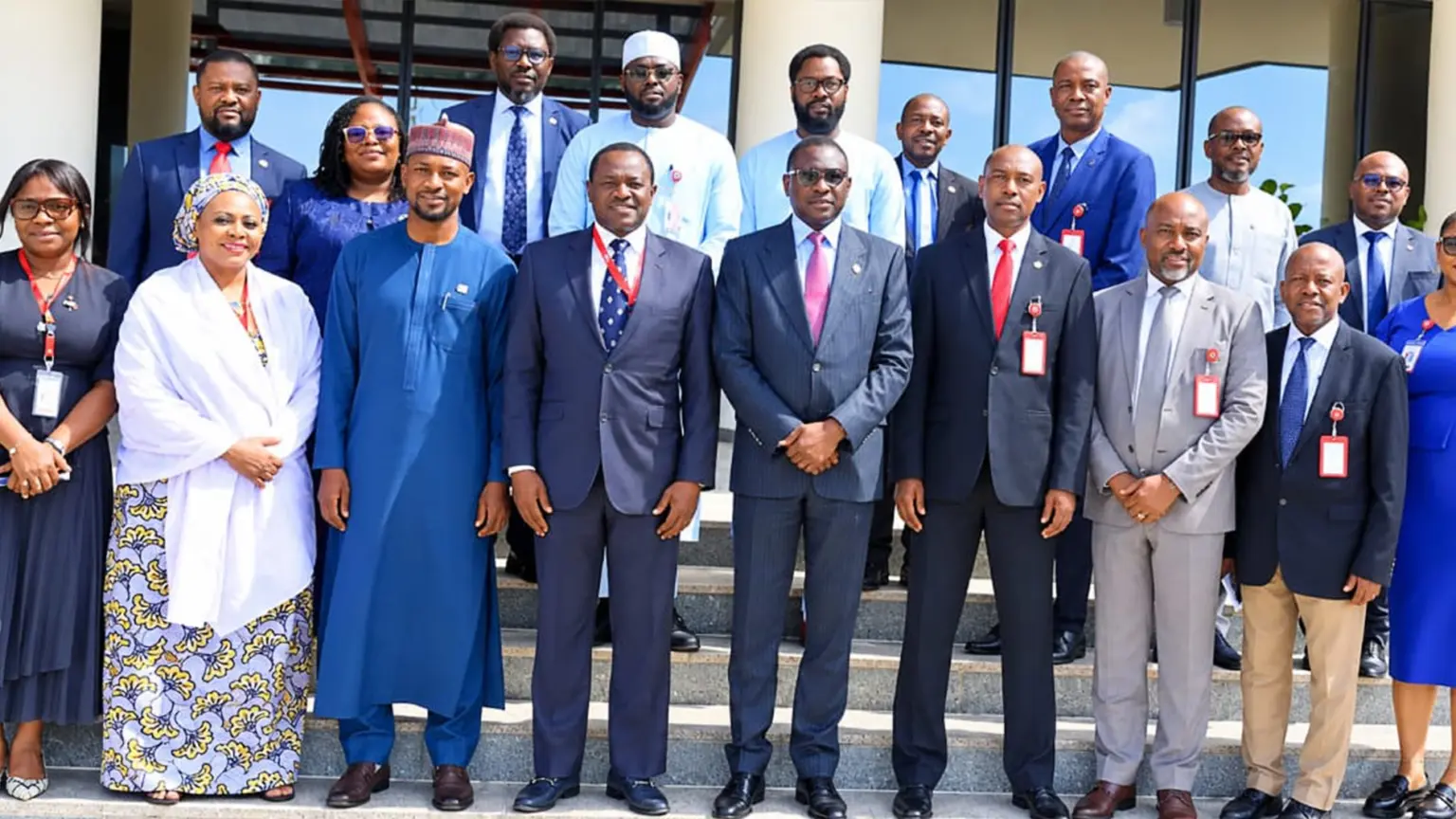
Money recovered from financial crimes is set to take on a new role in Nigeria’s education system, with the Federal Government moving to channel eligible recovered funds into student loans under a new agreement between the Nigerian Education Loan Fund (NELFUND) and the Economic and Financial Crimes Commission (EFCC).
The deal, signed in Abuja yesterday, is designed to connect two otherwise separate government functions: the recovery of public resources lost through financial crimes and the financing of Nigerian students seeking tertiary education.
But what exactly does the agreement mean, and how could it affect the student loan scheme?
Where will the money come from?

The funds in question are proceeds recovered by the EFCC from financial crime investigations.
President Bola Tinubu has directed that all unencumbered liquid funds recovered by the EFCC be transferred to NELFUND to support the long-term financing of student loans.
The important qualification is “unencumbered”. This means funds that are not already tied up by legal claims, court orders, restitution processes or other obligations would be eligible for transfer, subject to applicable laws and procedures.
The arrangement, therefore, does not mean that every asset or amount recovered by the EFCC will automatically become student-loan money.
Why does NELFUND need additional funding?
NELFUND was established to provide loans to Nigerian students who need financial assistance to pursue tertiary education.
As more students seek access to the scheme, the sustainability of the programme increasingly depends on the availability of sufficient funds.
The EFCC partnership provides another potential source of financing beyond the resources ordinarily available to the education loan system.
The logic is straightforward: rather than allowing eligible recovered public funds to remain idle after the conclusion of recovery processes, the government intends to deploy them towards an activity with a direct social and economic benefit — financing access to higher education.
Does the MoU mean the EFCC is now funding NELFUND directly?
Not exactly.
The agreement establishes a framework for cooperation between the two institutions. It provides for collaboration on recovered funds that may support NELFUND’s mandate, while requiring the agencies to operate within existing laws, regulations and established government procedures.
In practical terms, the EFCC remains responsible for its statutory functions, including investigating and recovering proceeds of financial crimes, while NELFUND remains responsible for administering the student loan system.
The MoU creates a formal institutional bridge between the two.
What happens to recovered money before it reaches NELFUND?
Recovery of money by the EFCC does not necessarily mean that the funds can immediately be spent.
Recovered proceeds can be subject to court processes, ownership claims, forfeiture proceedings and other legal requirements.
That is why the reference to “unencumbered liquid funds” is important.
Only funds that are legally available for transfer can potentially be deployed under the arrangement. The MoU itself does not override existing legal or financial procedures governing recovered assets.
Will students receive more loans because of the deal?
Potentially, but the agreement does not by itself guarantee a particular increase in loan awards.
The amount ultimately transferred, the timing of transfers and the government’s decisions on how the resources are deployed will determine their effect on NELFUND’s lending capacity.
If substantial eligible funds are transferred, however, the additional resources could strengthen the Fund’s ability to meet demand from students.
Why is accountability a major part of the agreement?
The arrangement brings together two areas that require strong financial controls: money recovered from financial crimes and public funds intended for education.
NELFUND and the EFCC said the MoU would strengthen information sharing, improve operational processes and help identify and close loopholes in the management of resources.
That means the agreement is not simply about moving money from one government institution to another. It is also intended to establish clearer procedures for identifying eligible recovered funds, transferring them and ensuring that their eventual use can be accounted for.
What does this mean for taxpayers and students?
For the government, the arrangement represents an attempt to turn recovered resources into a source of public investment.
For students, the potential benefit is greater availability of financing for tuition and other eligible education-related costs under the student loan programme.
For taxpayers, the key issue will be whether the funds are transferred transparently, properly accounted for and ultimately reach the intended beneficiaries.
That makes implementation as important as the MoU itself.
What are the safeguards?
The agreement states that cooperation will be subject to applicable laws, regulations and established procedures.
Both agencies have also reaffirmed commitments to integrity, transparency and accountability.
These safeguards matter because recovered funds are public resources. Their transfer to an education financing agency must therefore be traceable from recovery through transfer and eventual disbursement.
The bigger picture
The EFCC-NELFUND agreement signals a broader approach to public finance in which recovered proceeds from financial crimes are linked directly to government development priorities.
Instead of treating recovery and education financing as entirely separate processes, the government is seeking to create a pipeline through which eligible recovered resources can help sustain student financing.
The immediate question, therefore, is no longer simply how much money the EFCC recovers, but how much of it is legally available, how quickly it can be transferred and how effectively NELFUND can deploy it to students.
In conclusion, the success of the arrangement will be measured not by the signing of the MoU, but by whether recovered funds translate into more sustainable student loans, stronger accountability and fewer financial barriers to higher education.
(guardian)
-

 African News6 hours ago
Nigeria Demands 2 Permanent UN Security Council Seats For Africa
-
 News21 hours ago
₦70,000 wage inadequate for workers — Keyamo
-
World News6 hours ago
Trump Bows To Pressure, Allows CNN, Others Into White House After Court Order
-
News6 hours ago
Nigerians Are Enjoying, Petrol Costs N3,000 Per Litre In UK – Okpebholo
-
Metro23 hours ago
‘Abducted’ Benue doctor found in Police custody
-
 News22 hours ago
Nigerian father of two shot dead in South Africa
-
News21 hours ago
Reps ask n’assembly to reconvene over Tinubu’s extended vacation
-
Politics6 hours ago
Tinubu a friend of south-south, he would get maximum votes in region – Akpabio