
News
Nigeria’s Kidnapping Crisis Driven By Complex Network Of Terrorists, Bandits, Informants – Ex-NIA DG

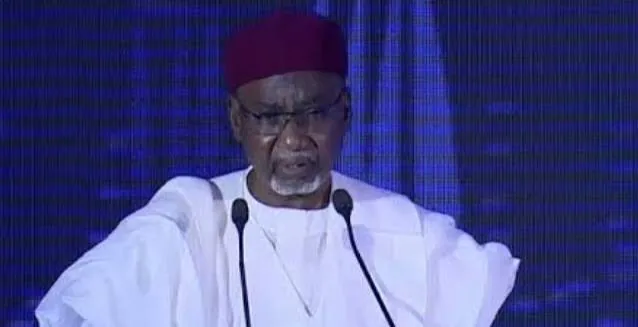
Nigeria’s kidnapping crisis is being sustained by a complex network of terrorist groups, criminal bandit militias, informants and financial facilitators, former Director-General of the National Intelligence Agency (NIA), Ambassador Ahmed Rufai, has said.
Rufai said the motives behind abductions had evolved from fundraising and recruitment to political propaganda and prisoner exchanges, making the country’s security challenge more complicated.
He spoke at the Global Security Forum in Qatar, an annual international gathering of senior government officials, security experts, academics and journalists.
Explaining Nigeria’s kidnapping situation, the former intelligence chief identified three broad categories of perpetrators: terrorist groups, bandit militias and other criminal gangs.

He said Boko Haram, which operates in parts of the country, was affiliated with terrorist organisations in the Sahel and beyond, adding that its early abductions were aimed at raising funds and recruiting young men and women into its ranks.
According to him, bandit militias, on the other hand, engage in criminal kidnapping, often targeting individuals and communities to collect ransom.
“It’s a kind of economy hostage-taking,” he said.
Rufai said the motives of the different groups had increasingly overlapped, with terrorist organisations sometimes working alongside criminal militias to carry out mass abductions.
He said such operations were intended not only to raise money but also to serve as propaganda and demonstrate the groups’ continued activities, particularly when security forces intensified their operations against them.
The former NIA chief cited the Abuja-Kaduna train attack, in which about 100 passengers were abducted, as an example of collaboration between terrorist and criminal groups.
He estimated that between $1 million and $2 million was collected as ransom, saying the money was channelled to Ansaru in the Sahel region.
Rufai said the pattern of kidnapping had also expanded to the abduction of schoolchildren and worshippers, both Muslims and Christians, with some incidents now aimed at securing the release of detained members of the groups.
He, however, noted that negotiations for prisoner exchanges could become difficult when the individuals whose release was being demanded had already been killed during security operations.
Beyond the perpetrators, Rufai identified a network of informants, financial facilitators and other criminal collaborators as key elements sustaining kidnapping operations.
He said informants provide information about potential targets, while financial systems, including cryptocurrencies and small financial outfits, are used to launder ransom proceeds.
“They use a lot of informants that tell them about their targets, their potential targets,” he said.
On possible responses, Rufai said approaches to hostage-taking should depend on the motives and identities of the perpetrators.
He advocated discreet, back-channel negotiations in cases where terrorist groups abduct victims primarily for money, involving trusted intermediaries and contact persons.
But he said abductions carried out to make political or ideological statements required a different response.
Recalling the 2014 Chibok schoolgirls’ abduction, Rufai said intelligence and liaison channels had helped authorities maintain contact with some victims over the years and secure their return in batches.
He recounted the case of a rescued woman who had spent years with Boko Haram fighters and had been married to three members of the group, two of whom were killed in combat.
According to him, the woman expressed a desire to see her parents but also wanted to return to the group, illustrating the complex psychological and social circumstances that can shape the experiences of victims held by terrorist organisations.
Rufai said the case demonstrated why hostage situations could not be addressed through a single approach.
He also described some bandit groups as criminally motivated, saying they were not driven by ideology but by the desire to make money and enjoy material benefits.
He added that some criminal networks were involved not only in kidnapping but also in arms trafficking and cattle rustling.(Daily trust)
-

 News18 hours ago
I did not carry placard in protest against Jonathan — Adeboye
-
Politics17 hours ago
2027: I’ll Relocate To Kano For 2 Weeks To Deliver Tinubu – Yahaya Bello
-
Politics15 hours ago
Tinubu’s 2023 electricity promise quoted out of context, says APC campaign council
-
World News20 hours ago
Africans should be blamed for slavery, Britain must not pay for it – Kemi Badenoch
-
Politics17 hours ago
INEC Targets Dec 15 For Publication Of Final Voters’ Register
-
Metro17 hours ago
14-year-old boy found beheaded in Cross River
-
Politics15 hours ago
2027: I’m Lion of South-East, I’m strongly behind Tinubu – Umahi
-
Politics15 hours ago
Atiku tackles APC over Tinubu’s power pledge, says bonds can’t light homes