News
How Bureaucracy Leaves Power Equipment Rotting In Ports

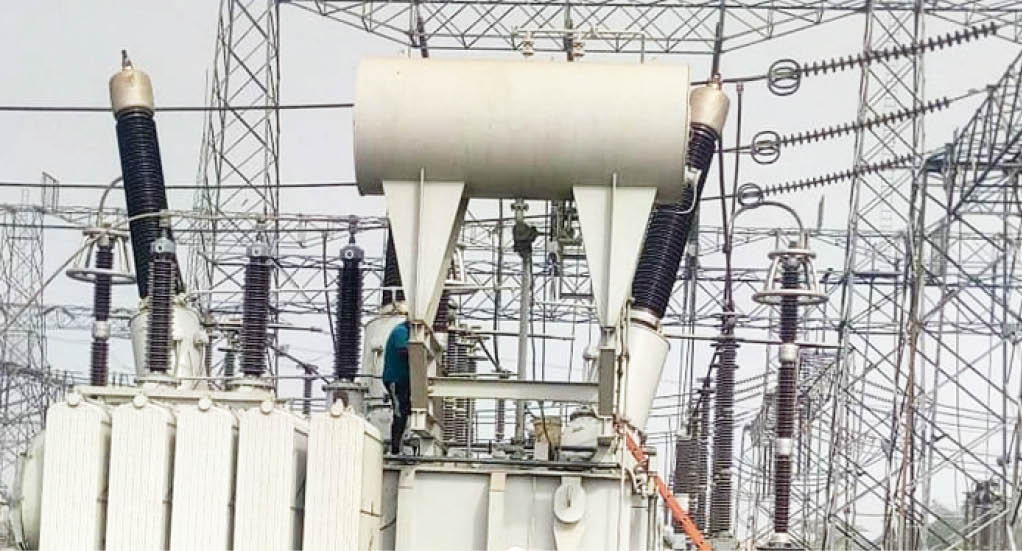
Recent revelations that more than 300 containers of critical electricity equipment imported by the Federal Government remained stranded at Nigerian ports for years have exposed the administrative bottlenecks and institutional inefficiencies undermining efforts to improve electricity supply across the country, experts have said.
The equipment, some of which have reportedly been trapped in the ports for close to two decades, were procured under various government-funded and development-partner-supported electricity projects, including the National Integrated Power Project (NIPP), Transmission Company of Nigeria (TCN) donor-funded projects and the Presidential Power Initiative (PPI).
Despite their importance to the country’s electricity infrastructure, the equipment have been unable to reach their intended destinations because of unresolved import documentation, disagreements over duty exemptions, mounting shipping demurrage, port charges and bureaucratic delays involving government agencies.
President Bola Tinubu has consequently directed the immediate clearance of the stranded containers, a move that has generated mixed reactions among stakeholders in the power sector.

While some experts have welcomed the directive as a demonstration of political will to address longstanding challenges in the electricity industry, others believe the development exposes years of institutional failures that cannot be resolved through presidential orders alone.
What power minister said
Minister of Power, Olasunkanmi Joseph Tegbe, who disclosed the presidential directive after the Federal Executive Council (FEC) meeting at the State House, expressed dismay that equipment meant to strengthen the country’s electricity infrastructure could remain abandoned at the ports for such an extended period.
Tegbe said: “Those containers are not empty. It is appalling to see that we find ourselves in such situations.
“They were imported by the Federal Government through the Ministry of Power/Transmission Company of Nigeria (TCN) under various power projects over the years.”
However, industry experts said the circumstances surrounding the stranded equipment reveal structural weaknesses in government procurement, importation and project implementation processes.
Nigeria has an installed electricity generation capacity of approximately 13,014.40 MW to 13,625 MW, while available or generated power fluctuates between 4,000 MW and 5,403 MW.
This was largely attributed to ageing or inadequate infrastructure to support transmission and power distribution.
It would be recalled that the Niger Delta Power Holding Company Limited (NDPHC) recently recovered abandoned power equipment worth billions of naira from various seaports across the country, following an intervention by the Nigerian Ports Authority (NPA).
The Managing Director/Chief Executive Officer of NDPHC, Jennifer Adighije, said during a visit to the NPA in August that the released items were in 110 abandoned containers and 216 packages.
Some experts called for a critical evaluation of the equipment in order to retrieve those that are still useful.
A former Chief Technical Officer, Presidential Power Initiative (PPI) and MD/CEO, Idfon Power Engineering Consultants (iPEC) Limited, Engr. Idowu Oyebanjo, said the situation arose when the projects were awarded to contractors at low cost without demurrage.
According to him, some of the contracts are structured on Cost, Insurance and Freight (CIF) Lagos terms, meaning the equipment are delivered to the Lagos port without sufficient arrangements to ensure their prompt clearance and transportation to the project sites.
He explained that the difficulties begin even before the containers arrive in Nigeria, as critical import documentation and duty exemption approvals are often not completed before shipment.
Oyebanjo stated that upon the arrival of the containers and notification sent to the shipping agents, the agents approach TCN to obtain an Import Duty Exemption Certificate (IDEC).
However, TCN would reportedly inform them that the relevant file was with the Ministry of Power, while the ministry, in turn, would say it was with the Ministry of Finance.
He added that the Ministry of Finance often views the imported equipment as potential revenue for the government and consequently seeks to impose a five per cent import duty.
He noted that such equipment should ordinarily benefit from the relevant government exemptions, considering that they were imported specifically for public electricity infrastructure projects.
According to him, some of the consignments arrive without properly processed Form M, the mandatory import declaration form; Pre-Arrival Assessment Report (PAAR); Standards Organisation of Nigeria Conformity Assessment Programme (SONCAP) certification; and Import Duty Exemption Certificate (IDEC).
These omissions, he said, leave the equipment exposed to additional clearance requirements and charges.
Oyebanjo said the situation becomes more complicated after the containers spend 90 days at the ports without clearance.
He disclosed that a particular batch of 22 containers accumulated liabilities of N483.88m because of the conflicting classifications and the continued accumulation of shipping charges.
Providing details of the contents of the containers, Oyebanjo said they include critical electricity infrastructure approved by the Federal Executive Council for various transmission projects.
Among the equipment are 300 Mega Volt-Ampere (MVA), 330/132/33 kilovolt (kV) transformers intended for Ikeja West, Gas Insulated Switchgear (GIS) spares, 33kV double-circuit lines for Katampe and materials for the proposed Super Grid.
He said some of the equipment had remained in the ports for about 20 years.
Oyebanjo alleged that the prolonged delays had also created opportunities for an auction racket, claiming that some overtime cargo were auctioned to cronies at about 10 per cent of their value before being resold to TCN.
‘How to avoid recurrence’
To prevent a recurrence, he recommended the establishment of a dedicated TCN desk at the Nigeria Customs Service, rather than leaving the process entirely within the purview of the Ministry of Finance.
Such a desk, he said, should operate with pre-approved duty waivers to ensure that documentation and clearance arrangements are completed before the equipment arrive in the country.
He also called for a change in the procurement structure for future electricity projects, recommending that all new contracts adopt Delivered Duty Paid (DDP) arrangements, under which contractors would be responsible for delivering equipment to the project sites rather than simply bringing them to Lagos ports under CIF terms.
On his part, a power expert, Engr. Ibrahim Sulu said since 2016, presidential approvals have cleared stranded power equipment again and again, only for it to pile up.
He said the country needs a standing rule that does not depend on whoever is minister, adding that all contracts are Delivered Duty Paid (DDP) to the project site, with the contractor bearing demurrage.
A power stakeholder, Duru Oguzie, expressed dismay over the prolonged abandonment of the equipment, describing the situation as evidence of a lack of patriotism among some Nigerians entrusted with managing public resources.
He criticised the Nigeria Customs Service for allowing the equipment to remain stranded for years when they could have been released earlier for use in the country’s electricity infrastructure.
He described the development as a show of shame, arguing that the equipment had lost much of its potential value to the country because of the prolonged delays.
Oguzie urged the Federal Government to maintain zero revenue charges on the stranded electricity equipment to ensure their immediate release.
He argued that the government should prioritise the national interest and the potential benefits of deploying the equipment rather than focusing on revenue collection from assets already procured with public funds or development financing.
However, another stakeholder, Saka Mohammad, questioned the political narrative surrounding the presidential directive.
He said the applause generated by the presidential directive was undeserved because the clearance of the equipment should be viewed within the broader context of the government’s responsibility to address the longstanding weaknesses in the power sector.
He maintained that the Federal Government should take more proactive measures to ensure that the problems responsible for the abandonment of critical electricity equipment do not recur.
However, energy expert Rasheed Adeleke described the clearance of the stranded equipment as a positive development that could support improvements in the electricity sector.
He lamented that the equipment had remained trapped at the ports for almost two decades, saying the situation exposed the persistent institutional failures and unnecessary bureaucratic hurdles slowing the development of Nigeria’s power infrastructure.
Beyond the stranded equipment, concerns have also been raised about the direction of the country’s transmission infrastructure development and the feasibility of some newly announced projects.
A competent source with knowledge of the industry said, “Now, as elections approach, the President has promised Nigerians that he will fix the power sector and end estimated billing. He even challenged Nigerians not to vote for him if he fails to deliver on these two promises.
“They have now introduced the East-West transmission project without publishing the necessary details, technical studies or implementation plan. Yet, they claim it will be completed in two years and add 14,000MW to the national grid. This is being presented to Nigerians without adequately explaining the technical and commercial realities.”
The source added, “Electricity is not generated simply by making political promises. It requires properly coordinated investments in generation, transmission and distribution, supported by credible technical studies, financing and implementation capacity.
“Without addressing these fundamental issues, the promise of adding 14,000MW in two years raises serious questions about the feasibility and credibility of the project.” (Daily trust)
-

 News19 hours ago
I did not carry placard in protest against Jonathan — Adeboye
-
Metro17 hours ago
14-year-old boy found beheaded in Cross River
-
News2 hours ago
Nigeria’s Kidnapping Crisis Driven By Complex Network Of Terrorists, Bandits, Informants – Ex-NIA DG
-
Politics17 hours ago
2027: I’ll Relocate To Kano For 2 Weeks To Deliver Tinubu – Yahaya Bello
-
Politics17 hours ago
INEC Targets Dec 15 For Publication Of Final Voters’ Register
-
Politics16 hours ago
Tinubu’s 2023 electricity promise quoted out of context, says APC campaign council
-
Politics2 hours ago
2027: Tinubu Lacks Stamina To Continue In Office – APM Campaign
-
World News21 hours ago
Africans should be blamed for slavery, Britain must not pay for it – Kemi Badenoch