
Opinion
2027: Whoever wins, the same old economic problem awaits

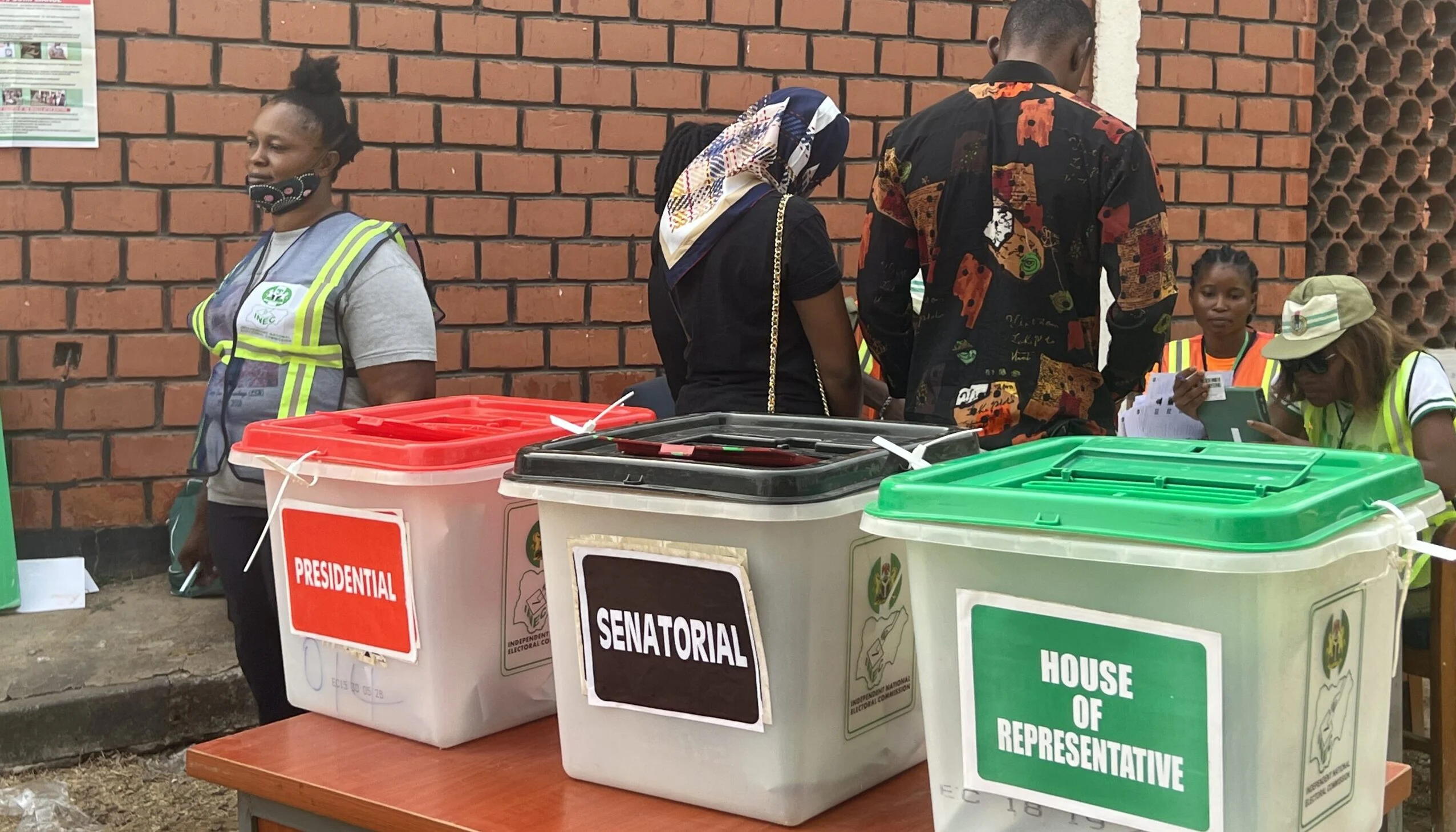
When Nigerians vote on 16 January 2027, they will be choosing a president to manage an economy whose central problem is older than most of the candidates’ careers. It is not a shortage of money. Since commercial quantities of oil were found at Oloibiri in 1956, the country has earned more from crude than almost any reasonable plan could have imagined. The problem, decade after decade, has been what happens to that money once it arrives.
A remark widely attributed to General Yakubu Gowon in the 1970s, that Nigeria’s problem was not money but how to spend it, is usually quoted as a joke against the oil boom. It deserves to be read as a diagnosis.
The boom that began in 1973 was spent almost entirely. When prices fell in the early 1980s, the country moved quickly from plenty to arrears, austerity and the long years of structural adjustment. The windfall from the Gulf crisis of 1990 and 1991 was spent through special accounts so poorly recorded that a panel chaired by Pius Okigbo later struggled to trace much of it.
The boom of 2011 to 2014, the highest sustained prices in our history, ended in the crash of 2014 to 2016 with the savings that should have cushioned it largely gone.

The brief era when Nigeria got oil wealth right
There was one partial exception, and it is the most useful thing a new government could study. Between 2004 and 2008, a fiscal rule set budgets on a deliberately low oil price and saved the rest in the Excess Crude Account. The account built up close to $20bn.
Part of that windfall helped pay for Nigeria’s release from its Paris Club debts in 2005 and 2006, and the savings helped the country absorb the global shock of 2008 and 2009 more smoothly than any earlier shock. For a few years, Nigeria did what Norway, Chile and Botswana have done. It saved in good years so that it could spend sensibly in bad ones.
Then the rule gave way. The account was drawn down heavily from 2009, and by the time oil prices collapsed in 2014 it held only around $2bn. The reason was not a lack of technical knowledge. It was political pressure, from governors, legislators and constituencies with urgent needs and short horizons, and a saving mechanism whose legal footing had been disputed from the start.
Nigeria later created the Fiscal Responsibility Act and the Nigeria Sovereign Investment Authority, and each has faced the same pressures.
The real test for the next president
This is the inheritance that awaits the winner in January. Nigeria’s difficulty has rarely been not knowing what to do. It has been doing it in the right order, with the means to check that it is being done, and with institutions strong enough to hold a government to its own rules when the money is flowing.
Norway’s petroleum fund is protected by no constitutional guarantee. It survives because of a clear rule, transparent reporting and a consensus across parties that the rule should be respected. That consensus is a political achievement, not a technical one.
Three questions are therefore worth putting to every candidate. First, what rule will you follow for saving oil revenue when prices are high, and who will be able to stop you breaking it? Second, how will you widen the tax base, so that government depends on the productivity of Nigerians rather than the price of crude? Nigeria’s tax-to-GDP ratio remains among the lowest in the world for a country of its size, and the tax legislation passed in 2025 is the most serious attempt in decades to change that. Third, how will you protect the institutions that have worked, when their success has so often depended on a single able leader and faded once that leader moved on?
None of this is a counsel of despair. The same history that records the squandered booms records a people of extraordinary resilience. Traders rebuilt after the civil war, farmers grew food through decades of policies that worked against them, and a generation of young Nigerians is building businesses across deficits that textbooks would say make enterprise impossible. Nigeria’s failures have not been failures of human potential. They have been failures of institutions, and institutions can be built.
The next president will not be the first to promise that this boom will be different. The question for voters is which candidate has a credible plan for making it so.
•Written By Tunde Akinmade
-

 News9 hours ago
Power supply to improve in 72 hours — Minister
-
Business9 hours ago
Borrowers drown in debt, loan apps battle defaults
-
Politics9 hours ago
Naira would have become worthless without reforms – Tinubu
-
World News9 hours ago
US offers $20m reward for info on ‘Iran’s nuclear program’
-
Metro9 hours ago
Police rescue 10 stolen children in Abia
-
Business9 hours ago
Tesla’s Cybertruck heads for exit as electric pickup loses market appeal
-
Business9 hours ago
Nigeria’s CNG drive gains mometum as 106 stations go live, attracting $2.6bn private capital
-
Business9 hours ago
Power outages deepen cost pressures for Nigerian businesses as growth slows