
News
Nigerian Judges Can’t Deliver Justice With Empty Pockets – Tinubu

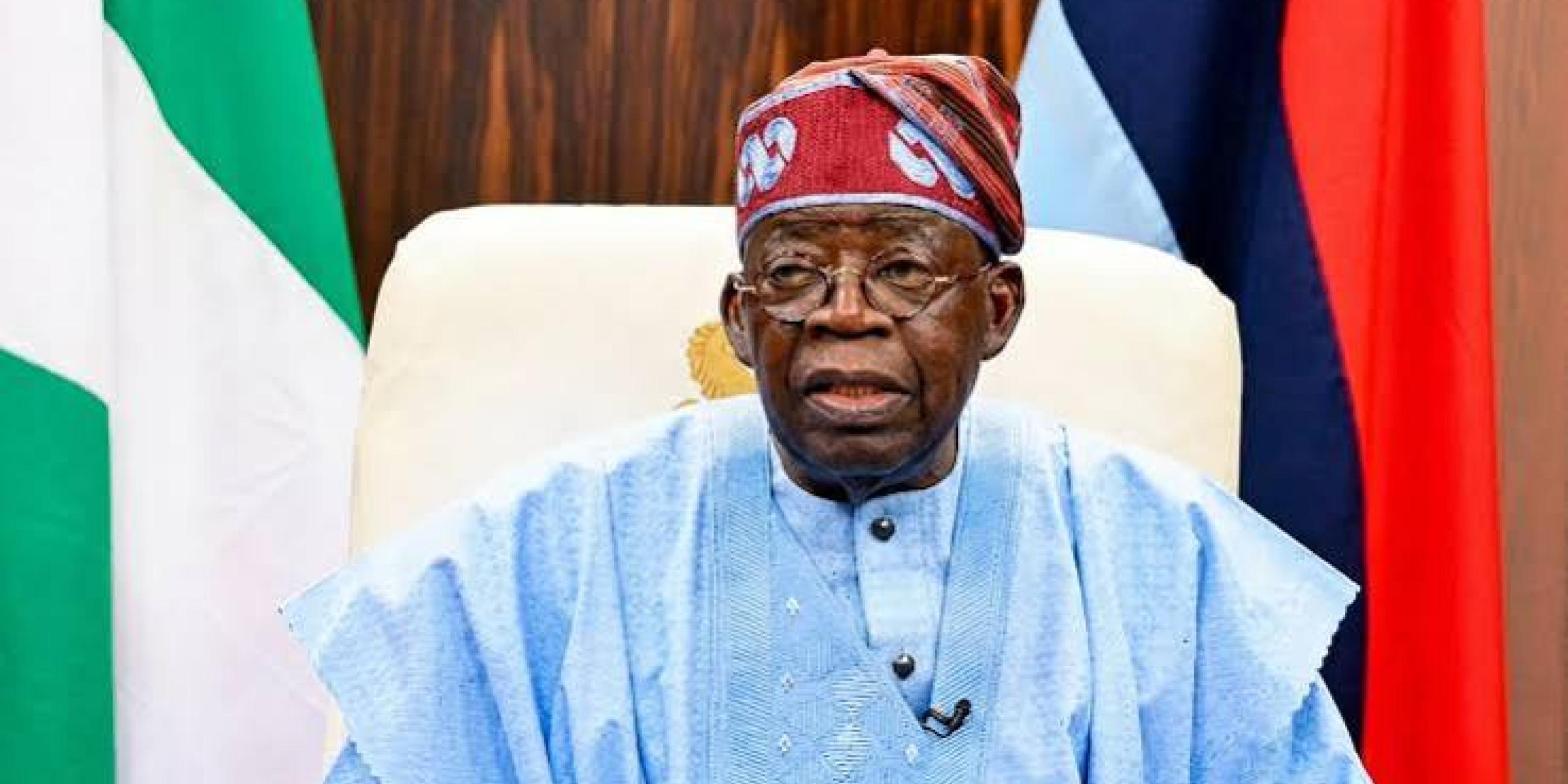
President Bola Tinubu has said judges cannot effectively dispense justice if they are financially disadvantaged, insisting that his administration respects judicial independence and court decisions, including those that go against the government.
Tinubu said judicial officers must enjoy financial security and institutional independence to perform their duties without fear or favour.
The President spoke through his Special Adviser on General Duties, Dr Moddibo Aliyu, at the presentation of a six-volume legal publication in honour of Senior Advocate of Nigeria (SAN), Wole Olanipekun, in Abuja.
“Our administration respects court judgments, even the ones we do not enjoy reading.

“We do not denigrate, attack or intimidate the judiciary. A government that bullies judges only weakens its own foundation,” Tinubu said
He argued that poor remuneration and inadequate welfare could undermine the ability of judges to discharge their responsibilities effectively.
“We cannot ask our judges to hold the scale of justice steady while their own pockets are empty,” he said.
Tinubu cited the Judicial Office Holders (Salaries and Allowances, Etc.) Act, 2024, which he signed in August 2024, as part of his administration’s efforts to improve the welfare of judicial officers.
The law provides for a 300 per cent increase in the salaries, allowances and fringe benefits of judicial officers, following years of complaints about inadequate remuneration and poor working conditions.
The President said the intervention was aimed at strengthening the justice system and improving public confidence in the country’s judicial institutions.
The event also marked Olanipekun’s 75th birthday, 50 years at the Nigerian Bar and 35 years as a Senior Advocate of Nigeria.
Tinubu’s assertion of respect for judicial independence comes against the backdrop of his involvement in several major constitutional disputes and legal battles spanning decades.
In November 1993, following the military takeover by the late General Sani Abacha and the dissolution of the National Assembly, Tinubu was among former senators who sought legal intervention against the action.
Olanipekun recalled at the event that Tinubu and some of his colleagues approached him and the late G.O.K. Ajayi, SAN, at he Lagos residence of the late Senator Odi Adewumi to institute a court action against the dissolution.
Although a suit was filed, Olanipekun said it was later withdrawn because of the prevailing circumstances under military rule.
Tinubu’s engagement with the judiciary became more prominent during his tenure as Lagos State governor between 1999 and 2007, when his administration challenged the Federal Government over constitutional powers and control of public funds.
One of the major disputes involved the creation of additional local government development areas by the Lagos State Government.
The administration of former President Olusegun Obasanjo subsequently withheld statutory allocations due to Lagos State’s 20 constitutionally recognised local government councils.
Tinubu’s government challenged the decision at the Supreme Court, which ruled in December 2004 that the President had no constitutional power to withhold the allocations.
In 2006, when the Oyo State House of Assembly removed Governor Rashidi Ladoja from office, Tinubu reportedly contacted Olanipekun to assemble a legal team to challenge the impeachment.
He reportedly warned that allowing governors to be removed through unconstitutional procedures could undermine the country’s democratic system.
The Supreme Court eventually upheld the judicial position nullifying Ladoja’s removal.
Since becoming President in May 2023, Tinubu’s administration has also approached the courts to resolve major constitutional disputes.
In July 2024, the Federal Government, through the Attorney-General of the Federation, challenged the 36 state governments at the Supreme Court over the financial autonomy of the 774 local government councils.
The apex court ruled in favour of greater financial independence for local governments, directing that allocations due to the councils should be paid directly to them rather than through state governments.
Tinubu’s administration has continued to highlight the 2024 judicial remuneration law as a major intervention to improve the welfare and working conditions of judicial officers.
The law covers the Chief Justice of Nigeria, Supreme Court justices, presidents of the Court of Appeal and National Industrial Court, judges of the Federal High Court, state high courts and other superior courts.
-

 Business20 hours ago
Kola Karim’s $10bn ambition: Building Nigeria’s answer to Tata
-
News20 hours ago
Constitutional lawyer alleges breach, heads to court to block State Police
-
Business20 hours ago
Naira slides to N1440/$ as foreign reserves shed $406m
-
Opinion19 hours ago
Living in bondage: Jimmy Odukoya and Lara Adeboye
-
News20 hours ago
FG suspends Lagos-Ibadan bridge work after 20-hour gridlock
-
Business20 hours ago
How Dangote’s highway spend de-risks his $14.3bn refinery expansion
-
Politics3 hours ago
Angry mob attacks Rarara, Tinubu’s praise singer, at National Mosque, Abuja
-
News19 hours ago
Patients running out of options, antibiotics not working against infections – WHO