
Politics
2027: Voter apathy looms as cost of living, violence still on the rise

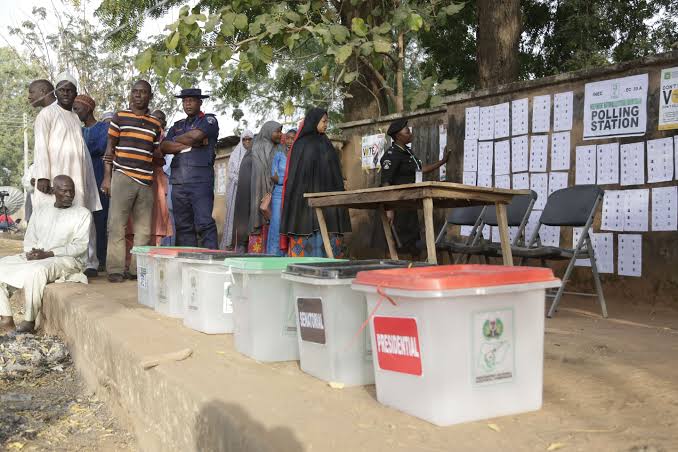
Latest reports of political violence and the rising cost of foodstuffs, transport fare, goods and services may be standing in the way of citizens as Nigeria marches toward the 2027 general election.
While those in power appear to be rolling out achievements, their opponents are making promises; however, the masses are complaining, no food on their table, they can’t enter some political campaign venues for fear of attacks. On the streets of Lagos, Kano, Enugu, Port Harcourt, Maiduguri and Jos, the dominant mood is not excitement. It is exhaustion, and increasingly, fear.
In an analysis published on November 11, 2026, and a DW report on November 18, 2026, ACLED researcher Raheem Mutiu reported that ACLED recorded more than 30 politically linked attacks targeting campaigns, candidates, supporters, convoys, and gatherings since campaigning began on August 19, 2026.
More worrisome is the fact that the attacks are spread across parties, any party risks being attacked, APC, ADC, NDC, PDP, have all recorded one form of attack or the other on their campaign trail. Peter Obi of NDC was attacked in Calabar, stopped from entering Benue. Party members killed in Delta, and shot at in Edo State. The ADC has once alleged of plans to assassinate its presidential candidate, Atiku Abubakar, which the government has denied.

The ruling party is already having her own share of the attacks. The president was booed in Kaduna, Plateau and Abuja. The party’s posters and billboards are being attacked in some parts of the country. Generally, violence is becoming widespread with obvious fatalities.
For millions of Nigerians, the coming election is not about who will win. It is about whether they can survive until then, and whether it is safe to even try to participate.
Two forces are now converging to produce something more threatening to democracy than rigging itself: rising cost of living and politically motivated violence. Together, they are pushing citizens toward mass political apathy.
Obi Anuonye, a legal practitioner, speaking on end result of political violence said that it would really dampen the enthusiasm of voters “Without doubt I think the political violence that has bedevilled the electioneering campaign will surely dampen the enthusiasm of voters in the 2027 general election.”
Sylvester Akhaine, a professor of Political Science, disclosed that there is a relationship between voter apathy and electoral violence. “Violence has a correlation to voters’ apathy. This cannot easily be controverted,” he said.
To understand the apathy, you must first understand the arithmetic of daily survival. A worker earning N70,000 minimum wage spends between N3,000 and N5,000 daily on transport in Lagos alone. That is N60,000 to N100,000 a month just to get to work. Food prices have more than doubled in two years. Rent in urban centres has become a yearly trauma. School fees, hospital bills, electricity tariffs and data costs have all risen, while incomes have remained largely stagnant.
In such an environment, politics becomes a luxury. When a mother must choose between buying a bag of rice and paying for transport to a PVC collection centre, she will choose rice. When a young graduate must choose between queuing for hours to register to vote and hustling for a daily N5,000 gig, he will choose the hustle.
This is not laziness. It is rational survival. But it is devastating for democracy because it hollows out participation from below, leaving the field open to those who can buy crowds, buy votes, and buy outcomes.
The Independent National Electoral Commission (INEC) has consistently lamented low voter turnout. In 2023, despite over 93 million registered voters, only about 27percent actually voted. If the cost of living continues on its present trajectory, 2027 may record an even lower turnout, not because Nigerians do not care, but because they are too tired to care.
Apathy does not exist in a vacuum. Where citizens disengage because of hunger, violence rushes in to finish the job. Nigeria is already witnessing a disturbing wave of politically motivated violence, months before the official campaign season peaks.
Martin Onovo, a former presidential candidate of the National Conscience Party (NCP), said that violence would surely scare people away from the polling boots.
“It will surely scare a few voters but I do not think it will be significant to the level of voter apathy. The current political tide for a ‘Ba ma yi’ change is very strong.
“However, we must not accept the violence. We must demand and insist that the violent ruling party and their thugs must be held accountable. We know the promoters of the violence because they are acting brazenly with impunity.
“We saw and know Fadahunsi of the ruling party. We know that the thug that was captured and killed in Asaba works for the ruling party. We know that the attack at the NDC event in Ughelli was led by thugs of the LG Chairman who belongs to the ruling party.
“We know that the thug that was captured during the attack on the NDC convoy in Calabar is a known thug of the ruling party.
“So, it is very clear that the ruling party is promoting political violence with impunity. Unfortunately, the mass media is unwilling to hold the ruling party accountable for the violence they are promoting” he said.
In Lagos, opposition candidates, including the National Rescue Movement (NRM) governorship candidate, have complained bitterly about systematic poster and billboard vandalism. Party chairpersons have had to petition the police over the destruction of campaign materials. It is not mere mischief. It is a deliberate strategy to erase opposition visibility.
In the South-East, reports of attacks on party meetings, threats to candidates, and destruction of campaign offices have become familiar. In the North-Central, especially Plateau and Benue, political rallies have been disrupted by armed groups, blurring the line between communal conflict and political intimidation.
In Rivers, Kano, Kaduna and Edo, the story is similar: campaign convoys attacked, supporters beaten, rival factions clashing over control of party structures, and voters threatened ahead of the actual polls.
This violence is not random. It is structural and strategic. Its purpose is clear: to send a message that politics is dangerous, and that ordinary people should stay away.
When the stakes of holding power are so high, and the cost of losing is total exclusion from state resources, politics becomes a do-or-die affair. Those who control the state control contracts, jobs, land, and security. Those outside control nothing.
For unemployed youths, that violence is also an economy. With no jobs, no living income support, and no social safety net, many young men become available for hire as political thugs. A politician who cannot offer a job can offer N10,000, a motorcycle, and a sense of belonging to a young man with no alternative. That young man then becomes the weapon used to tear down opponents’ posters, disrupt rallies, and scare voters away from polling units.
This creates a vicious cycle: high cost of living produces idle, angry youths; politicians weaponise those youths; violence drives more citizens away from politics; and with fewer citizens watching, politicians can loot even more, worsening the cost of living.
Nigerians have heard it all before. Every election cycle brings promises of jobs, cheap fuel, stable power, good roads, free education, and affordable healthcare. After the election, the same politicians who promised heaven disappear into convoys and gated government houses.
President Bola Tinubu’s Renewed Hope Agenda promised reforms that would bring short-term pain for long-term gain. For many Nigerians, the pain has arrived, but the gain remains a press statement. The removal of fuel subsidy and the floating of the naira were defended as necessary reforms, but the palliatives that were supposed to cushion the blow have not reached the majority.
When people cannot see the link between voting and their daily life improving, they stop believing in voting itself. Add violence to that, and the calculation becomes even simpler: Why risk my life to vote for people who will not change my life?
That is why the most dangerous slogan in 2027 may not be from any party, but from the streets: “All of them na the same.”
That slogan, if it spreads, is more powerful than any rigging machine. It convinces the honest voter to stay home, while the compromised voter, who has been paid or protected by thugs, goes out to vote.
What 2027 really needs
If Nigeria is to avoid a low-turnout, high-violence election in 2027, the conversation must shift from personalities to survival and safety.
Of course, INEC, the police and other security agencies must treat politically motivated violence not as a normal part of election season, but as a direct attack on democracy. Campaign material vandalism in Lagos, attacks on rallies in the North-Central, intimidation in the South-East and South-South must be investigated and prosecuted quickly and publicly. Without consequences, violence becomes the cheapest campaign strategy.
Second, political parties must move beyond infrastructure promises and speak to human living. A state that builds bridges while its people go hungry has missed the point. Policies like living income support, social housing, health insurance, and targeted cash transfers for the poorest households are no longer socialist fantasies. They are democratic necessities.
Third, the political class must reduce the cost of campaigning. When a governorship campaign costs billions of naira, the winner must recoup that money from the state treasury. That is why politics is violent, because it is an investment that must yield returns. Cheaper, issue-based campaigns would reduce both violence and corruption.
Finally, civil society, media, and religious leaders must rebuild the civic case for voting. Nigerians need to be reminded that apathy is also a vote, a vote for the status quo. Staying home does not punish politicians.
Femi Falana, Human Right lawyer, speaking on Channels Television’s Politics Today following deadly rally violence in Delta State blamed continued impunity and the failure to prosecute electoral offenders for fueling political violence, warning it threatens the 2027 election.
Discussions around rising 2027 pre-election tensions highlight “winner-takes-all” politics, call on security agencies to protect all parties and identify flashpoints early, and note that while politicians use intimidation to scare voters, many Nigerians remain determined to participate
Indeed, 2027 is not just another election. It is a referendum on whether Nigerians still believe that democracy can feed them and protect them.
If the cost of living continues to rise and politically motivated violence continues to be tolerated across the nation, millions will conclude that the ballot box is irrelevant and unsafe, and they will stay home. That silence will be louder than any campaign rally.
But if the political class can show, with concrete policies and credible actions, that voting can change the price of food, the cost of transport, and the safety of the streets, then Nigerians will return.
The choice is not between APC, PDP, LP or NRM. The choice is between a democracy that works for the living, and a democracy that only works for the few who can afford it, and the few who can intimidate the rest. (BusinessDay)
-

 News4 hours ago
Canadian agency stops accepting certificates from four Nigerian varsities
-
Politics16 hours ago
BREAKING: Lagos Senator Idiat Adebule Is Dead
-
Politics4 hours ago
How late Lagos senator collapsed during APC campaign
-
Opinion4 hours ago
Six questions seeking answers in 2027 presidential election
-
Politics4 hours ago
Opposition parties no longer exist – Tinubu
-
Politics15 hours ago
UPDATED: Lagos Senator dies after celebrating 56th birthday
-
Politics4 hours ago
Vote Tinubu now, do eight years later – Akpabio tells Ndigbo
-
News16 hours ago
Lagos is sinking, putting millions at risk of coastal flooding – Study