Business
Nigeria’s 2mbpd target remains elusive as theft trumps capacity

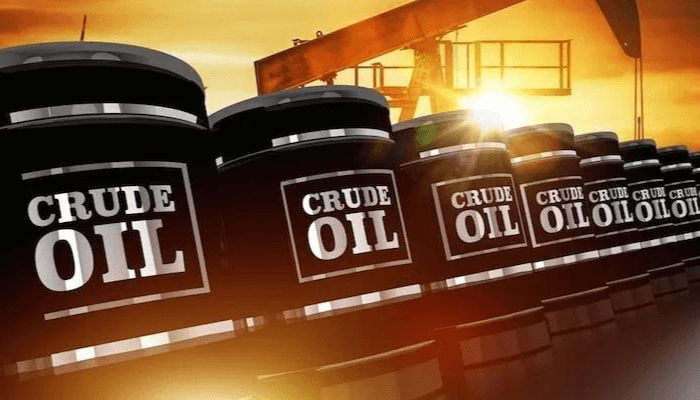
Nigeria’s crude oil production is projected to average about 1.7 million barrels per day (bpd) in 2026, marginally above its OPEC quota, but prospects of sustaining output above two million bpd remain slim, constrained less by reserves or capacity than by oil theft, pipeline vandalism and weak Niger Delta security, according to SBM Intelligence.
In its oil and energy sector outlook, SBM described the recovery as fragile and incremental rather than transformational. While recent improvements in pipeline availability and export-route security have lifted output modestly, structural security and governance failures continue to impose a hard ceiling on production.
Theft remains binding constraint
Nigeria has repeatedly shown it can produce more. Output climbed above 1.8 million bpd in July 2025, surpassing its OPEC quota of 1.5 million bpd.

However, maintaining those volumes has proved elusive as theft-related disruptions force shutdowns, delay repairs and undermine asset economics, particularly for onshore and shallow-water fields.
SBM identified theft as the binding constraint on production, noting that repeated pipeline breaches and the risk of re-vandalisation discourage reinvestment and accelerate decline.
“Gains will be limited by a lack of new major projects and persistent theft and vandalism,” the report stated.
This challenge is compounded by a thin upstream project pipeline, as most international oil companies, including Shell, ExxonMobil, Eni and TotalEnergies, have scaled back or exited onshore operations, while new offshore projects are not coming on stream fast enough to offset losses.
The economic toll is significant. A 2025 study titled “Oil Vandalism Cost and Economic Growth in Nigeria (1970–2022)”, by Sarah Agara et al., found that rising crude losses, repair costs, and theft have a long-term negative impact on Nigeria’s GDP, highlighting pipeline vandalism as both an operational and macroeconomic problem.
“Between 2010 and 2012, a total of 2,787 line breaks were reported on pipelines belonging to the Nigerian National Petroleum Corporation (NNPC), resulting in a loss of 157.81 mt of petroleum products worth about N12.53 billion,” the study stated
Security concerns also shape official targets. In July 2024, Christopher Musa, Chief of Defence Staff, warned that renewed agitations in oil-producing communities could derail production ambitions, even as the government targets an output of 2.1 million bpd.
“We are targeting 2.1 million bpd, which is achievable. So, we’re taking steps to ensure that all that is required to be done is done,” Musa said after a meeting with President Bola Tinubu, while acknowledging that community grievances remain a key risk.
What sustaining Niger Delta security requires
According to reports, Nigeria loses around 400,000 barrels per day, more than $10 billion annually, to oil theft and vandalism, and short-term military deployments and surveillance contracts are insufficient to sustain higher production.
A 2024 study titled ‘Curbing Oil Theft and Pipeline Vandalism in Nigeria’s Niger Delta: Copenhill, Denmark as a Blueprint’ by Uzoma Nwoke states that decades of militarised responses have failed, proposing community-centred security models that align local incentives with infrastructure protection.
Nwoke argues that “traditional top-down security measures, ranging from militarised task forces, have proven inadequate, since the problem persists unabated.”
He proposes experiential, community‑centred approaches inspired by Denmark’s Copenhill, where functional infrastructure is integrated with local engagement. Community-led surveillance, cultural forums, and festivals could foster trust and cooperation, aligning security with cultural and emotional incentives.
Existing efforts, such as the Federal Government’s engagement of Tantita Security Services in 2022, which reportedly recovered significant stolen oil volumes, show potential.
Nwoke cautions, however, that “genuine community ownership requires not only operational collaboration but co‑creating meaningful experiences that resonate with the host communities.”
Why security matters for investment
Investment is closely tied to these security outcomes.
“If Niger Delta security is maintained, production could consistently exceed 2 mbpd, attracting increased foreign interest via asset swaps and selective offshore investment,” the SBM report stated.
A 2025 study on insecurity and foreign direct investment (FDI) by Olorunsemi Akindoyo found a significant negative relationship between oil theft and FDI, identifying theft and attacks on oil workers as key deterrents. For context, Sectoral investment in oil and gas fell below $500 million in the first half of 2023, down from peaks above $22 billion in 2014.
Austin Avuru, executive chairman of AA Holdings, said Nigeria’s production ambitions are inseparable from investment realities. “Nigeria currently needs $25 billion annually to stabilise its oil production at 2 million bpd,” he said, pointing to years of underinvestment and security risks that have eroded capacity.
He added that prolonged divestments left the evacuation infrastructure under-maintained. “Most of the evacuation infrastructure fell into ‘no man’s land’, and the divesting IOCs stopped investing in their maintenance and surveillance.”
A fragile recovery
SBM Intelligence’s 2026 outlook suggested Nigeria is on a delicate path to recovery rather than a return to past highs. Production may edge above quota, but sustaining output beyond 2 million bpd depends on durable security and governance reforms in the Niger Delta. (BusinessDay)
-

 News20 hours ago
Edo Assembly Rejects Speaker Agbebaku’s Resignation, Impeaches Him
-
World News15 hours ago
I’ll Be Impeached If I Lose The Midterms- Trump
-
News20 hours ago
‘Phantom’ Agency: ‘Court Order Protects Us’ — DG Marked For Arrest Speaks
-
Business20 hours ago
Otedola increases investment in First HoldCo to N1.61trn with N12bn share acquisition
-
News16 hours ago
Oyo govt condemns exclusion of Makinde from Ibadan-Ijebu-Ode road flag-off
-
News15 hours ago
Even Enemies Will Testify Lagos-Calabar Highway Is Tinubu’s Best Gift — Umahi
-
Politics19 hours ago
BREAKING: Obi backs subsidy removal, says mismanagement of proceeds not enough to bring it back
-
Sports24 hours ago
Four arrested over boxing champion’s murder in South Africa