News
Wale Edun loses ground in Tinubu’s Finance Ministry reset

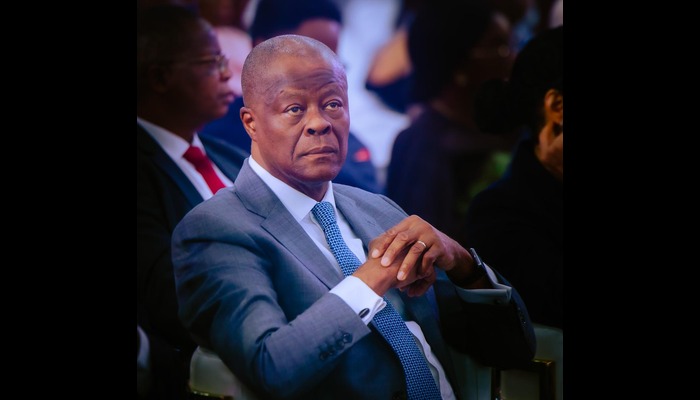
President Bola Tinubu has ordered a massive reset of responsibilities within Nigeria’s Federal Ministry of Finance, stripping key revenue-generation and cash management functions from Wale Edun, Finance Minister and Coordinating Minister of the Economy, and transferring them to Doris Uzoka-Anite, the Minister of State for Finance.
The presidential directive, conveyed in a memo from the presidency dated Wednesday, December 10, marks one of the most significant internal reorganisations of Nigeria’s fiscal architecture in years.
Its immediate effect is to curtail Edun’s authority over revenues, debts and payments at a time when the federal government is grappling with a deepening cash squeeze.
The shake-up comes against the backdrop of a sharp revenue shortfall in 2025, despite repeated public assurances by revenue agencies that targets had been exceeded– claims now widely disputed. Nigeria has slipped into what senior officials privately describe as “cash management crisis mode”, with delayed payments across government and mounting concern at the presidency over the state of federal finances.

In response, Tinubu has handed Uzoka-Anite sweeping powers to urgently identify ways to shore up federal revenues. Since last week, the minister of state has embarked on a comprehensive review of government cash balances, payment obligations and revenue flows. She has held meetings with the heads of the Debt Management Office, Nigeria Customs Service, cash management units, home finance and technical services, according to officials briefed on the process.
She has also opened talks with the Nigerian National Petroleum Company (NNPC) to press for improved revenue delivery, while President Tinubu has directed the Attorney-General to work with her on tightening oversight of the state oil firm.
Still, without a sustained lift in crude output and a reduction in leakages, the oil revenue outlook for 2026 remains fragile.
The objective, a senior government official told BusinessDay, is to develop clearly defined measures to improve the federal government’s cash position within the next 90 days.
While some officials see potential upside in the restructuring, the transition has also introduced confusion across government. Civil servants and private-sector counterparties accustomed to dealing with Edun for payment approvals are now being redirected to the minister of state, raising questions over authority and accountability.
Critics argue the turmoil is partly self-inflicted. By separating the Budget Office from the Ministry of Finance– a structure introduced under former president Muhammadu Buhari and later reversed– Tinubu has revived a system many economists say weakens fiscal discipline. The split has resurfaced amid an emerging fiscal crisis the government is now struggling to contain.
“Not only should the budget ministry be merged back with finance, Nigeria needs to move towards zero-based budgeting,” said one economist. “Diffusing authority and line of sight over fiscal data across institutions makes poor execution and bad behaviour more likely. The current crisis reflects that disconnect.”
Investigations by BusinessDay show the split has also complicated oversight of import duty waivers. While approvals for Import Duty Exemption Certificates are granted by the finance ministry, they are often not reconciled with budget assumptions. Since 2020, import waivers worth about N3.6 trillion remain outstanding.
Another pressure point is the federal government’s Service-Wide Vote, a legal but controversial budget line that allows discretionary funding for new projects with presidential approval. By year-end 2025, requests under this window are expected to reach about N15 trillion, officials said, forcing the finance ministry to seek prioritisation guidance from the presidency, with the remainder likely to be rejected.
“The system is riddled with structural enablers of poor budgeting,” one senior official said. “Anyone can propose projects under the intervention window and expect funding. States have used it relentlessly. Federal examples include initiatives like the compressed natural gas programme.”
Uzoka-Anite, who trained as a medical doctor before qualifying as a Chartered Financial Analyst, brings extensive financial-sector experience to the expanded role. She previously served as group treasurer at Zenith Bank and as commissioner for finance in Imo State. (BusinessDay)
-

 News16 hours ago
Tragedy Averted As Private Jet Loses Door Mid-Air
-
Metro15 hours ago
Anglican Church suspends Archbishop ‘with immediate effect’ over alleged misappropriation of N2 billion
-
Business16 hours ago
Importation, Insecurity Threaten Nigeria’s Food Sufficiency
-
Politics4 hours ago
2027: ADC campaign accuses Kwankwaso of working for Tinubu
-
Politics4 hours ago
2027: Tinubu afraid to face Nigerians – ADC
-
Business15 hours ago
Households lament as sachet water hits N500 per bag in Lagos
-
Metro16 hours ago
Two DPOs suspended in Rivers over renovation of police outpost by suspected cultists
-
Politics16 hours ago
Tinubu Appoints 4 INEC National Commissioners, 2 RECs