Business
Holiday demand tests national grid as gas supply tightens

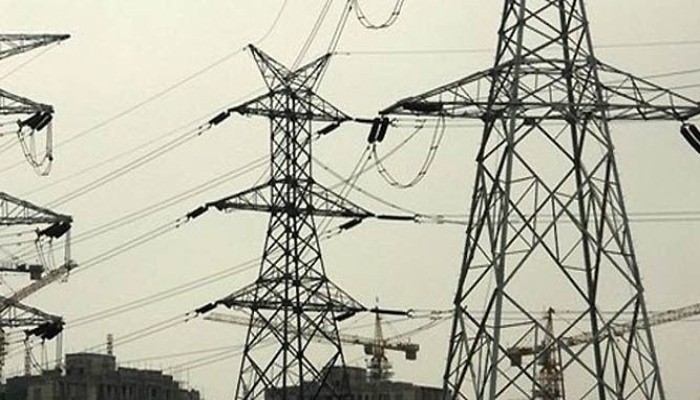
Nigeria’s national grid is buckling under pressure as fresh gas supply constraints curtail power generation across Africa’s most populous country, leaving millions without reliable electricity during the holiday season when demand typically peaks.
The situation worsened Tuesday when the Nigerian National Grid confirmed that generation companies are grappling with gas supply shortages, limiting their ability to maintain optimal output and operational frequency.
The disclosure comes as distribution companies (DisCos) across the country’s southern regions implement aggressive load-shedding measures to prevent a complete system collapse.
“GenCos are experiencing gas supply constraints affecting their optimal output and general operational frequency,” the National Grid stated in a post on X, formerly Twitter, underscoring the severity of a problem that has plagued Africa’s largest economy for decades despite its status as the continent’s biggest gas producer.

Industry players linked gas outages to the December 10 explosion incident at Escravos–Lagos Pipeline System (ELPS) in South West Warri, Delta State.
“The explosion on the ELPS in Delta state has impacted the ability of GenCos connected to the pipeline to get gas for power generation,” said a senior executive manager in a power company.
On Tuesday, the Enugu Electricity Distribution Company (Enugu DisCo), which serves the South-East through five subsidiary companies, including MainPower and TransPower, warned customers that reduced power allocation from the Transmission Company of Nigeria (TCN) has directly impacted service quality.
The measures have directly reduced power allocations to distribution companies, diminishing the volume and quality of electricity available to millions of customers across states, including Enugu, Anambra, Ebonyi, Imo, and Abia.
“The recent drop in power supply availability is due to low system frequency, occasioned by gas constraints affecting the Generation Companies. This development has necessitated the load shedding of available energy by the Transmission Company of Nigeria,” said Emeka Ezeh, head of Corporate Communications at Enugu DisCos.
In southern Nigeria, Port Harcourt Electricity Distribution attributed current outages to poor generation and allocation from power producers and grid operators.
The company, which serves Rivers, Bayelsa, Cross River and Akwa Ibom states – the heart of Nigeria’s oil and gas producing region- urged customers to exercise patience while generation companies work to improve output.
“Kindly be informed that the current load shedding being experienced in all our franchise areas is a result of poor generation and allocation from the generating company and NCC,” Port Harcourt DisCos said.
“We appeal to our esteemed customers to exercise patience as the GENCO team is working assiduously to improve generation and allocation. All inconveniences are regretted.’’
Voices from darkness
The technical explanations offer cold comfort to Nigerians enduring the harsh reality of power failures during what should be a festive season.
Chioma Nwosu, a restaurant owner in Ikoyi, said the outages have decimated her holiday business.
“We’ve had maybe six hours of power in the last three days,” she said, watching her generator gulp through diesel that now costs more than the food she’s selling. “Christmas orders are piling up, but I can’t keep my freezers running. I’ve lost thousands in spoiled ingredients.”
In Ikeja, an affluent GRA neighbourhood, Tunde Adeyemi, a software developer, has abandoned attempts to work from home. “The power situation has made remote work impossible,” he said on X. “Even when I have generator power, the internet is unreliable because the providers’ base stations are also affected. It’s like we’ve gone back 20 years.”
Small manufacturers are feeling the squeeze most acutely. Patience Okonkwo runs a small textile printing business in Shomolu, Lagos, and employs eight workers. “We’ve sent people home early four times this week,” she said. “No power means no production. These are seasonal orders we’re losing, they won’t come back in January.”
The timing couldn’t be worse. December traditionally sees electricity demand spike as businesses ramp up for year-end operations, families host gatherings, and urban dwellers return home bearing electrical appliances as gifts. Air conditioning units run continuously in Nigeria’s tropical heat, while cold storage for perishable holiday goods strains available capacity.
“We have the gas, but we can’t get it to the plants reliably,” said Aisha Mohammed, an energy analyst at the Lagos-based Centre for Development Studies.
“The infrastructure is inadequate, the pricing mechanisms don’t incentivise domestic supply, and the payment chain is broken. Generation companies can’t pay gas suppliers because distribution companies can’t collect from consumers because the tariffs don’t reflect costs.”
The World Bank estimates that Nigeria loses roughly $29 billion annually, about two percent of GDP, due to unreliable electricity supply.
“Every business in Nigeria essentially operates two power systems, the grid and their backup,” Mohammed said. “During the holiday season, when you should be maximising output, you’re instead maximising costs on diesel and generator maintenance. It’s unsustainable.”
Infrastructure under strain
The crisis exposes a fundamental contradiction in Nigeria’s energy sector: the country holds Africa’s largest proven natural gas reserves at approximately 209 trillion cubic feet, yet domestic gas supply for power generation remains chronically inadequate.
Industry analysts point to a constellation of structural problems that prevent gas from reaching thermal plants consistently.
Poor infrastructure tops the list of constraints. Pipeline networks suffer from decades of underinvestment, with aging facilities vulnerable to ruptures and efficiency losses.
Security challenges compound infrastructure weaknesses, as vandalism and theft along gas transmission routes disrupt supply chains. In the Niger Delta, militant activities and community disputes have periodically shuttered production facilities and damaged critical pipelines.
The absence of robust take-or-pay contracts, where buyers commit to paying for minimum gas volumes whether delivered or not, leaves gas producers with insufficient revenue certainty to justify infrastructure investments.
Meanwhile, domestic gas pricing regulations have historically kept prices below market rates, discouraging producers from prioritising local supply over more lucrative export opportunities through liquefied natural gas facilities.
Payment failures throughout the electricity value chain create additional friction. Generation companies often struggle to pay gas suppliers because distribution companies fail to remit revenues collected from consumers, who themselves face irregular billing and arbitrary charges. This cycle of dysfunction leaves the entire system financially constrained and operationally compromised.
For ordinary Nigerians, the technical explanations matter little.
“We’re told to be patient,” said Tunde Adelakun, a supplier of frozen food based in Ijegun, Lagos, told BusinessDay. “But patience won’t keep my food fresh or my children comfortable. This is supposed to be the 21st century, not the Stone Age.
Nigeria’s national grid is buckling under pressure as fresh gas supply constraints curtail power generation across Africa’s most populous country, leaving millions without reliable electricity during the holiday season when demand typically peaks.
The situation worsened Tuesday when the Nigerian National Grid confirmed that generation companies are grappling with gas supply shortages, limiting their ability to maintain optimal output and operational frequency.
The disclosure comes as distribution companies (DisCos) across the country’s southern regions implement aggressive load-shedding measures to prevent a complete system collapse.
“GenCos are experiencing gas supply constraints affecting their optimal output and general operational frequency,” the National Grid stated in a post on X, formerly Twitter, underscoring the severity of a problem that has plagued Africa’s largest economy for decades despite its status as the continent’s biggest gas producer.
Industry players linked gas outages to the December 10 explosion incident at Escravos–Lagos Pipeline System (ELPS) in South West Warri, Delta State.
“The explosion on the ELPS in Delta state has impacted the ability of GenCos connected to the pipeline to get gas for power generation,” said a senior executive manager in a power company.
On Tuesday, the Enugu Electricity Distribution Company (Enugu DisCo), which serves the South-East through five subsidiary companies, including MainPower and TransPower, warned customers that reduced power allocation from the Transmission Company of Nigeria (TCN) has directly impacted service quality.
The measures have directly reduced power allocations to distribution companies, diminishing the volume and quality of electricity available to millions of customers across states, including Enugu, Anambra, Ebonyi, Imo, and Abia.
“The recent drop in power supply availability is due to low system frequency, occasioned by gas constraints affecting the Generation Companies. This development has necessitated the load shedding of available energy by the Transmission Company of Nigeria,” said Emeka Ezeh, head of Corporate Communications at Enugu DisCos.
In southern Nigeria, Port Harcourt Electricity Distribution attributed current outages to poor generation and allocation from power producers and grid operators.
The company, which serves Rivers, Bayelsa, Cross River and Akwa Ibom states – the heart of Nigeria’s oil and gas producing region- urged customers to exercise patience while generation companies work to improve output.
“Kindly be informed that the current load shedding being experienced in all our franchise areas is a result of poor generation and allocation from the generating company and NCC,” Port Harcourt DisCos said.
“We appeal to our esteemed customers to exercise patience as the GENCO team is working assiduously to improve generation and allocation. All inconveniences are regretted.’’ (BusinessDay)
-

 News20 hours ago
Fire Service CG’s Massive Convoy Sparks Reactions
-
News20 hours ago
‘No Worshipper Was Rescued’, Kaduna Community Counters Army
-
Metro20 hours ago
Rivers: One Killed As Rival Cult Factions Clash Over Girlfriend
-
News19 hours ago
Banditry weakening Nigeria’s state structure — Report
-
Politics3 hours ago
INEC Plotting To Block Our 2027 Candidates – ADC
-
News3 hours ago
Fresh Killings: Suspend Rhetoric, Get To Work – Atiku Tells Tinubu
-
 News3 hours ago
Tinubu To Commission Six Projects In Lagos
-
Politics19 hours ago
Kwankwaso welcomes ex-Kano deputy gov Gwarzo into ADC