News
Inside the N1.6bn UNILAG hostel that became part of crisis it was built to solve

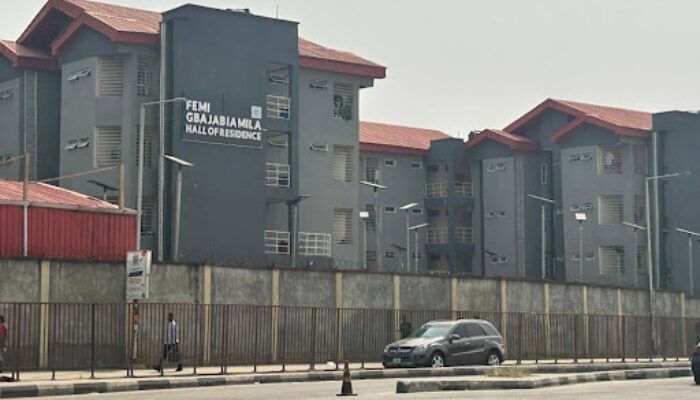
A N1.6 billion federal government hostel built to ease the student accommodation crisis at the University of Lagos is now priced at nearly N1 million per bed space, placing it out of reach for many of the students it was meant to help. BusinessDay Investigations reveals how a project meant to solve a crisis became part of it. YOUSUPH ADEBAYO writes.
When Chinedu Obote got admission to study Economics at the University of Lagos (UNILAG), the then 17-year-old believed the hardest part of studying in one of Nigeria’s prestigious universities was behind him.
His parents had travelled with him from Enugu State, pending the time he would quickly secure a bed space in one of the hostels inside the university.
Their hopes were quickly dashed when Obote could not secure an accommodation inside the University through the balloting for space – this marked the beginning of their troubles.

For weeks, Obote and his parents scouted parts of Akoka and Bariga, in search of vacant rooms. Many of them had already been taken by returning students. The few available spaces were either overcrowded or far more expensive than the family could afford.
“Some landlords asked for N450,000 for a bedspace in one small room to be shared with two other students. My father shook his head. Comfort aside, we just couldn’t afford it,” says Obote.
Obote’s last resort was to settle for a distant uncle’s house in Egbeda, a suburb in Lagos, 25 km away from the main campus of the university.
Every morning, he wakes up by 5 a.m. to prepare for the commute to campus. The journey takes about 1.5 hours on days when traffic is relatively mild. During heavy traffic, he spends two hours or more on the road, trying to get to school.
“You don’t even know the system yet. So, you’re scared of falling behind. Sometimes I arrive when the class has already started. Some lecturers will not allow late students into the lecture hall the moment they start. So, you just stand outside and wait for the next class,” he said.
The cost of transportation to and from campus was also taking a heavy toll on him.
“I spend roughly N8,000 on transport every day to get to campus and come back. And I have often had lectures for four days a week or even five. That is N40,000 on transport every week. So, sometimes, all I’m thinking about is not even reading but how to manage transport for the week,” he admitted.
Obote added that this cost often competes with his academic needs. He continues to manage the challenges of living off campus and balancing long commutes while trying to keep up with his academic performance.
Students pay three times their tuition for hostel accommodation
Obote is not alone in this ordeal; this is a challenge faced by several other students in UNILAG.
For Williams Motunrayo, a 400-level Physics student, her off-campus hostel accommodation now exceeds the cost of her tuition itself.
She pays N220,000 as tuition each academic session, but this is less than the cost of a bed space in her hostel room, which she shares with five other students, at the cost of N700,000, more than three times her tuition.
For this amount, she gets a bed space, a locker, a table and chair, and access to a shared bathroom used by all six occupants, each of them paying N700,000.
Recalling when she was scouting for accommodation after losing out on the institution-run hostels on campus, she said, “I couldn’t believe it. How is it possible that rent is more than what I pay for school fees?”
Another student of the school, Damilare Ibiyemi, who lives in the Onike area in Lagos, said he pays almost the same amount for accommodation.
Due to the possibility of losing the bed space to other students who are equally searching for available spaces, he explained that paying for his hostel often takes priority over other expenses, including tuition.
Ibiyemi pays N700,000 for a bed space in a room shared by four other students – that is more than three times his tuition fee of N230,000.
He noted that delays in payment are risky, as landlords and house agents quickly replace students who cannot pay on time with others eager to secure the space.
Just like Williams and Ibiyemi, BusinessDay gathered that many more students of UNILAG are paying more for a roof over their heads than for the education they came to pursue.
For years, the accommodation crisis at UNILAG has been largely driven by a widening gap between the university’s student population and the available hostel facilities.
According to official records, the institution currently has a total student population of about 52,000, while it admits 9,000 students annually.
Over the years, the university operated twelve halls of residence. For its male students, it has five halls of residence. While the institution houses its female students in seven halls of residence.
Despite this, only a fraction of the growing student population could be accommodated in these halls of residence. These facilities collectively provide fewer than 8,000 bed spaces, which is far short of the demand from students.
In 2019, the immediate past Vice-Chancellor of the University of Lagos, Professor Oluwatoyin Ogundipe, sought the intervention of one of its alumni, the then-Speaker of the House of Representatives, Femi Gbajabiamila.
The management of UNILAG wanted the former Speaker, who went on to become the Chief of Staff to President Bola Tinubu, to assist the institution in resolving the persistent accommodation infrastructure crisis and the academic, financial and welfare strain it imposes on its students.
In 2020, a Zonal Intervention Project was approved to construct a 484-bed hostel to ease the troubles of UNILAG students, who have had to pay through their noses for half-decent hostel accommodation within the university.

Built with public funds, rented out as a commercial private hostel
Branded as a donation from the former Speaker, Gbajabiamila and named after him, with his sculpture greeting every student at the entrance, the hostel offers two types of accommodation: single-occupancy and four-man en-suite rooms.
Officially titled the ‘Construction and Furnishing of a 484-bed Landmark Student Hostel at the University of Lagos’, it was included in the Zonal Intervention Project (ZIP) Appropriation Act of 2020, with a total allocation of N1.6 billion for its construction.
The hall was commissioned on January 3, 2024, by the Speaker of the House of Representatives, Tajudeen Abbas, who represented his predecessor, Gbajabiamila.
However, to the disappointment of many students, the newly constructed hostel did not function as a government-funded project; it was just another commercial enterprise.
“When they were commissioning it, I really thought this would be a huge relief, but that wasn’t the case. The cost of a bed space there is as expensive as other private hostels. We could even get some that are cheaper than what they are charging at Gbaja Hall,” says Jude Egbas, a Law student who has been squatting with his friends for two semesters.
Businessday Investigations found that students living in the Femi Gbajabiamila Hall of Residence pay N950,000 per session for a single-occupancy room while occupants in a four-man room each pay N710,000. This amounts to N2,840,000 for every four-man room in the facility.
Findings by BusinessDay Investigations showed that this price is no different from the cost of obtaining a bed space in privately-owned hostels within the university.

Our correspondent spoke to students who live in private hostels within the university, such as the UNILAG Women Society (ULWS) Hostel, an exclusive female private hostel with similar facilities to Femi Gbajabiamila Halls of Residence.
At ULWS Hostel, a single-occupancy room and a four-man room also go for N950,000 and N700,000 respectively, marking no significant difference between a commercially-run accommodation enterprise and a publicly-funded Zonal Intervention Project meant to be for the benefit of students.

By comparison, students staying in older university-managed hostels such as King Jaja Hall, Mariere Hall, Saburi Biobaku Hall, Sodeinde Hall, Madam Tinubu Hall, among others, pay N80,000 for a bed space.
BusinessDay Investigation also observed that in its notice to students on the balloting allocation of hostel accommodation, UNILAG classifies the Femi Gbajabiamila Hall of Residence with other private hostels, including ULWS and El-Kanemi Hall.
A breakdown of the pricing structure suggests the facility operates on a revenue model comparable to private hostels. With 484 bed spaces and charges ranging from N710,000 to N950,000 per occupant, the hostel could generate about N300 million annually if fully occupied. This raises questions about whether a publicly funded student welfare project is being run as a commercial enterprise.
Many parents whose children struggle with UNILAG’s hostel accommodation crisis bemoan the high cost of the government-funded hall of residence.
They call into question the essence of a constituency project, as ZIPs are more commonly referred to, that does not ease the burden of the public it was executed for.
For Tawakaltu Raji, a single mother of a 300-level Mechanical Engineering student, Mariam Raji, the pain runs deeper.
Raji is a member of several women-led political support groups for the former lawmaker, Femi Gbajabiamila, across Surulere federal constituency.
Knowing how badly affected her daughter is by the crisis, both of them were thrilled when news of the hostel as a ‘constituency project’ in UNILAG broke. But that excitement vanished when her daughter made further inquiries about the cost of securing a space there.
“Before we knew the cost, she would boast to me that the politician and political party she supports is extending the dividends of democracy to the common man, and I was about to benefit from that.
“After I told her the cost, she said, I guess the constituency project is not for people like us,” Raji says.
Commercially operated, maintained with public funds
Further look into budgetary allocations by BusinessDay Investigations reveals that, beyond the initial N1.6 billion allocated for the construction of the project in the ZIP Appropriation Act of 2020, successive budgetary allocations have been made for the maintenance of the Femi Gbajabiamila Hall of Residence.
In the 2024 budget, the sum of N247,963,258.79 and another N250,000,000 were allocated for the ‘provision of additional facilities and maintenance of Femi Gbajabiamila Hall of Residence, University of Lagos’.
While both budget lines bear the same heading, the executing agencies listed for them were different. The Project Development Institute, Enugu, was named for the former and the Federal College of Fisheries and Marine Technology, Lagos, was listed for the latter.
These allocations indicate continued federal involvement in the maintenance of the facility even after its completion.
Public infrastructures should prioritise public benefit
A public finance and governance advocate, Deborah Folorunsho says the pricing of UNILAG’s Gbajabiamila Hall of Residence reflects a pattern of what she describes as the growing commercialisation of publicly funded infrastructure in Nigeria, warning that the trend risks undermining the core purpose of government interventions.
Speaking to BusinessDay Investigations, Folorunsho said projects financed with taxpayer funds are expected to prioritise accessibility and public benefit, not operate on pricing models comparable to private investments.
“When infrastructure built with public funds is priced at market or near-market rates, it raises fundamental questions about equity and intent. The objective of government spending, particularly in education, is to expand access, not to create premium services that exclude a significant portion of the population,” Folorunsho noted.
According to her, while cost recovery and maintenance are legitimate considerations, they must be balanced against the social responsibility of public institutions. She added that such practices could gradually redefine expectations around public goods, especially in federal universities where affordability is central to access.
“There is a difference between sustainability and commercialisation. If the cost structure at the Gbajabiamila Hostel, effectively mirrors that of privately funded hostel facilities, then the line between public service and private enterprise becomes blurred.
Some of the students at the University of Lagos who spoke to BusinessDay said they initially justified the cost of accommodation at the Gbajabiamila Hall of Residence because they believed the facility was privately funded, an impression they linked to its naming.

“Many of us believed it was a donation from the former Speaker. That’s why we refer to the hostel as ‘Gbaja’. It’s even the reason some students felt the cost was justified. Because, if it’s a gift from him, then the cost of living there would understandably be the prerogative of the donor and maybe the school management,” says Egbas.
Zonal Intervention Projects are federally funded initiatives. They are nominated by members of the National Assembly to address development needs in their constituencies. Under Nigeria’s public finance system, ZIPs are funded through budget appropriations and executed by government agencies. Lawmakers who nominate or ‘facilitate’ these projects do not legally own them.
“Constituency projects are not personal projects of lawmakers. They are funded with taxpayers’ money and should be treated as public assets. The role of legislators is facilitation, not ownership. This distinction is critical,” says Yinka Otuduyo of civic tech organisation, BudgIT.
Odutuyo noted that the practice of naming ZIP projects after lawmakers who facilitated them blurs the line between public service and personal legacy-building. He added that while the practice is widespread, it operates in a grey area where law, ethics, and political norms intersect.
“This culture of naming a constituency project after the lawmaker who nominated it creates a false narrative of ownership. The funds are from taxpayers, but the naming makes it seem like a gift from a politician,” he explains.

Nigeria’s Public Procurement Act 2007 governs how public projects are awarded and executed. The law emphasises transparency, competitive bidding, and value for money allocated for such projects.
However, the Act does not explicitly address how completed projects should be named.
Speaking with BusinessDay, Moji Adamolekun, a public policy advisor at the Policy and Legal Advocacy Centre, says the absence of explicit rules on the naming of projects does not mean the practice is without consequence.
“When a government project is branded around a politician, it blurs responsibility. When something goes wrong, say with the management or maintenance of the project, the public often doesn’t know if they can or if they should hold anyone accountable since the project has been branded as a donation from the political facilitator,” says Adamolekun.
Adamolekun noted that the Procurement Act of 2007 needs to be reviewed with set guidelines on the naming of federally funded projects, attribution standards for facilitated interventions and public communication of project ownership.
“Public infrastructure should reinforce the idea of collective ownership, not individual credit. Citizens need to clearly understand that these are their projects. That clarity is key to understanding the essence of the project as a social amenity and demanding accountability where necessary,” she noted.
Hostel fees are at the discretion of management – UNILAG
When contacted, Olayinka Omotola, an official of the University of Lagos Communications Unit, said hostel fees and accommodation policies remain within the administrative authority of the university management.
According to Omotola, decisions regarding hostel allocation, pricing, and related policies are determined by the institution’s governing structures based on prevailing operational realities.
“Hostel accommodation in the university is limited, and the management has the discretion to determine the fees and conditions attached to it. These decisions are made after considering maintenance costs, utilities, security, and other administrative expenses required to keep the facilities functional,” he said.
Pressed further on the cost of accommodation at the Gbajabiamila Hall of Residence, strikingly at par with that of private hostels in UNILAG, Omotola argued that the cost of maintenance of the facility justifies the price rate.
“If you look at the available facilities in Gbaja, you can’t compare them to other hostels. The amenities at Gbaja need to be maintained. That’s why the cost is different from that of other school hostels,” he noted.
When our correspondent reiterated the significance of the hostel as a Zonal Intervention Project aimed at easing the accommodation crisis in UNILAG, as against being a profit-making project, Omotola declined to comment further. He noted that clarification on that would be better attended to by the Dean of Student Affairs.
Efforts by BusinessDay Investigation to contact Professor Musa Babalola, the Dean of Student Affairs at UNILAG, proved abortive, as repeated calls to his phone line went unanswered.
Gbajabiamila silent on commercialisation of constituency project
Meanwhile, efforts to obtain a response from Femi Gbajabiamila, the Chief of Staff to the President and facilitator of the Femi Gbajabiamila Hall of Residence project, were unsuccessful.
Our correspondent reached out to his office through multiple phone calls and messages seeking clarification on the pricing structure of the hostel and the objectives of the federally funded intervention.
However, as of the time of filing this report, no response had been received yet.
Further attempts to obtain comments from aides in his office also did not yield any response.
As students continue to pay more for accommodation than for tuition, it is still unclear how a taxpayer-funded intervention designed to ease hardship evolved into a system that mirrors the very market it was meant to correct. (BusinessDay)
-

 News22 hours ago
SSS breaks into Malami’s residence, disperses occupants amid Atiku’s visit to embattled ex-attorney general
-
News22 hours ago
BREAKING: IGP Disu Redeploys Police Commissioners, Ezima Heads Cybercrime Centre, Ehindero To FCID Admin
-
News24 hours ago
Terrorists Bomb Niger Bridge To Slow Down Troops Operation
-
News24 hours ago
Many feared dead as explosion rocks Kwara community
-
Social Media News23 hours ago
OnlyFans owner Leonid Radvinsky dies of cancer at 43
-
Metro22 hours ago
I was lured with food, money, Baba Ijesha rejects paedophile tag
-
Politics7 hours ago
Hamzat, Yayi, Alli may emerge APC consensus gov candidates
-
News24 hours ago
Baruwa unseats MC Oluomo as NURTW president, takes control of secretariat