Politics
2027: Tension between Tinubu and opposition awakens the ghost of Abacha

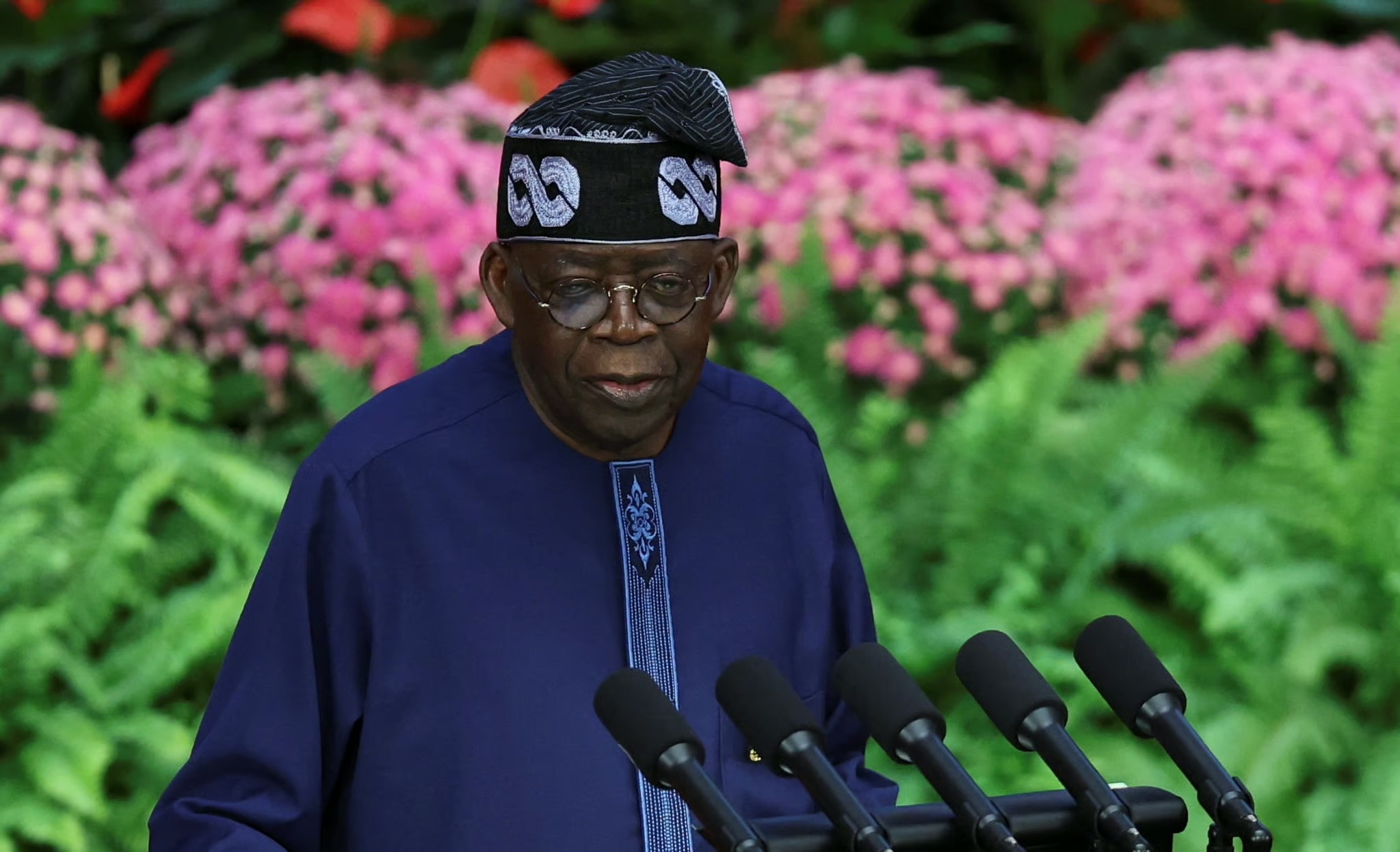
Nigerian dictator Sani Abacha’s name has resurfaced in heated exchanges between the opposition and President Bola Tinubu’s camp last week, triggered by deepening crises in the opposition parties, just months before the next election.
At the centre of the storm is the African Democratic Congress (ADC), which has emerged as the platform for a coalition of opposition figures seeking to challenge Tinubu in 2027. The ADC coalition ran into trouble as the Independent National Electoral Commission (INEC) delisted David Mark and Rauf Aregbesola as its leaders.
INEC tied the decision to an eight-month-long lawsuit filed by Bala Gombe, a former deputy national chairman of ADC, opposing the Mark-led leadership.
Last year, opposition figures, including Atiku Abubakar and Peter Obi, adopted the ADC as a 2027 coalition platform after the main opposition parties, the Peoples Democratic Party (PDP) and the Labour Party (LP), had been hobbled by internal crises. The opposition figures had first considered using the Social Democratic Party (SDP) but abandoned it over early signs of a crisis.

Trouble brewing in the ADC
In July 2025, the ADC’s National Working Committee, led by Ralph Nwosu, was dissolved to pave the way for new leadership under Mark and Aregbesola. INEC formally recognised the arrangement in September. But Gombe alleged that he was not carried along and challenged the takeover in court.
The matter escalated to the Court of Appeal, which, in a 12 March ruling, directed all parties to maintain the status quo before the lawsuits, pending a final determination of the dispute.
Citing that ruling, INEC removed Mark and Aregbesola from its records last week. The move has triggered outrage within the opposition, which views it as a calculated attempt to destabilise the coalition.
The twist comes just as the ADC appeared to be gaining momentum after Kano political heavyweight Rabiu Kwankwaso joined the coalition last Monday, bolstering hopes of a united front against Tinubu.
In the same week, INEC had given control of the PDP to Nyesom Wike, an ally of Tinubu, who had vowed to see to the president’s reelection. For many observers, the ADC episode paints a troubling pattern of systematic weakening of opposition parties ahead of 2027.
Weeks earlier, political analyst Farooq Kperogi had warned that the ADC, like the PDP and the LP, might soon be imperilled by the lawsuit filed by Gombe, which has remained undecided in court for over eight months. “Given how the courts have ruled in the past in respect of the PDP and LP, which many people suspect is induced from the Tinubu camp, it won’t come as a surprise if Gombe gets judicial imprimatur to displace Mark,” he said.
Opposition figures and analysts have repeatedly accused Tinubu of sponsoring divisions in opposition parties to clear his path to reelection. The president has denied any strategy to pursue a one-party state. Yet last year, Tinubu said it would be his pleasure to see the opposition “in disarray”.
Echoes of Abacha years
The tension has revived the memories of the Abacha years. Atiku alleged that Gombe is being sponsored and financially induced to destabilise the ADC coalition. “How can someone who claimed to be the party chairman suddenly be provided with security, vehicles and a residence? It clearly points to outside influence,” he said.
Obi accused Tinubu of deploying tactics reminiscent of Abacha’s strategy in 1998. “Yesterday’s defenders of democracy are today’s destroyers,” he said. “What an irony of history that the acclaimed defenders of democracy and human rights, who claimed to have fought during the era of General Sani Abacha, now find themselves worse than the man they opposed.”
Kperogi expressed concern over instability in the major opposition parties ahead of next year’s poll. “This trajectory calls to mind the 1998 transition programme under Abacha,” he said, recalling how the dictator eroded opposition by manipulating five political parties to adopt him as a consensus candidate.
It was in the struggle against Abacha’s military dictatorship in Nigeria, under the umbrella of the National Democratic Coalition (NADECO), that Tinubu forged his democratic credentials, becoming Nigeria’s president 25 years later.
Tinubu’s camp pushes back
Tinubu’s camp has vehemently rejected the Abacha label and narrative. In January, when Atiku first drew the parallel, the presidency pushed back strongly. “The absurdity of Atiku’s ‘dictatorship’ narrative collapses under minimal scrutiny,” the presidency said.
Tinubu’s ally and ambassador-designate, Femi Fani-Kayode, described Obi’s comparison of Tinubu to Abacha as irresponsible politics. “To mock the memory of those who died fighting for democracy in the struggle and sacrificed their lives and liberty as members of NADECO in this way is unacceptable and unforgivable,” he said.
The Tinubu camp also circulated an old photograph of Obi meeting with Abacha during the period when Obi received an appointment under Abacha’s regime to join a task force on port decongestion.
Reno Omokri, another Tinubu ally and ambassador-designate, zeroed in on Mark, who, as a retired military officer, allegedly aligned with Abacha to annul the 1993 presidential election and subsequently threatened to shoot MKO Abiola, the official winner. “The INEC should not be beholden to a disgruntled former coup plotter,” Omokri said.
The ruling All Progressive Congress (APC) has also denied Tinubu’s interference, adding that the ADC crisis is self-inflicted and that the party is not a threat to Tinubu.
“The claim that Tinubu is weakening the opposition to foist a one-party state ahead of the 2027 general election is false,” said Ajibola Bashiru, APC national secretary. “As of today, there are 19 registered political parties in Nigeria, all with the potential to compete.”
Echoes of a one-party state?
Yorubaland traditional leader Aare Ona Kakanfo Gani Adams also says that the political atmosphere mirrors the Abacha era. “Those in power are using the judiciary to suppress the will of the people,” he says. “If care is not taken, we will have only one candidate in next year’s presidential election.”
Human rights lawyer Femi Falana has accused INEC of aiding the ruling APC’s alleged one-party state agenda. “When a political party is not recognised, its members cannot contest elections,” Falana said. “INEC is wrong because the court order has been misinterpreted to favour the ruling party.”
He noted that the courts aided Wike, an ally of Tinubu, in seizing control of the PDP. “We are speaking not because the PDP and the ADC are better than the APC – they are birds of a feather. But the Nigerian people must be allowed to choose among those who seek to govern them.”
According to Falana, Nigeria’s situation reflects a broader trend across Africa. “A presidential election has just taken place in Benin; many potential candidates are either in jail or in the cemetery,” he said. “In Tanzania, the most popular candidate was charged with treason and was battling for his freedom during the election.”
The strategy, if deliberate, may prove counterproductive for Tinubu.
“Tinubu is inadvertently setting a trap for himself,” says Jaafar Jaafar, senior journalist from Kano State. “His efforts to stifle opposition are fuelling public anger, awakening the previously indifferent and pushing undecided voters towards the opposition.”
(The Africa Report)
-

 News17 hours ago
Fire Service CG’s Massive Convoy Sparks Reactions
-
News17 hours ago
‘No Worshipper Was Rescued’, Kaduna Community Counters Army
-
News17 hours ago
Banditry weakening Nigeria’s state structure — Report
-
Metro17 hours ago
Rivers: One Killed As Rival Cult Factions Clash Over Girlfriend
-
Politics1 hour ago
INEC Plotting To Block Our 2027 Candidates – ADC
-
News1 hour ago
Fresh Killings: Suspend Rhetoric, Get To Work – Atiku Tells Tinubu
-
 News1 hour ago
Tinubu To Commission Six Projects In Lagos
-
News1 hour ago
EXPLAINER: What You Need To Know About N3.3tn Power Sector Plan