Business
From farm to fridge: How investors can target Nigeria’s N160bn cold-chain gap

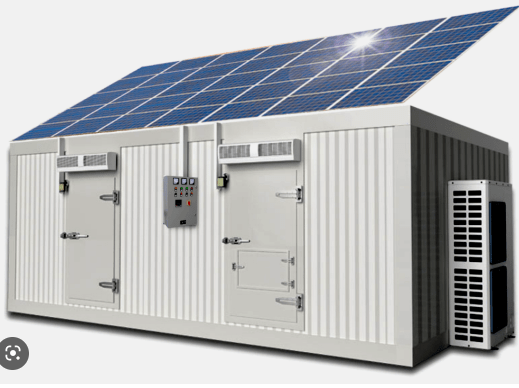
Cold-chain logistics has emerged as the new oil boom for farmers and agropreneurs who wish to tap into this N160 billion opportunity gap.
A recent report by the Organization for Technology Advancement of Cold Chain in West Africa (OTACCWA) revealed that Nigeria recorded between N3.5 trillion and N5 trillion in post-harvest losses in 2025.
According to the president of OTACCWA, Alexander Isong, Nigeria lost an estimated 30 to 40 million metric tonnes of food to post-harvest inefficiencies across major value chains.
He added that tomatoes, vegetables, fruits, dairy, meat, fish, and root crops were mostly affected.
“ Nigeria loses between N3.5 trillion and N5 trillion worth of food annually, amounting to about 40 million tonnes of food wasted every year,” he noted.

Upon interaction with this reporter, Tijjani recounted how he lost over 50 percent of his tomato order while being transported from Jos, Plateau State, to Lagos, a nearly 18-hour journey by road.
“ More than half of my tomatoes always get spoilt before they arrive,” he noted. “ Sometimes, I have to sell off the tomatoes at a lesser price to avoid incurring more losses,” he added.
From Yusuf Musa, another tomato vendor in Mile 12 Lagos Market, to Mama Bose, a fruit seller in Ketu fruit market, the experiences are similar and express a significant gap that must be filled.
“ Nigeria doesn’t have a production problem, but a supply-chain problem,” noted Adebayo Adeleke, founder of Supply Chain Africa.
The United Nations World Food Programme recently identified Nigeria as the leading country with the highest food waste in Africa, as evidence shows that the country loses about 40 percent to 70 percent of its fresh fruits and vegetables due to poor road infrastructure, lack of cold-chain logistics facilities, and poor storage systems, leading to decay and rot as delays in transportation over long distances persist.
A United States International Trade Administration report revealed that Nigeria has fewer than 1,000 cold trucks, far below the 25,000 needed to transport over 11 million metric tonnes of perishable foods annually
This significant shortfall presents a major investment opportunity in the country’s growing cold-chain sector, valued at N160 billion in 2023.
Nigeria’s cold-chain market projections
Nigeria’s cold-chain market has been projected for significant growth in 2026, largely driven by high imports of sea foods, fruits and vegetables according to Ken Research, a US-based market Intelligence platform.
Another driver for growth in the cold- chain market, is the lack of major players in the sub-sector and the African Continental Free Trade Zone(AcFTA) which provides an easy route in import and export goods across the globe at subsidized rates.
“ Adoption of new IoT technologies, opportunity for new players and rising imports of cold-chain commodities is driving Nigeria’s cold-chain market,” Ken Research (2026) report stated.
Challenges in the cold-chain market
Daniel Onwude, chief executive of Coldtivate, a digital cold-chain company, says the sector holds immense potential.
However, he notes that weak infrastructure and macroeconomic pressures continue to constrain growth.
“Setting up a cold room is capital-intensive,” he said. “High operating costs, heavy reliance on diesel, steep import duties, and volatile exchange rates make the economics extremely challenging.”
Onwude identified structural bottlenecks, some of which include unreliable power supply, poor road networks, and limited cold storage and transport infrastructure, as key barriers to scale.
“There is also a shortage of skilled local talent, which increases dependence on foreign expertise,” he added. “Regulatory red tape, policy inconsistencies, and bureaucratic delays further complicate investment and execution.”
Michael Akintese, co-founder of Ecotutu, highlighted deep inefficiencies across the value chain.
“As of 2024, Nigeria operates at just 4 percent of the cold-chain capacity it requires,” he said. “This shortfall translates into annual losses of up to N3.5 trillion for farmers and agribusinesses.”
He stressed that the challenge goes beyond production deficits.
“The real issue is a fragmented value chain,” Akintese explained. “Cold storage, transport logistics, and processing infrastructure must be integrated and accessible from the point of harvest to preserve value and reduce losses.”
Cost of installation of a cold-room
Cold rooms cost between N6 million and N15 million to build, depending on size and specifications, with capacities typically ranging from 3 tons to 20 tons according to Ofin Global.
This makes size selection a key investment decision that affects cost, scale, and returns.
Reliable power supply is the most critical operational need.Due to unstable electricity, investors must budget for alternative energy sources, as cooling must be constant to prevent losses.
Cold rooms serve different purposes some include chiller rooms for fresh produce, freezer rooms for long-term storage of meat and fish, blast freezers for rapid preservation, and modular systems for flexible business needs.
Efficient logistics, especially a cooling van, is essential to maintain product quality during transportation, while basic equipment and packaging materials support daily operations, experts say.
Cold-chain profitability
A small-scale cold-chain business can generate between 10 percent and 20 percent return on investment, experts say.
According to Ken Research, the largest markets for cold-chain services are concentrated in Lagos due to its proximity to seaports. Other major cities with strong potential for cold-chain commodities include Jos in Plateau State, a key hub for fresh food production, as well as Kano, Abuja, and Rivers State.
Investors can explore different business models such as cold-chain warehousing or cold-chain logistics.
A few players, including Ecotutu, Coldbox Stores, and MDS Logistics, are already tapping into this space. However, experts note that the industry still holds significant growth potential and requires more investors to bridge the gap. (BusinessDay)
-

 Metro16 hours ago
Man threatens to release Kano governor’s nude videos, photographs
-
Sports16 hours ago
Harry Kane crowned 2026 Ballon d’Or winner
-
World News16 hours ago
Trump hits back at Obama over Saddam ‘Cheesecake Factory’ jab
-
News16 hours ago
OPHK troops destroy ISWAP enclaves in Lake Chad, kill 16 terrorists
-
Business16 hours ago
Microsoft offers voluntary exit packages to 60,000 staff
-
Politics15 hours ago
‘He was trained in sanitation’ — Shettima says Atiku can’t govern modern economy
-
Politics15 hours ago
2027 Elections: 103m voters, 35m votes and the 68% who may decide the Presidency
-
Politics15 hours ago
FACT CHECK: How Tinubu’s Image On Bread Was Edited To Depict Obi