Business
Erastus Akingbola: Nigeria’s longest running corruption case

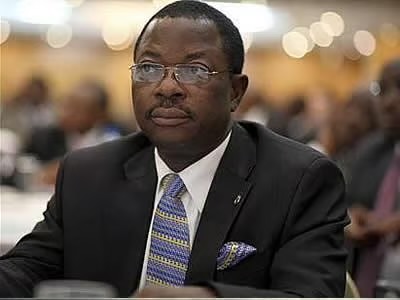
The former chief executive of Nigeria’s Intercontinental Bank has spent 16 years facing allegations he misappropriated N179bn (around $1.1bn at the time). Despite countless hearings and the involvement of at least 15 different judges, the case has yet to reach a decisive conclusion.
Akingbola’s drawn-out trial underscores the frustrations of Nigeria’s anti-corruption drive and the challenges of bringing influential bankers to account. Key witnesses have retired or are no longer available, highlighting the systemic delays that can sap momentum in high-profile cases.
First charged in 2009
Akingbola, once a revered figure in Nigeria’s financial sector, denies any wrongdoing and maintains the charges are politically motivated. Public prosecutors, however, believe this could be a landmark case—if they ever manage to steer it to a verdict.
Officials say they remain determined to push forward, but observers warn that age, fading memories, and a weary legal system threaten to keep the matter in limbo.

When he was first charged with fraud in 2009, Akingbola was a 59-year-old banking star, proud of his record in expanding Intercontinental Bank at home and abroad. Standing in court, he was still spry and upbeat, dressed smartly in his trademark suits. Now almost 75 and not as strong as he once was, he remains adamant about clearing his name.
Over the years, at least one of the lawyers involved in the case has died of old age, and several investigators have retired. “Fatigue has already set in,” one prosecutor told The Africa Report. “Even witnesses are fed up.”
Auwal Rafsanjani, who leads Transparency International in Nigeria, calls it a story emblematic of how the country’s judiciary can fail to deliver timely justice. “It is the story of high-profile cases in Nigeria, a reminder of the fact that Nigeria’s judiciary has not always been alive to its responsibilities,” he says.
Rise to prominence
Before his legal troubles, Akingbola was among Nigeria’s most acclaimed bankers. He served as president of two major professional bodies—the Chartered Institute of Bankers of Nigeria and the Institute of Chartered Secretaries and Administrators of Nigeria—and represented West Africa on the board of the African Bankers’ Forum of Afrexim Bank. A devout member of the Redeemed Christian Church of God, Akingbola was ordained a pastor by its revered leader, Pastor Enoch Adeboye.
He was also a notable philanthropist, donating facilities to universities across Nigeria, including a post-graduate hostel at the University of Lagos. By the late 2000s, his Intercontinental Bank had opened 350 branches in Nigeria, 40 in Ghana, and one in London, employing over 12,000 staff in Nigeria alone.
Fraud allegations
Everything changed in mid-2009 when President Umaru Musa Yar’Adua appointed Sanusi Lamido Sanusi as governor of the Central Bank of Nigeria (CBN). In the wake of the global financial crisis, Sanusi removed the top management of five leading Nigerian banks, naming about 200 bankers and investors in criminal investigations. Two of the biggest names were Cecilia Ibru of Oceanic Bank—who eventually pleaded guilty and served six months in prison—and Akingbola, who decided to fight.
Akingbola insisted his trouble began after he rejected a plan by Governor Bukola Saraki of Kwara State to merge Intercontinental Bank with the Saraki family’s Societe Generale. He claims Saraki then lobbied President Yar’Adua to appoint Sanusi, an old friend from their days at King’s College Lagos, as central bank governor.
From there, Akingbola’s assets and shares—valued at $2.3bn—were frozen. Intercontinental Bank was ultimately sold to Access Bank, whose leadership had ties to Sanusi. Saraki and Sanusi publicly dismissed Akingbola’s accusations.
Judicial twists
In August 2009, Akingbola fled to the UK, saying he feared for his life but charges were instituted against him nonetheless. He returned in 2010 under threat of extradition and pleaded not guilty before Justice Mohammed Idris of the Federal High Court in Lagos. Within weeks, the chief judge reassigned the case to Justice Charles Archibong, who later dismissed the charges and barred prosecutors from trying Akingbola again.
Justice Archibong was compulsorily retired by the national judicial authorities primarily because of what they termed the mishandling of the Akingbola case.
The controversial judgment was overturned six years later by the Supreme Court, paving the way for a fresh trial, but by then, a judge had retired, forcing more delays.
The constant reshuffling did not help. The prosecution amended charges multiple times, meaning each new version had to start from scratch. “It’s difficult to prove allegations when the process is so convoluted,” says one lawyer involved in the matter.
Parallel proceedings
Meanwhile, the Economic and Financial Crimes Commission (EFCC) filed a separate N46bn case at the Lagos State High Court. A high-profile judge took charge and sped up proceedings—only to be promoted to the Court of Appeal before delivering a verdict. The new judge faced jurisdictional challenges. Eventually, a higher court quashed the case, ruling that banking matters properly belonged in federal court.
In London, Access Bank secured a separate judgment against Akingbola for more than $1bn. A handful of his properties in London valued at £11m were forfeited. Attempts to enforce that ruling in Nigeria, where most of his assets lie, have so far failed in local courts.
“How do you explain that Akingbola’s case in the UK was settled in record time, but here in Nigeria, there is no end in sight?” asks Lanre Suraj, an anti-corruption activist who has worked with the EFCC.
Looking ahead
Through all the legal deadlock, the EFCC insists it remains “committed to reaching a logical conclusion”. With key prosecutors and investigators now retired, the window for unearthing conclusive evidence keeps narrowing. Even if the case eventually moves forward, Akingbola’s age and the receding memories of witnesses loom as fresh hurdles.
For many in Nigeria, the saga is a cautionary tale: it reflects the complexity of tackling big-ticket corruption in an overburdened judicial system—one that may allow determined defendants, armed with influential allies, to drag proceedings almost indefinitely.
(The Africa Report)
-

 News23 hours ago
Abuja Workers Turn To Pick-Up Trucks Amid Rising Transport Costs
-
 News23 hours ago
Ebola patient in Nigeria is Swiss, had not visited DR Congo – Foreign Ministry
-
Politics23 hours ago
Results With Discrepancies Won’t Be Uploaded On IREV – INEC
-
 News23 hours ago
Zamfara Community Fights Back
-
Politics23 hours ago
2027: You Can’t Hide Voters’ Register And Expect Trust – Atiku Tells INEC
-
Politics22 hours ago
South-East has better presidential options than Peter Obi – Umahi
-
Metro22 hours ago
Fasoranti To Be Buried December 17 – Family
-
Politics22 hours ago
Ministers spend billions to secure appointments – APC spokesman alleges