Business
Many traders shutting down as transportation eats deep into profits

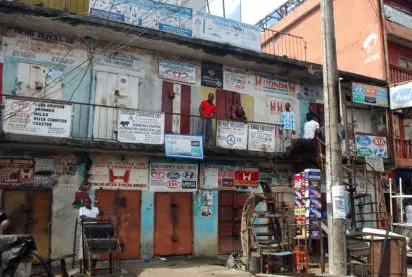
The hive activities that usually define Nigerian markets are gradually dying down. It is now being replaced by somber silence, as hundreds of traders have begun locking their shops.
Economy&Lifestyle discovered that this is due to their inability to bridge the widening gap between skyrocketing transportation costs and plummeting sales and customer patronage.
Small business owners are crying that the costs of moving goods to their places of business have swept away whatever gains they make.
Economy&Lifestyle findings revealed that the crisis is rooted in a brutal surge in fuel prices, which has seen petrol and diesel costs drive transportation fares up in some regions.

Traders, who previously spent N3,000 to transport a consignment of goods, now find themselves billed nearly double that amount, even as customers’ purchasing power falls.
Mrs. Akapema Edith, a cloth vendor, said: “Since the beginning of this year, I have not sold up to N100,000 in my shop and on-line.
“Before, I spent N3,000 to and fro for transportation in a week, but now it has increased to N6,000.
“My shop has been locked up for the past four weeks because of high transport fares.”
Mrs. Janet Nwafor, a foodstuff vendor, said:”People who usually come to my shop to do bulk purchases no longer do that.
“They now buy goods only according to their immediate needs.
“Many just enquire about prices and walk away empty-handed.”
A recent Stanbic IBTC Bank Purchasing Managers Index, PMI, report showed that consumer purchasing power has been crippled; families who previously budgeted N10,000 for groceries now find the same items cost upwards of N13,000, forcing them to buy in smaller quantities or skip non-essential items entirely.
“I now close my shop three times a week to save myself from wasting transport fare and going back home with nothing”, Nwafor said.
Mr. Luke Edemodeh, a photographer, said he now works from home as customers patronage of his business has declined.
“The situation of high transportation costs is very serious.
“I now work from home and put my shop under lock.
“Imagine spending a huge sum of money to rent a shop and boom you start experiencing low patronage coupled with high transport cost.
“Sometimes, I trek long distances to cut down on transport costs when going to my shop because I don’t know what sales would look like.
“So I decided to work from home to save cost and avoid wasteful spending.
“Small businesses are the ones mostly affected with this increased fuel price and it is telling on us.”
In some regions, the cost of a single market trip now exceeds the day’s potential profit, with commuters paying an average of N1,195.75 per drop in urban centers ,a nearly 27 per cent increase compared to early 2025, according to the National Bureau of Statistics, NBS latest Transport Fare Watch report .
The report also pointed out that the average fare paid by commuters for bus journey intercity per drop was N9,564.12 in March 2026, indicating an increase of 17.95 per cent on a month-on-month basis compared to N8,108.81 in February 2026.(Vanguard)
-

 News20 hours ago
Court Orders Wike’s Son Jordan to Produce American Passport in $2.1m Abuja Land Suit
-
News20 hours ago
NEMA deploys rescue teams as floods ravage states
-
Politics20 hours ago
Pantami wins PDP repeat governorship primary in Gombe
-
News19 hours ago
After 68 Days Vacation, Lawmakers Embark On Another Recess
-
Metro20 hours ago
Lagos teen detained over slippers freed after four years
-
News20 hours ago
Mixed reactions as FG demarcates First Niger Bridge
-
Sports20 hours ago
AFCON Qualifier: Guinea-Bissau Humble Super Eagles 3-0
-
Politics19 hours ago
2027: Which running mate brings the most votes – Shettima, Amaechi or Kwankwaso?