Business
Shell levies to Nigeria sink to decade low on onshore exit

…payments plunge to $2bn in 2025
…Brazil is the new biggest state beneficiary
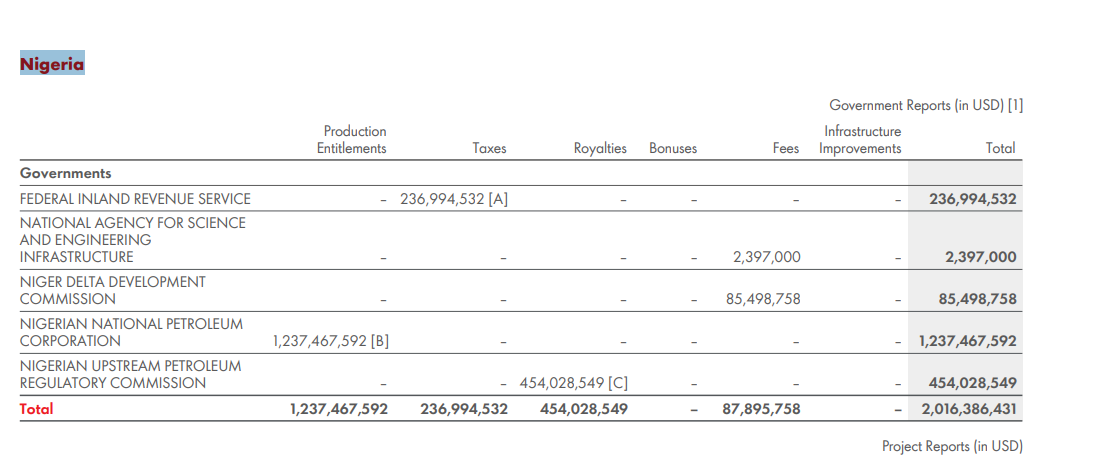
Shell Plc’s payments to the Nigerian government plunged to roughly $2 billion in 2025, the lowest figure in at least a decade, as the British oil major’s years-long withdrawal from the country’s onshore oil fields finally took full effect on its contribution to Africa’s largest oil-producing country.

The figure, disclosed in Shell’s annual Report on Payments to Governments filed under UK transparency regulations, covers production entitlements, taxes, royalties, and fees paid across all of Shell’s Nigerian operations during the year ended December 31, 2025.
It represents a collapse of more than 62 percent from the $5.34 billion Shell handed over to Nigerian authorities in 2024, and stands in stark contrast to the $5.63 billion peak payment recorded as recently as 2019.
Shell paid Nigerian authorities $6.39 billion in 2018, a figure that reflected the company’s then-commanding position across the Niger Delta’s sprawling onshore concessions.
By 2020, amid oil price turmoil and pandemic-driven disruptions, it had already retreated to $3.24 billion. Payments then partially recovered, reaching $4.48 billion in 2021, $4.5 billion in 2022, and $4.92 billion in 2023, before the 2024 figure of $5.34 billion briefly suggested stabilisation. The 2025 collapse now signals something more structural.
Shell’s 2025 report breaks its Nigerian payments into distinct streams. Production entitlements, the Nigerian government’s share of crude lifted from Shell-operated fields, accounted for $1.24 billion, paid entirely to the Nigerian National Petroleum Company.
Royalties of $454 million went to the Nigerian Upstream Petroleum Regulatory Commission, largely in kind, while taxes of $237 million were settled with the Federal Inland Revenue Service.
Fees totaling roughly $88 million rounded out the picture, with the Niger Delta Development Commission collecting the bulk of that sum at $85.5 million.
The Onshore Exit
Shell’s retrenchment from Nigeria’s onshore basins, where oil theft, pipeline vandalism, and decades of litigation over environmental damage had made operations increasingly untenable, has been the defining corporate decision reshaping the country’s energy landscape.
The company completed the sale of its Nigerian onshore subsidiary, the Shell Petroleum Development Company, in a transaction that closed in 2024, effectively transferring its joint venture interests in dozens of oil mining leases to Renaissance Africa Energy Company, a consortium of Nigerian independents, in a transaction that ended more than seven decades of Shell’s onshore presence in the country.
Shell spent years trying to sell the business, and the eventual divestiture of SPDC’s onshore assets has fundamentally redefined what Shell actually is in Nigeria.
What remains is a deepwater story. Shell retains significant interests in offshore blocks through its Production Sharing Contract (PSC) operations, including the flagship assets on OML 118 and OML 135, which house the Bonga deepwater field, Nigeria’s first deepwater development and still one of the country’s most important producing assets.
Those positions still generate meaningful revenue for the Nigerian state, but they operate under a different fiscal and operational logic than the onshore leases that once made Nigeria a cornerstone of Shell’s global upstream portfolio.(BusinessDay)
-

 News12 hours ago
Court Orders Wike’s Son Jordan to Produce American Passport in $2.1m Abuja Land Suit
-
Politics11 hours ago
Pantami wins PDP repeat governorship primary in Gombe
-
News11 hours ago
NEMA deploys rescue teams as floods ravage states
-
News10 hours ago
After 68 Days Vacation, Lawmakers Embark On Another Recess
-
Metro11 hours ago
Lagos teen detained over slippers freed after four years
-
Politics10 hours ago
2027: Which running mate brings the most votes – Shettima, Amaechi or Kwankwaso?
-
News11 hours ago
Mixed reactions as FG demarcates First Niger Bridge
-
Sports11 hours ago
AFCON Qualifier: Guinea-Bissau Humble Super Eagles 3-0