African News
‘Over 80% of ISIS operations now in W’Africa’

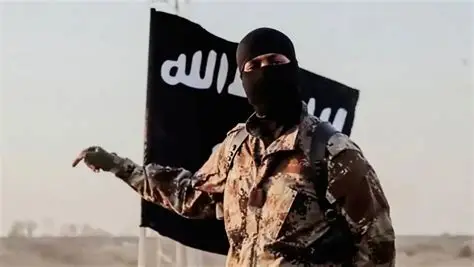
The Foundation for Peace Professionals has raised the alarm that more than 80 per cent of global operations linked to the extremist group Islamic State of Iraq and Syria are now concentrated in West Africa and the Sahel, warning that the region has emerged as the new epicentre of global terrorism.
Arewa PUNCH reports that the warning comes amid renewed security concerns in parts of Kwara State following recent attacks on communities, including the latest incident in Yashikira, Baruten Local Government Area.
In a statement issued on Tuesday, PeacePro Executive Director, Abdulrazaq Hamzat, said the organisation’s assessment was based on a comparative analysis of global incident data obtained from open-source intelligence, regional security reports and trend assessments of ISIS-linked activities across different conflict theatres.
Hamzat said, “Our assessment is based on a comparative analysis of global incident data obtained from open-source intelligence, regional security reports, and trend assessments of ISIS-linked activities across different conflict theatres.”

According to him, the analysis covered operations in the Middle East, Central Africa, and the Sahel region, and it revealed a significant shift in the geographical concentration of extremist activities.
“The analysis covered operations in the Middle East, Central Africa, and the Sahel region, and it revealed a significant shift in the geographical concentration of extremist activities,” he added.
The organisation explained that the 80 per cent estimate was derived from monitoring the frequency, scale, and attribution of attacks linked to ISIS and its affiliates over recent months.
PeacePro added that its methodology involved aggregating reported incidents, comparing regional distributions, and evaluating operational intensity, including attacks believed to be underreported.
“The 80 per cent estimate was derived from monitoring the frequency, scale, and attribution of attacks linked to ISIS and its affiliates over recent months,” the organisation explained.
“Our methodology involved aggregating reported incidents, comparing regional distributions, and evaluating operational intensity, including attacks believed to be underreported,” it added.
The group noted a marked decline in extremist operational activities in traditional ISIS strongholds such as Iraq and Syria, while attacks across West Africa, particularly within the Lake Chad Basin and the wider Sahel corridor, have continued to increase.
PeacePro stated that ISIS-affiliated groups operating through regional franchises in West Africa now account for the majority of attacks, fatalities, territorial incursions, and coordinated operations associated with the global terrorist network.
“ISIS-affiliated groups operating through regional franchises in West Africa now account for the majority of attacks, fatalities, territorial incursions, and coordinated operations associated with the global terrorist network,” they stated.
They stressed that the trend partly explains the increasing prominence of some Nigerian fighters within ISIS-linked command structures.
“The scale, coordination, and persistence of attacks across Nigeria and neighbouring countries signal a dangerous expansion of extremist networks, underpinned by adaptive strategies, local recruitment and possible external support systems,” the statement read in parts.
The organisation warned that the concentration of such a large proportion of ISIS-linked operations in West Africa reflects a major shift in global terrorism dynamics and requires urgent attention from both regional governments and the international community.
“The concentration of such a large proportion of ISIS-linked operations in West Africa reflects a major shift in global terrorism dynamics and requires urgent attention from both regional governments and the international community,” the organisation warned.
PeacePro, therefore, called on the federal government to spearhead efforts aimed at mobilising a coordinated international response to the growing threat.
It urged Nigeria to strengthen intelligence-sharing frameworks, deepen cooperation with international partners, and lead a unified offensive against extremist groups operating across the region.
“Nigeria must strengthen intelligence-sharing frameworks, deepen cooperation with international partners, and lead a unified offensive against extremist groups operating across the region,” the group said.
According to the organisation, Nigeria’s position as a frontline state in the fight against terrorism places it in a strategic position to galvanise broader regional and global action.
The group recommended enhanced multilateral security cooperation, deployment of advanced counterterrorism technologies, and more aggressive efforts to disrupt transnational financing and logistics networks that sustain extremist activities.
“Nigeria’s position as a frontline state in the fight against terrorism places it in a strategic position to galvanise broader regional and global action,” PeacePro stated.
“Enhanced multilateral security cooperation, deployment of advanced counterterrorism technologies, and more aggressive efforts to disrupt transnational financing and logistics networks are urgently needed,” it added.
PeacePro further warned that failure to respond decisively could allow terrorist groups to deepen their foothold in vulnerable communities, expand territorial influence, and export instability beyond West Africa.
While advocating stronger security measures, the organisation stressed that counterterrorism operations must remain intelligence-driven, evidence-based, and consistent with international human rights obligations.
“Failure to respond decisively could allow terrorist groups to deepen their foothold in vulnerable communities, expand territorial influence, and export instability beyond West Africa,” the organisation warned.
“Counterterrorism operations must remain intelligence-driven, evidence-based, and consistent with international human rights obligations,” it stressed.
According to the report, Nigeria and several countries across the Sahel have witnessed increasing attacks by extremist groups over the past decade, particularly factions linked to the Islamic State and other insurgent networks.
In Nigeria, terrorist activities have largely been concentrated in the North-East, where the Islamic State West Africa province and other insurgent groups continue to target civilians, military formations, and critical infrastructure.
Our correspondent reports that recent attacks in communities around Baruten Local Government Area of Kwara State have renewed calls for stronger security presence and improved intelligence gathering along Nigeria’s porous borders with neighbouring countries.(Punch)
-

 Business16 hours ago
Petrol Hits ₦1,900/Litre as Depot Prices Surge Despite NNPC Cut
-
Metro17 hours ago
NYSC kidnap: Freed graduates get S’West posting offer
-
News17 hours ago
NAF crash: Wedding plans turn funeral tears as families await remains
-
Metro17 hours ago
Nigerian man’s nudity arrest sparks US political row
-
Politics17 hours ago
2027: Senate rules out fresh review of Electoral Act
-
Metro17 hours ago
Three Nigerian sisters committed suicide – UK coroner
-
Politics16 hours ago
ADC Unveils 38-Member Presidential Campaign Council Ahead of 2027 Elections
-
African News17 hours ago
Xenophobia: More Nigerians depart S’Africa