News
Nigeria’s solar boom reshapes household shopping list

A decade ago, a Nigerian family furnishing a new flat budgeted for a generator, a few drums of petrol and a standby fuel attendant on speed dial.
Today, that same shopping list is more likely to include a lithium battery pack, a hybrid inverter and a refrigerator built to sip direct current rather than gulp it.
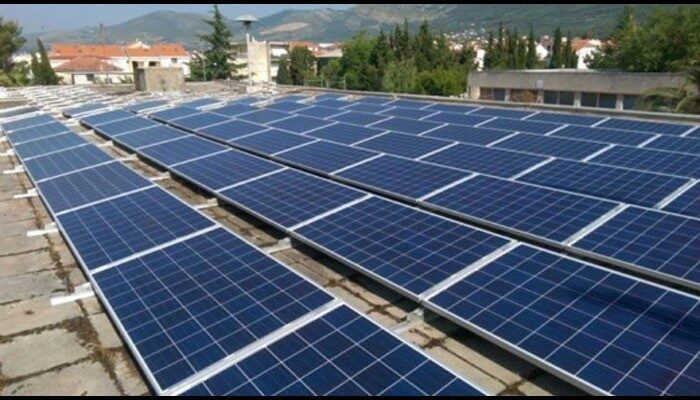
Nigeria’s installed solar capacity climbed to roughly 1,019 megawatts in 2025 after the country added more than 800 megawatts in a single year, according to data from the Global Solar Council.
Local panel manufacturing capacity has nearly tripled in two years, from 120 megawatts to about 300 megawatts, with another 3.7 gigawatts of production in the pipeline, the Rural Electrification Agency says. Imports of Chinese-made panels, still the backbone of the market, rose roughly two-thirds in the year through June 2025, tracking data from energy researcher Ember.

Power tariffs for so-called Band A customers, who were promised near-round-the-clock electricity in exchange for steep 2024 rate increases, now exceed N200 per kilowatt-hour in many areas, and the promised supply has often failed to materialise.
Diesel and petrol, the traditional backup, have stayed expensive and volatile since subsidy removal. For a growing number of homes, the math now favours paying once for solar hardware over paying indefinitely for fuel and grid bills that can run N50,000 to N100,000 a month.
Retailers and appliance makers are adjusting their catalogues accordingly. Off-grid solar specialist Sun King rolled out an upgraded home system this year built around battery storage and direct support for low-voltage appliances.
Lontor Hi-Tech has pushed solar-ready fans and lighting kits into the market, while mainstream appliance brands are re-engineering products for Nigeria’s specific conditions: voltage-tolerant compressors, energy-efficient cooling, and fridges and televisions designed to run comfortably off an inverter rather than straight grid current.
LG and Ecobank have struck an instalment-financing tie-up for connected appliances, and e-commerce platforms including Jumia now offer payment plans aimed squarely at customers bundling a solar setup with a new fridge or washing machine in the same purchase.
Solar is no longer sold as a standalone emergency fix but as the anchor purchase around which the rest of a household’s appliance choices get made. A buyer shopping for a refrigerator increasingly asks first whether it will run on a 1.5-or-3kVA inverter setup, then picks the model. Air conditioners, the single biggest driver of household power bills, remain the hardest sell on solar because of their load, pushing some buyers toward smaller split units or away from air conditioning altogether in favour of fans, which solar handles easily.
It isn’t all upside for consumers. Nigeria still imports roughly 90 percent to 95 percent of solar components, so the naira’s volatility against the dollar feeds directly into panel and battery pricing, and import duties of 5 percent to 10 percent plus a 7.5 percent value-added tax add further to the bill. A complete household system that might cost the equivalent of $10,000 today can become markedly pricier within months if the currency weakens, executives in the sector have noted, complicating financing and budgeting for installers and buyers alike. Battery chemistry is also shifting upmarket, with lithium iron phosphate units replacing shorter-lived lead-acid and tubular batteries — better performance, but a higher upfront price tag that keeps full systems out of reach for many lower-income households even as panel costs fall.
Policy is starting to catch up with the consumer shift. Nigeria’s electricity regulator introduced net-billing rules this year, allowing larger renewable users to sell surplus power back to distribution companies, and mini-grid regulations now permit interconnected systems of up to 10 megawatts, a change regulators say is meant to draw in more private capital. (BusinessDay)
-
Politics24 hours ago
2027: Opposition to name single presidential candidate before polls – Lukman
-

 Politics12 hours ago
2027: Northern govs pledge total support for Tinubu
-
Business15 hours ago
Petrol: Transporters raise fares, commuters groan
-
Metro15 hours ago
Man Drowned Trying To Rescue Suspect On Suicide Mission
-
Opinion12 hours ago
Nigeria’s jobless growth: The 800m job deficit warning
-
Politics12 hours ago
APC’s internal contradictions scare me more than Atiku, Obi – Shettima
-
Opinion15 hours ago
MKO: The story of an unlikely hero of democracy
-
Metro12 hours ago
Gunmen kill two policemen, set station, operation van ablaze in Abia