Business
Nigeria’s top 1% now control 44% of the country’s wealth – Doyin Salami

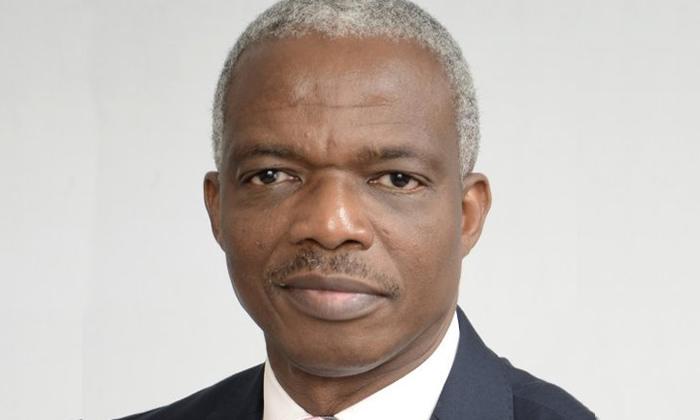
Economist and Chief Executive Officer of KAINOS Edge Consulting Ltd., Dr. Doyin Salami, has raised concerns over widening wealth inequality in Nigeria, revealing that the country’s richest 1% now control 44% of total wealth, up sharply from about 25% two decades ago.
Speaking at Anchoria’s The Quorum Investor Forum, Salami said the growing concentration of wealth underscores the need for Nigeria to pursue economic growth that is not only rapid and sustainable but also inclusive.
According to him, addressing inequality will require policies that unlock private capital, accelerate industrialisation and create jobs, rather than relying solely on government spending.
What the economist is saying
Salami said data on Nigeria’s wealth distribution points to a significant shift in the concentration of wealth over the past two decades.

- “I was astonished to discover that the top 1%, almost 20 years ago, controlled about 25% of total wealth. Today it’s 44%,” he said.
He noted that the trend reflects an upward concentration of wealth, making inclusive growth an urgent policy priority.
- “In other words, the first thing that has happened over the last two decades or thereabout is an upward concentration of wealth,” he added.
According to Salami, ensuring that more Nigerians benefit from economic expansion must become central to the country’s growth strategy.
Government revenues no longer enough
Salami also argued that Nigeria’s shrinking fiscal capacity leaves little room for government alone to finance the country’s development needs.
He noted that although federal government revenue has increased in naira terms over the years, its purchasing power has declined significantly when measured in dollars.
According to him, federal government revenue stood at the equivalent of about $72 billion in 2011 but fell to roughly $16 billion to $17 billion in 2025 after converting revenue at prevailing exchange rates.
- “I hope you understand what I’ve just said. Income decimation,” he remarked.
Salami warned that rising population growth and increasing infrastructure demands have coincided with weaker fiscal capacity, making private investment indispensable.
While commending ongoing tax reforms, he cautioned against expecting immediate fiscal gains.
- “Don’t throw away what the government is doing in terms of tax reforms, but it’s not going to immediately give you the fiscal space that you need,” he said.
He cited Vietnam’s reported plan to raise about $1 trillion from international capital markets for infrastructure development as an example of how countries are mobilising private capital to finance growth.
De-industrialization threatens job creation
Salami also expressed concern over what he described as Nigeria’s long-term de-industrialization, warning that the shrinking manufacturing sector is limiting the country’s ability to create jobs and raise living standards.
Breaking the economy into primary, secondary and services sectors, he said his analysis showed that the industrial sector has declined dramatically over the decades.
According to him, industry accounted for about 60% of Nigeria’s total output at the beginning of the 1980s but has now fallen to just 16% to 17%.
Salami argued that industrialisation remains critical because it transforms agricultural and mineral resources into higher value products, creates jobs, boosts exports and improves living standards.
- “If industry, which can transform agriculture and mining into jobs, output, exports and a higher level of living standards for the people, is not thriving, then we’ve got a big problem on our hands,” he said.
He maintained that attracting private capital into productive sectors of the economy remains the most viable path to reversing de-industrialization, expanding investment and delivering broad based economic growth.
What you should know
Dr. Salami’s revelation about wealth concentration in the hands of a few comes amid concerns over rising poverty in the country.
According to a recent World Bank report, the poverty rate in Nigeria rose to 63% in 2025, up from 56% in 2023 and 61% in 2024.
The Bank noted that household incomes have not grown fast enough to offset elevated inflation in the country.
Meanwhile, in another alarming revelation, PwC projected that poverty levels in Nigeria are set to deteriorate sharply this year, with as many as 141 million Nigerians expected to be living in poverty.
PwC noted that despite recent policy adjustments aimed at economic stabilisation, weak real income growth and elevated living costs are likely to push more households into poverty over the next two years. (Nairametrics)
-

 World News24 hours ago
Again, US judge blocks Trump’s order restricting birthright citizenship
-
Business20 hours ago
Dangote Petroleum Refinery Set for Landmark IPO Following SEC Approval
-
 News19 hours ago
BREAKING: Explosion As Boko Haram Targets Convoy Of APC Gov’ship Candidate In Borno
-
Business17 hours ago
BREAKING: Nigeria’s external reserves cross $54 billion, highest level in 18 years
-
Metro18 hours ago
Ghanaian government launches app for lovers to verify each other’s marital status
-
News4 hours ago
Outcry as fake products flood markets
-
Celebrity Gist4 hours ago
Okoye really sweet, Cardi B says after third sighting
-
News5 hours ago
N33.75bn Cash Transfer Mystery: FG Failed to Prove Millions of Vulnerable Nigerians Received Funds — Auditor-General