Opinion
Stop, CBN! The baby is in the bathwater

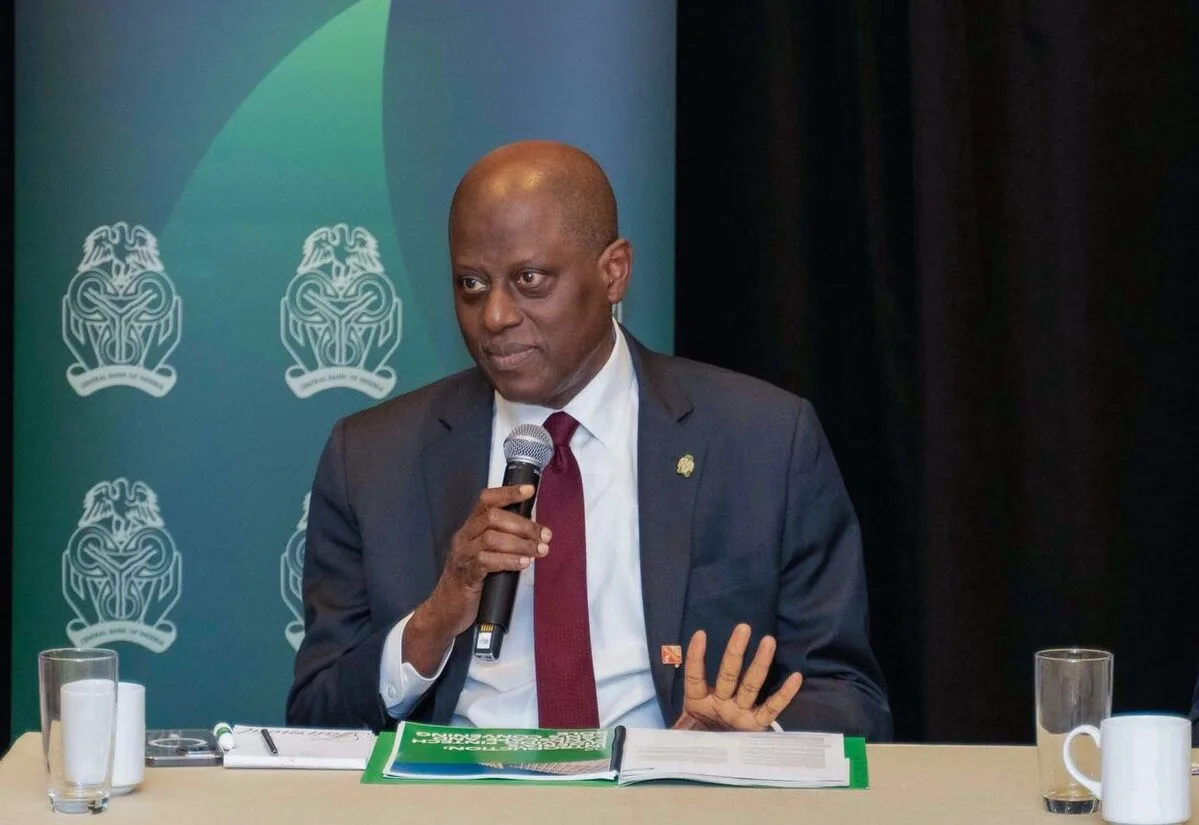
I invite you to join me on this journey to the Central Bank of Nigeria headquarters in Abuja, where I shall be meeting with the CBN Governor, Mr Olayemi Michael Cardoso. The meeting is neither official nor scheduled, but its importance highlights the potential harm a recent CBN directive portends for the nation’s banking sector.
The trip will be long and windy; I will be driving in my rugged BMW, which can only take a few passengers. So, the privilege to be on the trip will be on a ‘first come, first served’ basis. The journey is a rescue mission! The CBN is about to disrupt the equilibrium in the banking sector over advertisement fines, giving no room for feedback or consultation with stakeholders. Even the itinerant thrift collector, Bàbá AlájoSómólú, talks with stakeholders.
Having traversed the nation’s banking corridors for 44 years, with nearly three of those years as the helmsman at CBN, it is not too much to expect Cardoso, at 69, to possess the wisdom of an elephant.
I looked up Cardoso’s name half‑expecting to find “Solomon” tucked in the middle; instead, I found “Michael”. And the more I weighed both names, the clearer it became that Michael suits him better. Archangel Michael stands for protection and justice, flaming sword in hand, while Solomon’s famed judgement has long been questioned by ethicists who argue that no ruler should threaten or appear willing to endanger an innocent child, insisting that the outcome of Solomon’s judgement depended on emotional reaction, which could have been mistaken.

Instructively, the case I’m discussing with Cardoso rests more on protection and justice than wisdom, though justice rarely walks without wisdom in its shadow.
It was in the groundbreaking book, “Frames of Mind: The Theory of Multiple Intelligences”, written by Harvard professor Howard Gardner and published in 1983, that I discovered why I always muddle up music notes whenever I sing. It was Gardner’s book that told me music intelligence was among the eight types of intelligences there are. Gardner’s work opened my eyes to a moment of epiphany when I realised that no matter what I do, I can never sing according to notes because I do not possess music intelligence. Just look in my direction if you’re looking for the king of ‘off-beat’ singing. You won’t have to mock me for too long though, as I shall enrol in a music school soon.
But Bob Marley wasn’t beset with my “off-key” fate. Still the greatest reggae music band after 45 years of dissolution, Bob Marley and the Wailers bequeathed to humanity timeless songs such as ‘One Love’, ‘No Woman, No Cry’, ‘War’, ‘Buffalo Soldier’, ‘Exodus’, ‘Could You Be Loved’, ‘Three Little Birds’, and many more. The acronym of Marley’s evergreen band is BMW.
If you ask me which I prefer between going down on bended knees before a cheering crowd in the street, engagement ring in hand, asking my beloved, “Will you marry me?” and holding my partner in high esteem at all times? I would choose the latter. What is the essence of public display of affection when the man is a King Kong at home?
Anyway, the whole essence of dating and courting becomes promising when the man proposes and tells the lady to “Be My Wife”: BMW.
Germany produced Adolf Hitler, the mass murderer. It also gave the world great men like Karl Marx, Beethoven, Goethe, Kant, Nietzsche, Engels, and Bismarck, even as the auto world owes gratitude to Germany’s genius, which produced Mercedes-Benz, Porsche, Maybach, Volkswagen, Audi, Opel, etc.
Germany is also the home of Bayerische Motoren Werke, the makers of my very first car, a three-series BMW. Is there someone who didn’t like their first car? I was besotted by my darling BMW. Young and dashing, with a dream job in hand, my silver BMW represented the five stars on the epaulette of a bachelor ready to explore possibilities, promise and passion.
One day, I took my BMW to my panel beater, whose shack flanked the Central Bank of Nigeria, Akure branch. I had just bought a stereo and the gadget wasn’t sitting properly in the radio cavity. The stereo jutted out a jot from the cavity, and I felt the panel beater would have a device to slightly expand the cavity for the radio to sit smugly.
“I’ll be back soon,” I told the guy as I trekked to my bank across the road. When I got back from the bank, the panel beater sprouted from under a car; a big smile spread on his face. “I have finished your work,” he beamed. I joked with him as I paid him his charge, and we both walked to my BMW. I got into my car and froze as I looked at the radio.
The stereo was right there sitting in the cavity. But the panel beater had gouged a big hollow under the cavity to allow the stereo to fit in, leaving an unsightly gash, like missing incisors. I looked at him for an explanation. Heartily, he sprinted from my side to the passenger’s side, got into the car and regaled me about the genius he employed to perform the magic.
I felt like punching him right in the face. But the close range he was to me in the car wouldn’t allow me to deliver the type of punches I wanted. I was too angry to talk as I watched him fiddling with the stereo and telling me the wisdom that produced his act of vandalism. So, I got out of the car, paced about as I wrestled with the thoughts of how best to avenge the wanton destruction.
When other craftsmen saw my state, they abandoned what they were doing and came over to me, asking, “Ọ̀gá, kíló ṣẹlẹ̀. Wetin happen?” It was the panel beater who answered the questions. “Ọ̀gá ń bínú nítorí iṣẹ́kékeré tí mo ṣe ni,” he announced, smiling, “Ọ̀gá is angry because of the little job I did.” So, his colleagues went to the car to see the little job he did. Everyone was aghast, vehemently condemning his stupidity and calling him names.
I got into my car and drove off with my stereo. I didn’t even remember to collect the money I paid him. That was about 30 years ago.
The panel beater’s reckless solution – a crude fix that destroys what it intends to improve – is exactly what the CBN is about to inflict on Nigeria’s banking sector. A badly worded directive that threatens to deduct from the Cash Reserve Ratio kept with the CBN, following a five-day ultimatum, is not regulation. It is panel beaters at work at the CBN
Now, let’s unbare the issues. In a July 24, 2026, circular to all commercial banks, aka Deposit Money Banks, the CBN recalled a November 27, 2025, circular, alleging that many banks had failed to comply “with regulatory provisions on advertisement,” thereby ordering “immediate withdrawal of non-compliant advertisements”.
The latest circular entitled “Imposition of Regulatory Sanctions for Breaches of Advertising Requirement”, goes on to say that the CBN had conducted a review of non-compliant advertisements, promotions and related communications by affected commercial banks, adding that “continued circulation of non-compliant advertisements and promotional materials after the November 27, 2025, circular” has attracted fines that run into billions of naira across the banks. My investigation revealed that over 95 per cent of commercial banks are affected in a wave of fines that range between N250m and N500m.
Accusing the affected commercial banks of unprofessionalism in their advertisements, the CBN alleged that, “Misleading claims, omitted conditions and prohibited inducements distort consumer decisions, cause avoidable harm and give non-compliant institutions an unfair advantage over those that observe the rules.” The apex bank added that “penalties are imposed pursuant to Section 95(f) and (g) of BOFIA 2020,” stressing that “the sanctions reflect the nature, severity and persistence of the breach, as well as the consumer protection risks arising therefrom”. BOFIA is the Banks and Other Financial Institutions Act. It encourages sound banking practices and the prevention of misleading representations in promotions and gambling-like advertisements.
To put the scenario in perspective, a layman’s explanation would suffice. The CBN is frowning on advertisements and promotional materials that say bank customers can win a certain amount of money if they participate in a promotion. In the wisdom of the CBN, such a promotion is unethical because not all bank customers can win the promised package.
As good as CBN’s oversight appears in this context, it will amount to cutting off the nose to spite the face if Cardoso does not take a critical look at the whole process holistically. For example, the banks coming under the hammer of the CBN obtained approvals from relevant statutory regulators, such as the Advertising Regulatory Council of Nigeria and the Federal Competition and Consumer Protection Commission. Does this mean that the alleged breaches the CBN is complaining about are different from the laws of the nation’s apex regulatory bodies for advertising and consumer protection? Are there two sets of advertising and consumer protection laws in the country? Should there not be a consultative meeting among the CBN, the affected banks and the nation’s advertising and consumer protection bodies so that a proper perspective of all the issues could be unfurled before commercial banks’ balances with the CBN are deducted?
Given the interconnected nature of the banking system in Nigeria, as is the case in most jurisdictions around the world, the practice of deducting regulatory penalties directly from commercial banks’ accounts maintained with the CBN carries the risk of creating unintended disruptions. Such deductions can adversely affect the liquidity reserves of Deposit Money Banks, funds that ultimately underpin customer deposits and financial obligations. Consequently, while regulatory sanctions are an important tool for enforcing compliance, care must be taken to ensure that their implementation does not inadvertently undermine the very financial stability and depositor interests that the CBN is mandated to protect. This concern becomes particularly relevant for several reasons.
Except the CBN takes the role of another panel beater, it should be crystal clear that if substantial penalties are debited directly from a bank’s balances maintained with it, the following industry implications may arise:
Firstly, deductions may temporarily reduce the affected bank’s liquidity position, particularly where the sanction is significant and applied without prior provisioning.
Also, the penalties may negatively impact profitability by reducing earnings available to shareholders and limiting resources that could otherwise be deployed for lending, technology investments, branch expansion or customer service improvements.
It should be noted that widespread industry sanctions can create operational pressure on banks, prompting emergency compliance reviews, forensic audits and the diversion of management attention from business growth initiatives to regulatory remediation efforts.
If the sanctions are imposed simultaneously on many banks, the cumulative effect could tighten liquidity within the banking sector, albeit temporarily, depending on the magnitude of the deductions and prevailing market conditions.
Such actions may increase regulatory risk perceptions among investors, potentially affecting market sentiment, valuation metrics and confidence in the stability of the operating environment.
And there may be reputational consequences for affected institutions, particularly where sanctions receive extensive media coverage. Customers and counterparties may seek explanations regarding the nature of the breaches, even where the infractions relate to historical marketing materials rather than prudential or solvency concerns.
However, arguing from a regulatory perspective, the CBN may contend that enforcement actions are necessary to preserve market discipline, promote consumer protection, ensure compliance with BOFIA, and maintain confidence in the banking system. Sound argument!
But what is the motive behind a punitive circular that does not state the particular infractions committed by respective banks – in the face of the fact that most of the alleged infractions had been corrected by some of the banks? Why issue sanctions without allowing affected banks to respond and present their cases? By holding affected commercial banks by the jugular, without giving room for fair hearing, the CBN has chosen to be draconian. This is a disturbing trend.
I strongly think that the CBN should look inwards and evolve an organic solution to the sectoral challenge because where the alleged infractions relate to historical advertisements already withdrawn by banks, and where there is no evidence of customer loss, financial instability, fraud or prudential misconduct, a collaborative remediation framework may achieve regulatory objectives more effectively than punitive sanctions of a magnitude capable of affecting industry liquidity and operational efficiency
Cardoso, I have laid out the cards. Please, deal wisely. Use your flaming sword of protection and justice fairly.
•Written By Tunde Odesola
-

 News11 hours ago
UK universities withdraw admission offers to Nigerians over visa crackdown
-
News11 hours ago
Benue: Suspected herdsmen kill nine in fresh Ukum attacks
-
News11 hours ago
Why kidnappers target NYSC members — Security experts
-
Politics11 hours ago
2027: Protest, relief as INEC releases final candidates’ list
-
Politics10 hours ago
2027: Opposition, APC clash over campaign funding
-
World News11 hours ago
US gunman shoots dead 7 relatives, family friend
-
Opinion11 hours ago
Did Obi actually win in 2023?
-
Business11 hours ago
Fitch revises Nigeria’s outlook to positive, affirms ‘B’ rating