Opinion
Nasir El-Rufai and the Rest of Us

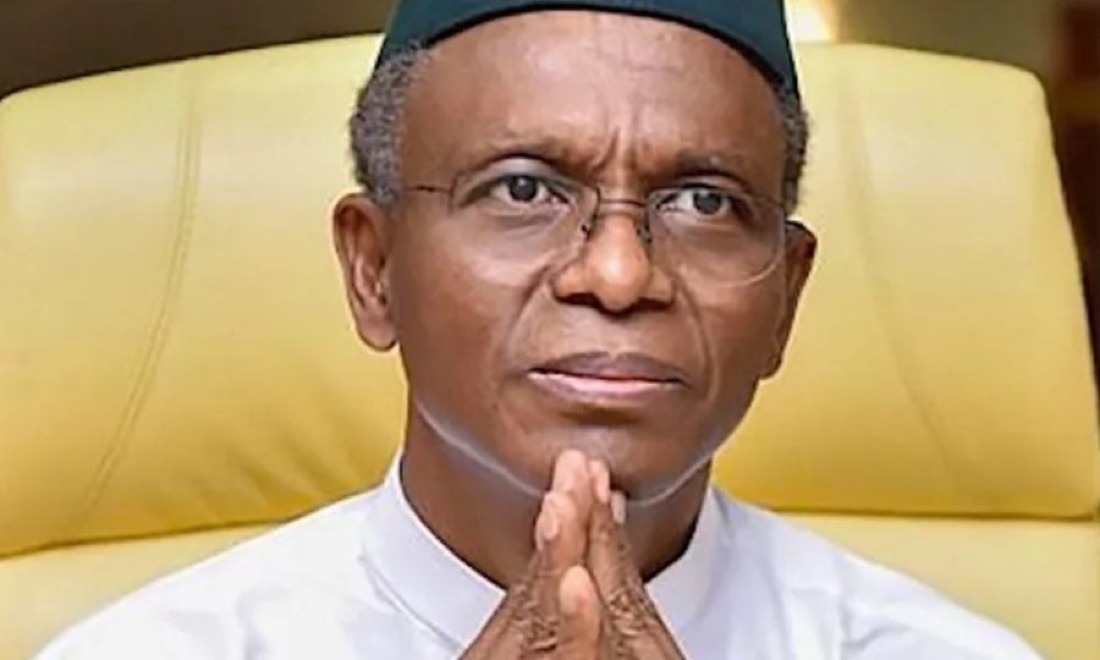
By Olusegu Adeniyi
On his 66th birthday in February this year, Mallam Nasir El-Rufai walked into the Abuja headquarters of the Economic and Financial Crimes Commission (EFCC) in response to an invitation. He remains in captivity as Nigeria marks its own 66th independence anniversary today. But his travails are with the Independent Corrupt Practices and Other Related Offences Commission (ICPC). The commission has not only barred the media from covering the three cases for which it has arraigned the former Governor of Kaduna State, he is also being treated more as a convict than as a detainee.
GeographicReference

Before I continue, it is important to make a declaration from the outset on what this column is not about. It is not a plea for immunity. Neither is it a verdict on the ICPC allegations against El-Rufai. I have read the report of the Kaduna State House of Assembly. Those are specific and serious allegations for which their former governor has already pleaded not guilty and is entitled to his day in court. Nor will I defend what El-Rufai said on ARISE Television that “someone” he knows had tapped the telephone of the National Security Adviser (NSA), Mallam Nuhu Ribadu, and he had listened in on some conversation. So, for me, the question is not whether El-Rufai should be tried. The problem is how that trial has unfolded and what that says about the rule of law in Nigeria. I stated this much in May this year,
https://www.thisdaylive.com/2026/05/28/el-rufai-and-the-rule-of-law-2/, and nothing seems to have changed.
Consider the sequence. On 12 February, security operatives attempted to arrest El-Rufai at the Nnamdi Azikiwe International Airport, Abuja, on his return from Egypt. His passport was reportedly seized. On 16 February, the Department of State Services (DSS) filed cybercrime charges against him at the Federal High Court, Abuja. That same day, El-Rufai honoured the EFCC invitation. At about 8pm on 18 February, the EFCC granted him administrative bail. He did not make it beyond the premises. Armed operatives waiting at the commission headquarters took him away, and before the night was over, the ICPC announced that El-Rufai was in its custody “in connection with investigations”. On 1 April, only days after he had been let out on compassionate grounds to bury his mother, DSS operatives took custody of him again.
Today El-Rufai faces four separate criminal trials in Kaduna and Abuja; three corruption cases filed by the ICPC and the wiretapping case by the DSS. Each, taken alone, may be defensible. Taken together, they look less like a prosecution than a relay race in which the baton is the defendant who, as I once surmised, is essentially being ‘roundtripped’ by three state agencies. Then there is the issue of bail. On 14 April, Justice Rilwan Aikawa of the Federal High Court, Kaduna, admitted El-Rufai to bail in the sum of N200 million with two sureties in like sum. One must be a Kaduna resident whose property must have a verified Certificate of Occupancy. The other must be a respected elder certified by the elders’ council. El-Rufai must also surrender his passport, report to the ICPC on the first Monday of every month and live at a named residence. The judge herself described the terms as “strict and extensive.” A week later, Justice Darius Khobo of the Kaduna State High Court refused El-Rufai bail outright. He cited the gravity of the nine-count charge and fears of interference with investigations, and held that the interests of justice were best served by keeping El-Rufai available for “an accelerated trial”.
In the Abuja case, Justice Joyce Abdulmalik’s bail conditions included a surety who is a federal civil servant not below Grade Level 17 and resident in either Maitama or Asokoro. That surety must also deposit the original Certificate of Occupancy of a landed property with the court and furnish three months’ evidence of salary authenticated by a bank manager. The defendant must also produce a letter of attestation from the chairman of the Kaduna State Traditional Council and two other members. That council, by the way, was constituted by El-Rufai’s successor, Governor Uba Sani! Which chief or emir would risk his royal stool (and all the attendant goodies) for a man that has already been indicted by the State House of Assembly and is, to put it mildly, not in the good books of the incumbent governor?
When El-Rufai’s lawyers returned in June to say that the directors they approached did not own houses in those Abuja Districts, the judge declined to vary the terms, insisting that such civil servants exist. The Judge evidently knows a lot about Abuja! Meanwhile, the law on this is not ambiguous. Section 165(1) of the Administration of Criminal Justice Act (ACJA) 2015 provides that where bail is granted, the conditions shall not be excessive. This has been affirmed by the Supreme Court which held that the principal function of bail is simply to secure the attendance of the defendant at trial. Even the five suspects arrested near a British air base used by American bombers on an alleged terror case that has drawn global attention were released on bail within a few days!
Let us now consider the arithmetic. Section 12 of the Cybercrimes Act provides, upon conviction for unlawful interception, a fine not exceeding N5 million or two years’ imprisonment, or both. The DSS closed its case in June after calling two witnesses. The court will rule on his no-case submission on 26 October. By then El-Rufai will have spent more than eight months in custody, convicted of nothing, on a charge that carries a maximum of two years!
Let me also make this clear: Judges rule on the applications before them, and each of these conditions may be defended on its own terms. But one court has refused bail outright, and two others have set conditions that have proved impossible to meet. The outcome is the same: a man whom Section 36(5) of our Constitution presumes innocent is being punished before judgement. When citizens can be detained in perpetuity simply by filing cases in different courts and before different Judges, the judiciary becomes, wittingly or unwittingly, mere tools for untoward practices.
It gets even worse. In June, a family member said that a doctor at the National Hospital, Abuja, had expressed concern that El-Rufai could be developing a serious medical condition. After a court-approved medical visit on 7 July, the ICPC accused him (El-Rufai) of using the occasion to meet political associates and arrested his personal physician, Professor Bello Abubakar, for allegedly making false statements. In August, El-Rufai filed a N10 billion fundamental rights suit alleging that his wife and son had been barred from visiting him. The ICPC insists that it has met its obligations, and that access to detainees is governed by certain regulations. I am in no position to adjudicate those claims. But when the doctor who attends to a detainee becomes a suspect himself, every physician in Nigeria has received a message.
What makes all this even more interesting is that El-Rufai is not an ordinary Nigerian. He was the Director General of the Bureau of Public Enterprises (BPE) for more than three years, Minister of the Federal Capital Territory for four years and Governor of Kaduna State for eight. He is wealthy enough to retain a team of Senior Advocates of Nigeria. His son, Bello, sits in the House of Representatives. If a man with his means can spend 227 days in custody on allegations yet to be proven, we can only imagine what would happen to the ordinary citizen who steps on some big toes.
As it would happen, El-Rufai, of all people, should know the answer. The leader of the Islamic Movement in Nigeria, Sheikh Ibrahim El-Zakzaky, and his wife, Zeenat, were held in defiance of a December 2016 order of the Federal High Court, Abuja, that they be released. The Kaduna State Government under El-Rufai then prosecuted them for culpable homicide. On 28 July 2021, Justice Gideon Kurada upheld their no-case submission and freed them. Within two days, Kaduna State announced fresh charges with El-Rufai deploying every extra-legal trick to keep the El-Zakazakys behind bars. I recall this episode not to gloat or justify the whataboutery that El-Rufai’s opponents use to dismiss the call for justice. I recall it because it proves conclusively that the instruments of state have neither memory nor loyalty. They serve whoever holds them, and they are always, eventually, held by someone else. El-Rufai must have gotten the memo by now.
President Bola Tinubu needs no lecture as to what happens when the apparatus of state is turned against a critic. His years in exile during the dictatorship of the late General Sani Abacha are part of the democratic story that will be on full display this afternoon in Lagos at the premier of the documentary, MKO, produced and directed by my friend, Ose Oyamendan. But let’s be fair; this is not Tinubu’s call: This perversion of bail is a problem within the purview of the National Judicial Council (NJC) that appears to be looking away while the judiciary is being rubbished. Even if the Judges who have granted El-Rufai bail vary the conditions, he still has a case before a Judge who outrightly refused him bail!
Meanwhile, it is obvious that the ICPC is determined to keep El-Rufai in detention till ‘kingdom come’. The commission initially obtained a 14-day remand order, under oath, to charge him to court within the duration of that order. That order expired without charges being filed. So, the ICPC went to secure another remand warrant in rather controversial circumstances. In the interval, the ICPC claimed in court documents to have recovered wiretapping equipment from El-Rufai’s residence. While the Constitution grants a right to silence, the ICPC treated El-Rufai’s assertion of that constitutional right as evidence of non-cooperation and publicised the same as one of their justifications for keeping him in custody.
In a reflection titled ‘My Relationships and the Aftermath’, released last weekend, El-Rufai wrote about the silence of his friends and those he once supported. He said he bears no resentment towards them. I understand that silence; fear is a rational response for most politicians in a season like this. But silence is also how these things become normalized. The precedent being set in this case will not end with El-Rufai. It will be available to the next government, against the next political opponent. That political opponent may have no Senior Advocate on retainer: only a charge sheet, bail conditions nobody can meet, and a long wait for ruling in different courts.
That the judiciary is part of a process by which a citizen has been turned into a political ping-pong ball by prosecutors using the process of arraignment and bail application to orchestrate perpetual detention raises serious questions. The offences for which El-Rufai has been arraigned are bailable and many others facing similar charges are now Senatorial candidates of various political parties, plotting their way to the red chambers where they will join fellow travellers to make laws for the rest of us. On a day such as this, people who hold the levers of power in Nigeria should understand that as a citizen, El-Rufai is entitled to fair treatment by our courts and state institutions.
The context may be more personal but I believe we can adapt the words of the late South African President Nelson Mandela to argue that the freedom of a country and that of its citizens are intertwined. At 66, Nigeria should be old enough to understand that a state that can weaponise the judiciary and security apparatus against one of its most powerful citizens would have no qualms crushing its weakest. That explains why I believe that whatever one may think of Nasir El-Rufai [and I have had my disagreements with him over the years], we should all be interested in his case.
I wish Nigerians a Happy Independence Anniversary.
- You can follow me on my X (formerly Twitter) handle, @Olusegunverdict and on www.olusegunadeniyi.com
-

 News17 hours ago
FACT CHECK: Is Uganda Govt Right About Nationality Of Nigeria’s First Ebola Patient?
-
Politics22 hours ago
2027: El-Rufai betrayed us – Ex-Chief of Staff
-
 News14 hours ago
Hardship: Nationwide labour action looms as talks deadlock
-
News17 hours ago
Bandits kill teacher, two others in Sokoto ambush
-
News22 hours ago
Ebola: UN expresses confidence in Nigeria’s containment efforts
-
Politics22 hours ago
Sowore claps back after Senator Ajibola called him ‘skit maker’
-
Sports22 hours ago
Maradona doctor was made ‘scapegoat’ for his death, court told
-
Politics22 hours ago
How Tinubu, Matawalle Returned 8 Aggrieved Zamfara Lawmakers To APC