News
TUC Says Fuel Subsidy Has Returned as FG Defends 30-Day Petrol Discount

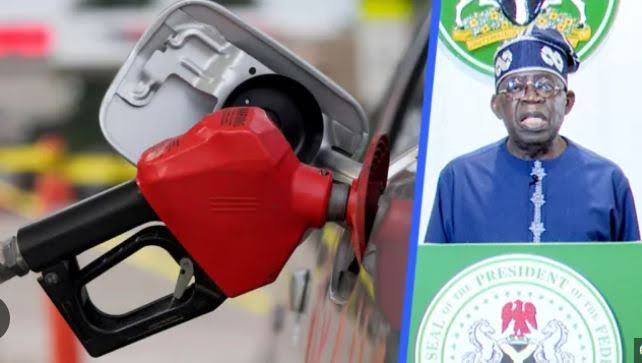
The Nigeria Labour Congress (NLC) and the Trade Union Congress (TUC) have renewed the debate over petrol subsidy following the Federal Government’s decision to introduce a 30-day fuel discount aimed at cushioning the impact of rising petrol prices on Nigerians.
TUC President Festus Osifo has argued that the government’s latest intervention amounts to a form of fuel subsidy, despite the Federal Government’s insistence that it has not returned to the subsidy regime abolished in 2023.
Under the new arrangement, the government says NNPC will offer petrol at a discounted price for 30 days, particularly to provide relief to public transport operators and commuters.
Osifo, however, questioned the distinction between the current arrangement and the subsidy system.

According to him, if the market price of petrol is higher than the price at which consumers are allowed to buy it, somebody must absorb the difference. He argued that such an arrangement is, in economic terms, a subsidy regardless of the terminology used by the government.
For example, if the actual cost of petrol at the gantry is ₦1,500 per litre but consumers or selected users are able to obtain it for ₦1,350 because the government absorbs the ₦150 difference, the difference represents a subsidy, according to the TUC position.
The Federal Government has rejected that interpretation.
Finance Minister Wale Edun and other government officials have maintained that the intervention should not be confused with the broad petrol subsidy regime that existed before President Bola Tinubu announced its removal in May 2023.
The government describes the latest measure as a temporary price-relief and price-smoothing mechanism designed to protect consumers from sudden increases in petrol prices.
The disagreement therefore centres partly on terminology and partly on who ultimately bears the cost of keeping petrol prices below what they would otherwise be in the market.
Under the old subsidy system, the government routinely compensated marketers for the difference between the regulated pump price and the cost of supplying petrol. The policy became a major burden on government finances before it was removed.
The current intervention is presented as temporary, with the government stressing that it does not represent a return to the former system.
However, labour unions argue that the economic effect is more important than the name attached to the policy.
The controversy comes as Nigerians continue to grapple with the high cost of transportation and living expenses following the dramatic increase in petrol prices since the 2023 subsidy removal.
While the government says the temporary discount is intended to provide immediate relief, labour leaders are demanding greater transparency over the source of the funds and the mechanism being used to keep prices down.
The debate is therefore likely to continue over whether the government’s latest intervention represents a genuine return of petrol subsidy or simply a temporary government-funded price-support programme.
For now, the Federal Government maintains that the old petrol subsidy has not returned, while TUC insists that if government is absorbing part of the cost of petrol, then a form of subsidy has effectively returned.
-

 News15 hours ago
How Nigeria’s Population Commission mismanaged N245 billion on undelivered products, other controversial contracts – Auditor-General
-
Opinion16 hours ago
Tinubu’s extended absence
-
Business16 hours ago
NNPC cuts customer debts by N11.7tn, reduces unpaid bills
-
Sports16 hours ago
Infantino, FIFA crisis intensifies as Nigeria ponder suing, compensation
-
Metro16 hours ago
Suspected cocoa thief found hanging in Osun police cell
-
News16 hours ago
Soldiers, 25 terrorists killed as troops repel ISWAP attack in Borno
-
News16 hours ago
Pipeline contracts: Asari Dokubo’s claim may heighten ethnic tensions – Niger Delta coalition warns
-
 Metro16 hours ago
Woman remanded over alleged cyberstalking of Shade Okoya