Politics
Lagos 2027: Inside Tinubu-GAC’s search for Sanwo-Olu’s successor

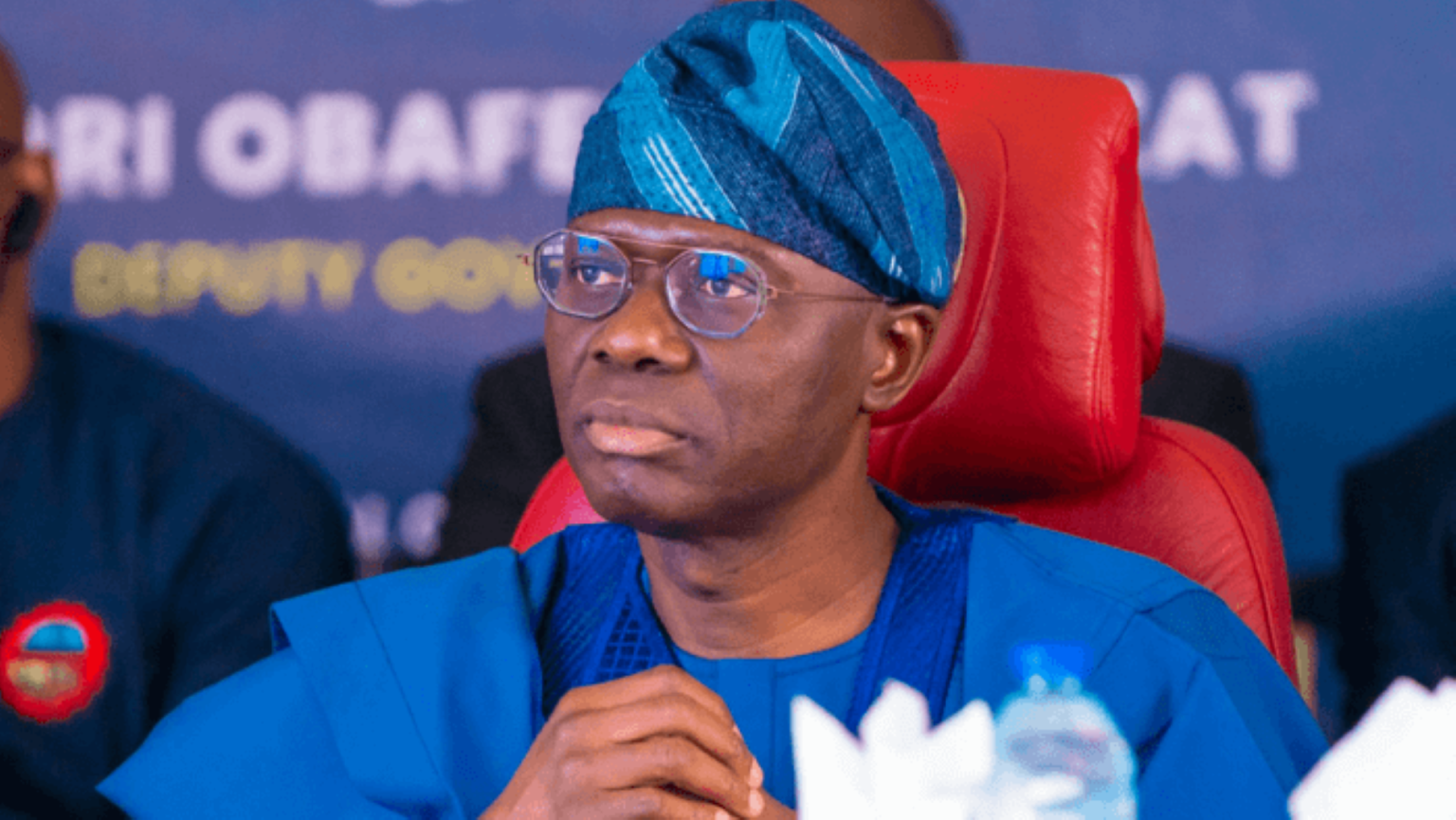
As preparations for the 2027 Lagos governorship election gather pace, attention is again on the intrigues that have long shaped candidate selection in the ruling All Progressives Congress (APC). In a state where consensus often trumps open contests, residents are waiting for the next “joker” of President Bola Tinubu and the Governor’s Advisory Council (GAC), GBENGA SALAU reports.
The 2027 election cycle is gradually gathering momentum across Nigeria, with aspirants for governorship seats in various states already mobilising resources, building alliances, and testing their popularity among the electorate.
Ironically, in Lagos State, the country’s commercial nerve centre, visible political activities ahead of the governorship race remain subdued.

To many observers and insiders, this is not unusual. Rather, it reflects the entrenched political culture in the state, where candidate emergence is often less about open contestation but more about internal consensus shaped by party hierarchy.
Already, many aspirants on the platform of the ruling All Progressives Congress (APC) are deliberately avoiding public mobilisation because such efforts do not necessarily translate into securing the party’s ticket.
In years past, the real contest has always taken place behind closed doors.
Rather than going out to mobilise support for their ambitions, aspirants lobby political leaders and gatekeepers, including President Tinubu, whose body language is often the final say.
This approach underscores the unique nature of Lagos politics, where the influence of party elders and longstanding political structures, largely built over decades, continues to shape outcomes.
The dominance of the ruling APC since 1999 further reinforces this pattern, making the party’s ticket almost synonymous with electoral victory. As a matter of fact, since 1999, when Nigeria returned to democratic rule, whoever wins the ruling party’s governorship ticket usually goes on to become governor in the main contest.
For example, in 2007, when Babatunde Fashola emerged as the party’s flag bearer, he eventually won the main contest to become governor. The same pattern repeated itself in 2015 when Akinwunmi Ambode clinched the party’s ticket in a keenly contested primary held at Onikan Stadium; Ambode went ahead to defeat Jimi Agbaje to emerge governor, just as the incumbent governor, Babajide Sanwo-Olu, who also secured the party’s ticket amidst an APC internal crisis, went on to win the main contest.
But amid this backdrop, zoning and religion are emerging as critical factors in determining who will fly the APC flag in 2027. Some stakeholders argue that, given the current configuration, with Governor Sanwo-Olu from Lagos Central and a Christian, the ticket may likely go to a Muslim from either Lagos East or Lagos West. This informal balancing arrangement, though unwritten, has often guided political calculations in the state.
However, the field of aspirants does not entirely conform to this projection. Several hopefuls either come from Lagos Central or are Christians, suggesting that the eventual decision may not strictly follow predictable patterns.
Feelers from within the party indicate that a number of prominent figures are already intensifying consultations across different power blocs.
Among those frequently mentioned are the incumbent Deputy Governor, Obafemi Hamzat; Chief of Staff to the President, Femi Gbajabiamila; Principal Secretary to the President, Hakeem Muri-Okunola; Minister of Education, Tunji Alausa; Chief of Staff to Governor Sanwo-Olu, Tayo Ayinde; Commissioner for Environment and Water Resources, Tokunbo Wahab; and Samuel Ajose, who has openly declared his ambition.
While Hamzat and Gbajabiamila are widely regarded as the most politically experienced among the contenders, others have also built significant profiles within government and party structures.
That said, the issues of religion and zoning are going to be critical, especially as Muslim faithful are already insisting that the next governor on the platform of the APC must be one of them. This is not new, as in 2015, the Christian community in Lagos also insisted that one of them must emerge after Tinubu and Fashola, who were both Muslims, spent 16 years in office.
That agitation then led to the emergence of Ambode, a Christian, against the preferred choice of Fashola.
At present, Ambode from Lagos East and Sanwo-Olu from Lagos Central, both Christians, have spent a combined 12 years.
The party will also face challenges in balancing zoning arrangements. President Tinubu, who governed Lagos from 1999 to 2007, emerged from Lagos West and was succeeded by Fashola (2007–2015) from Lagos Central. He was succeeded by Ambode, who spent one term (2015–2019) from Lagos East, and then by Sanwo-Olu, who will complete two terms (eight years) in 2027, from Lagos Central.
As an insider put it: “If the party is going to hinge its calculations on religion and zoning, it might face the challenge of balancing.
“But here is a party that has peculiar ways of handling its internal affairs. We should wait and see. However, the issue of religion may not be easily jettisoned this time, just as I know that the next candidate cannot come from Lagos Central.”
Obafemi Hamzat
To many within the APC, the incumbent Deputy Governor represents a blend of technocratic competence and grassroots political engagement. Having served as commissioner under both Tinubu and Fashola, and currently as deputy governor, he possesses deep institutional knowledge of Lagos governance.
Hamzat is often described as a steady hand with strong elite backing and reasonable grassroots acceptance. His profile appears to align with prevailing considerations: he is a Muslim from Lagos East, placing him in a potentially advantageous position.
However, his ultimate prospects will depend on how he navigates internal party dynamics and whether he can galvanise broader political momentum beyond established structures.
Femi Gbajabiamila
Gbajabiamila brings formidable legislative experience and national visibility to the race. A six-term member of the House of Representatives and former Speaker, he is one of the most recognisable political figures from Lagos Central.
His influence within Surulere and his extensive political network are significant assets. Yet, questions linger about his statewide grassroots reach.
Additionally, his origin from Lagos Central, the same district as the incumbent governor, could be a disadvantage under the zoning calculus, despite his Muslim faith aligning with prevailing expectations.
Hakeem Muri-Okunola
Muri-Okunola’s ambition is anchored on his administrative pedigree. Rising through the Lagos civil service to become Head of Service, he played key roles in bureaucratic reforms, particularly in land administration.
His close relationship with President Tinubu places him within the inner circle of power. However, his lack of electoral experience and limited grassroots political structure may pose challenges in a state where ward-level mobilisation is crucial. Like Gbajabiamila, he is also from Lagos Central, which could complicate his chances.
Tunji Alausa
Alausa enters the race with a strong technocratic background. A US-trained medical doctor and current Minister of Education, he has also served as Minister of State for Health, giving him exposure to federal governance.
Known for his reform-oriented approach, particularly in education and health, Alausa’s candidacy appeals to those who prioritise competence and policy expertise. Although he lacks a strong grassroots base, his alignment with zoning expectations, as a Muslim from Lagos East, works in his favour. However, recent indications suggest that earlier speculations about his emergence as a preferred candidate may be waning.
Tayo Ayinde
Popularly known as “Buffalo,” Ayinde is a seasoned political operative and current Chief of Staff to Governor Sanwo-Olu. With a background in the State Security Service and extensive experience in campaign coordination, including directing Sanwo-Olu’s successful elections, he is regarded as a skilled mobiliser.
Ayinde’s strength lies in his grassroots network, particularly in Lagos West. However, his Christian faith, similar to that of the incumbent governor, may count against him under prevailing religious balancing considerations.
Samuel Mawuyon Ajose
Ajose, an entrepreneur and philanthropist from Badagry in Lagos West, stands out as an outsider among the aspirants. As chairman of Levitikal Group, he has built a reputation in business, particularly in construction and real estate.
Unlike other contenders, he lacks the political profile of others but has been vocal about his ambition, engaging directly with the public. This may not really count in the party’s calculations. While his origin from Lagos West may be an advantage, his Christian faith and outsider status could pose significant hurdles within the APC’s tightly controlled structure.
The ‘joker’ factor in Lagos politics
One defining feature of Lagos politics is the tendency for unexpected candidates to emerge from outside the circle of frontline aspirants. Within the APC, succession battles are often settled long before formal primaries, with consensus candidates emerging through internal negotiations.
Historical precedents reinforce this pattern. When President Tinubu prepared to leave office in 2007, many aspirants actively jostled for the party’s ticket. Yet, Fashola, then relatively low-profile, was eventually selected, surprising many observers.
Notable aspirants at the time (2007) included Tokunbo Afikuyomi, Jimi Agbaje, Tunde Fanimokun, Remi Adikwu-Bakare, Femi Pedro, Tola Kasali, Rahman Owokoniran, and Hakeem Gbajabiamila. Some, like Pedro and Afikuyomi, defected after the process, underscoring the high stakes involved.
Similarly, the emergence of Akinwunmi Ambode as Fashola’s successor followed a comparable trajectory.
Despite intense lobbying and campaigns by several aspirants, including Hamzat, Ganiyu Solomon, Adeyemi Ikuforiji, Olasupo Shasore, Leke Pitan, Tola Kasali, Tayo Ayinde, and Tokunbo Wahab—Ambode, who was not initially seen as the frontrunner, secured the ticket.
These precedents highlight a recurring theme: in Lagos, political calculations often transcend public perception. The eventual candidate may not necessarily be the most visible or vocal aspirant, but one who fits into a broader strategic framework defined by party leadership.
As 2027 approaches, this reality continues to shape expectations. While current frontline runners are intensifying their efforts, the possibility of a “joker”, a relatively unexpected candidate emerging from within the system, remains strong.
For now, the race appears quiet on the surface. But beneath that calm lies a complex web of negotiations, alignments, and power plays that will ultimately determine who governs Nigeria’s most strategic state.
Speaking with The Guardian, APC spokesman in Lagos, Seye Oladejo, said the party is still considering several options and that, at the appropriate time, it will present a candidate best suited for the governorship.
He said there are many capable individuals within the APC, “therefore, nobody among those mentioned is a pushover. My conviction is that whoever the party picks will eventually win the governorship election in 2027.” (Guardian)
-

 Politics17 hours ago
‘Weapon fashioned against APC’ — outrage as youth leader gifts 2026 Prados to party officials, then deletes post
-
News17 hours ago
Ebola: NCDC to pay contacts N100,000 weekly
-
Politics17 hours ago
We’ll Soon Expose Those Plotting To Scuttle My Guber Ambition – Pantami
-
Politics17 hours ago
We Won’t Allow Repeat Of 2023 Defeat – Lagos APC
-
News17 hours ago
Zamfara Steps Up Ebola Containment Measures After Passenger With 38°C Fever Arrives Airport
-
Metro17 hours ago
Okonjo-Iweala’s mother dies at 96
-
News17 hours ago
States’ six-month debt servicing bill hits N800bn
-
Politics17 hours ago
2027: NDC slams Tinubu, APC over ₦1bn worth of Prado SUVs for youth leaders