News
Politics overshadows governance as NASS observes 93-day recess in 2026

• Lawmakers on recess nearly six in 10 days since 2023, data shows
• N’Assembly risks missing 181-day constitutional threshold in 2026
• Recess treated as holidays, accountability weak, says Rafsanjani
• CHRICED: Prolonged recesses signal absenteeism, betray social contract
• Reps defend recesses, say elections will not disrupt duties
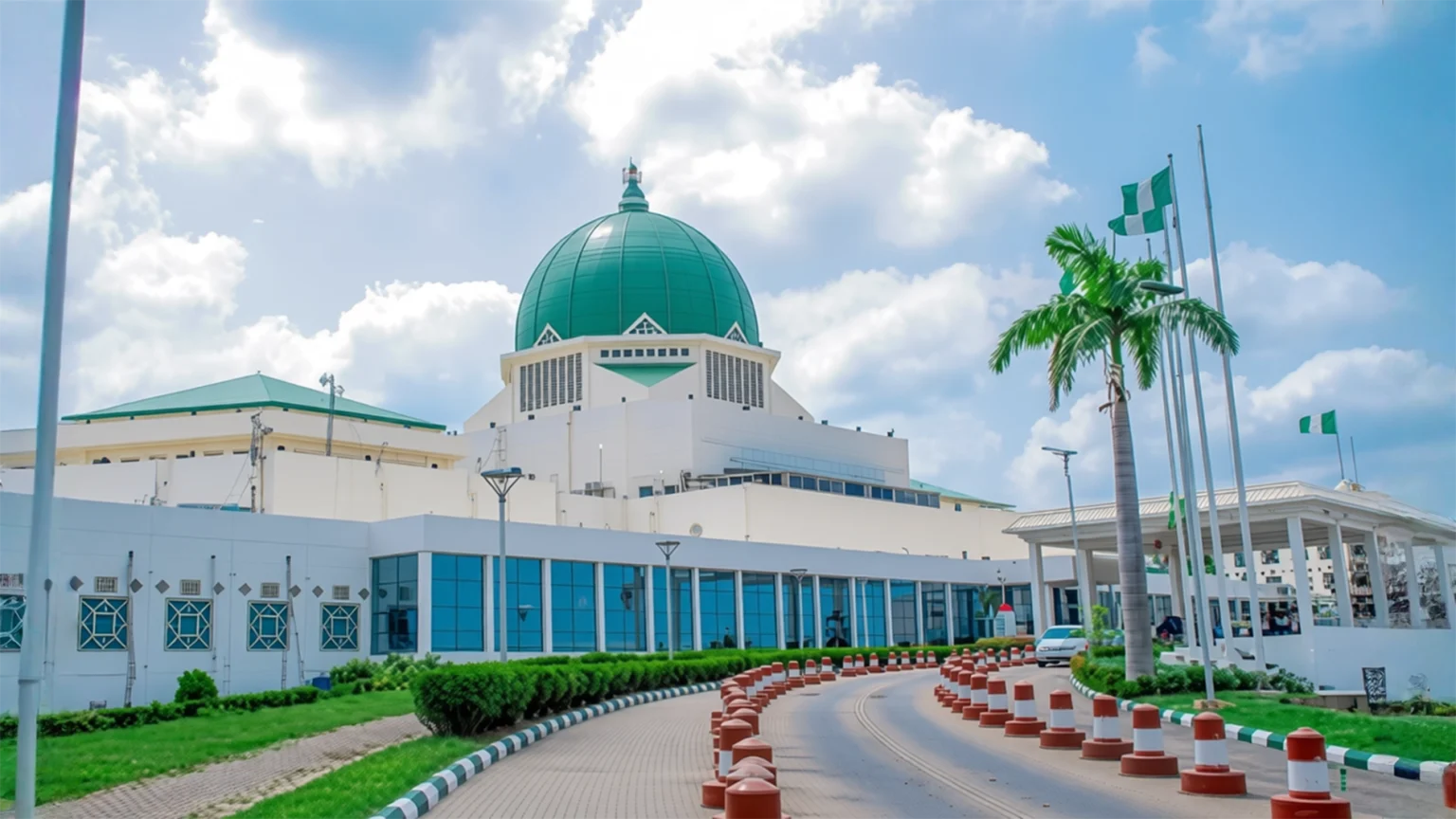
With the National Assembly set to resume plenary today, after its Easter break, lawmakers return following a series of adjournments and postponements that limited sittings to just 17 days in the first quarter of the year.
The resumption comes barely 48 hours before political parties begin primaries on April 23.

There are concerns that this could create a direct clash between legislative duties and full-scale electioneering ahead of the 2027 general elections.
Data obtained from the Policy and Legal Advocacy Centre (PLAC) shows that since its inauguration on June 13, 2023, the 10th National Assembly has spent 581 of 1,003 days on recess, with lawmakers sitting in plenary for only 422 days.
PLAC is an independent, non-profit, non-partisan civil society organisation that works to strengthen democratic governance and promote citizens’ participation and engagement with public institutions in Nigeria.
Further observation by The Guardian indicates that the lead-up to the April 21 resumption reflects a pattern of disrupted sittings.
Members of the National Assembly initially returned from the Christmas and New Year break on January 27, 2026, but plenary was quickly adjourned for two weeks to allow committees to engage ministries, departments and agencies (MDAs) in budget defence sessions following the presentation of the 2026 budget by the President in December 2025.
The National Assembly leadership stated that the move was intended to fast-track consideration of the 2026 Appropriation Bill at the committee level.
Legislative work, however, remained unsettled.
The Assembly briefly reconvened in February for the urgent passage of the Electoral Act 2026, after which plenary was adjourned again until February 24.
That date was later shifted to March 5 and then to March 10, as committees worked to conclude budget defence processes.
By the time lawmakers fully reconvened, the legislative calendar had already been significantly compressed.
After returning in March, the Assembly proceeded on a Sallah recess and reconvened on March 31 to pass the revised N68.32 trillion 2026 Appropriation Act.
Immediately after passing the budget, lawmakers adjourned again for the Easter break, from which they are set to return on April 21.
The cumulative effect of these disruptions is evident in the figures. With only 17 sitting days recorded between January and March 31, the National Assembly was away for 77.1 per cent of the period, falling well short of the constitutional benchmark.
PLAC data further shows that since June 2023, the National Assembly has taken more than 20 recesses, with 2025 standing out as the least productive year for legislative activity.
With only 141 sitting days recorded in 2025, the National Assembly fell 40 days short of the constitutional minimum, spending about 61.3 per cent of the year away from plenary.
The trend has continued in 2026, which appears even less productive. By the end of March, lawmakers had sat for just 17 days out of a possible 90.
Under Section 63 of the 1999 Constitution, the legislature is required to sit for not fewer than 181 days in a year. To meet that threshold in 2026, lawmakers would need to sit for at least 164 additional days before December.
Observers say this target appears difficult as the political calendar tightens. The challenge is further compounded by the timetable of the Independent National Electoral Commission (INEC), which places lawmakers at the centre of the electoral process in the coming months.
According to INEC, party primaries are scheduled to run from April 23 to May 30, 2026. During this period, many lawmakers are expected to seek re-election tickets to the National Assembly.
Campaigns for presidential and National Assembly elections are set to commence on August 19, 2026, while governorship and state assembly campaigns will begin on September 9, 2026.
Analysts say this overlap leaves a narrow and uncertain window for legislative work.
Apart from the Labour Party, which has fixed May 23 for its 2027 presidential primary, the All Progressives Congress (APC), the opposition Peoples Democratic Party (PDP), and the African Democratic Congress (ADC) have not fixed dates for their presidential primaries ahead of the 2027 general election.
During party primaries and the build-up to the general elections, lawmakers typically return to their constituencies to canvass for votes, engage party delegates and consolidate grassroots support.
These activities include consultations with local party structures, meetings with stakeholders and participation in political rallies aimed at securing nominations and strengthening their chances of re-election.
Early signs of these political movements are already visible.
The Guardian observed that legislative activities at the National Assembly in recent weeks have slowed significantly, with fewer lawmakers present for plenary and committee engagements.
Many committees are reportedly inactive, as members remain outside Abuja and focus on political mobilisation in their respective constituencies.
The situation is likely to persist in the coming months, particularly as the momentum of party primaries intensifies.
Irregular sittings are already affecting governance. The 2026 budget was passed well into the fiscal year, while constitutional amendment processes expected to conclude in 2025 remain unresolved.
The constitutional review exercise, which commenced in 2024, now appears constrained by recess cycles and an uncertain plenary calendar.
The leadership of the National Assembly had set December 2025 as the deadline for concluding the amendments. That deadline has passed without plenary consideration of key proposals, including special seats for women, state policing, judicial reforms and state creation, among others.
SPEAKING to The Guardian, the Executive Director of the Civil Society Legislative Advocacy Centre (CISLAC), Auwal Musa Rafsanjani, criticised the persistent breach of constitutional provisions governing the number of sitting days of the National Assembly.
He said the trend reflects a widening gap in legislative responsibility and is weakening effective governance in Nigeria.
Rafsanjani argued that, beyond plenary sessions, lawmakers are expected to remain actively engaged in legislative duties such as oversight, committee work and policy scrutiny.
He, however, expressed concern that, in many cases, recess periods appear to function more like holidays, with limited visible impact on pending legislative work, adding that this undermines public accountability, especially when key bills and oversight functions remain unattended.
He said: “It is a big problem if National Assembly members do not pay attention to the requirement of sitting in the National Assembly.
“This is also part of the reason why a lot of Nigerians are canvassing for probably just one legislative arm or reducing the cost of governance, because we are spending so much money with little impact and accountability, and then also this legislative arm becomes more of an extension of the executive arm, and that should not be the case.
“Another thing is that public accountability in Nigeria is very low. In fact, it is almost close to zero. Democracy is not seen as a system that will ensure effective participation, accountability, transparency and service in the interest of the general public.”
THE Executive Director of the Resource Centre for Human Rights and Civic Education (CHRICED), Ibrahim Zikirullahi, described the recurring pattern of prolonged recesses and low sitting days in the National Assembly as a “disturbing pattern of legislative absenteeism” and a betrayal of the social contract.
He noted that Section 63 of the 1999 Constitution clearly mandates at least 181 sitting days annually, warning that the current trend falls short of that requirement and undermines public confidence in the legislature.
Zikirullahi argued that, with lawmakers spending a significant portion of their time on recess and recording as few as 17 sitting days in the first quarter of 2026, it becomes increasingly difficult for citizens to see the National Assembly as fulfilling its constitutional duty.
“For CHRICED, this is not just a scheduling issue — it is a failure of democratic accountability. A legislature that is barely in session cannot provide oversight, cannot pass urgent reforms, and cannot claim to represent the people. It sends a dangerous message that governance can be paused while politics continues uninterrupted,” he stated.
He said the overlap between legislative recesses and political activities such as party primaries would further add to public frustration, noting that many Nigerians interpret it as a prioritisation of personal political ambition over national responsibility.
He warned that the implications for governance are severe, saying, “when the National Assembly is largely absent, the entire machinery of government suffers.”
“Nigerians are currently facing unprecedented economic hardship, soaring inflation, unemployment, collapsing public services and widespread insecurity.
“This is precisely the moment when the legislature should be most active, scrutinising executive actions, passing responsive laws and ensuring that public funds are used transparently.
“Instead, prolonged recesses create a vacuum of accountability. Ministries and agencies operate without meaningful oversight. Critical bills affecting the economy, security and social welfare remain stalled. Citizens see a government that appears disconnected from their suffering, and this widens the trust deficit between the people and the state.
“For millions of Nigerians struggling to survive, a legislature that is missing in action feels like a betrayal of the social contract. Governance cannot function when one of its three arms is effectively on pause. At a time of national crisis, the country needs a legislature that is present, active and responsive, not one that retreats into recess while citizens endure hardship,” he added.
Responding to concerns over frequent recesses and declining sitting days, the Deputy Spokesperson of the House of Representatives, Philip Agbese, told The Guardian that the leadership of both chambers is working assiduously to change the narrative around parliamentary productivity.
He said lawmakers have remained committed to the core responsibilities of legislation and oversight, despite time spent away from plenary.
Agbese argued that recess is a standard feature of parliamentary practice globally, stressing that it does not amount to a break from legislative duties.
According to him, committee work continues even when plenary is suspended, with lawmakers engaging ministries, departments and agencies (MDAs) and attending to other governance-related responsibilities outside the chamber.
“The recess is not for members to travel on vacation. It is for members to attend to other critical issues that are not chamber-based.
“For instance, as we speak, most of the committees are embarking on oversight. So, the period of recess is just a time when one is away from the chamber. It is not a period when one is away from the work at hand.”
He also dismissed concerns that election-related activities would undermine legislative work, describing political participation as part of democratic governance.
“It is normal for parliamentarians who want to return to parliament to participate in the primary elections of their political parties across their various constituencies. So, elections are part of governance.
“When parliamentarians participate in electoral processes, they also deepen the essence of governance and ensure that the country continues to sail through the democratic process. So, the upcoming electoral activities would not impact negatively; rather, they would impact positively on our legislative duties, because once that is done, members who participate will return to continue to deliver on their campaign promises to the people.” (Guardian)
-

 Metro17 hours ago
Woman cuts off boyfriend’s private part in Kano hotel
-
Politics8 hours ago
Fubara has corrected his mistakes – Wike
-
World News9 hours ago
US backs Chad on ICC exit, asks more nations to withdraw
-
Politics9 hours ago
Obi defeated Tinubu in Lagos because of naira redesign policy – Oshiomhole
-
News8 hours ago
Kaduna killings: Tinubu orders security forces to hunt down perpetrators
-
Metro12 hours ago
Hoodlums Invade ATBU Female Hostel, Rob Students Of Phones, Valuables
-
Politics10 hours ago
JUST IN: Appeal Court nullifies ruling ordering deregistration of ADC, four others
-
 News12 hours ago
How Bandits Abducted Bungudu LG Chair After Two-Hour Siege – Family