•Consumers now pay more for less •Output stuck at 3,000MW •We don’t enjoy Band A benefits — Customers •Band classification is lazy attempt to solving problem — Consultant
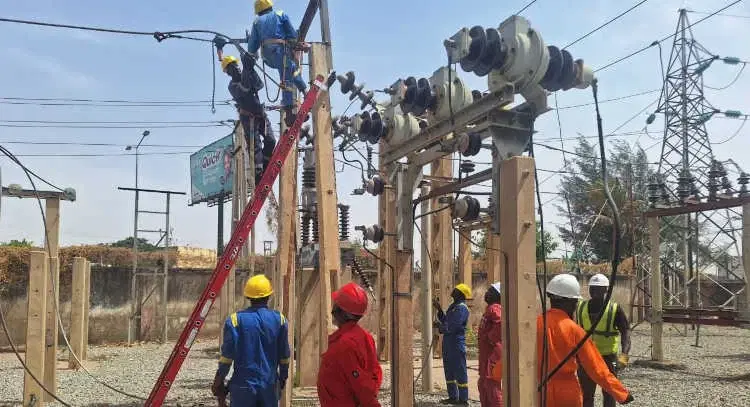
Nigeria’s electricity Band classification regime is fast unraveling, as power supply across major cities falls significantly below promised levels, leaving consumers paying more for less.
Findings by Financial Vanguard show that many feeders in Lagos, Abuja, Port Harcourt and Calabar now deliver far below the minimum hours stipulated under the Nigerian Electricity Regulatory Commission, NERC’s Band system.
Under the policy, Band A customers are entitled to at least 20 hours of electricity daily, Band B 16 hours, Band C 12 hours, while Bands D and E get 8 hours and 4 hours respectively.
However, consumer diaries compiled by Financial Vanguard in Lagos, Abuja, Port Harcourt, Calabar and others indicate a wide gap between policy and reality.
customers.“To the extent that the National Assembly has already commenced a legislative process to enforce sweeping reforms that could see core investors in the electricity distribution companies lose their stakes if they fail to improve on their investment strategy.
“In fact, the Federal Government has threatened to sell the eleven (11) DISCOs through a re-privatization process over capital failure if the Electricity Act (Amendment) Bill 2025 currently before the National Assembly becomes law.
”What looks like a solution to the problem is the recent move by some of the lawmakers to cancel the NERC imposed electricity tariffs bands as NASS plans to recommend the creation of a National Electric Power Policy Council to oversee high-level policy alignments in the country by tackling most of the inherent problems in the nation’s power sector.
”We’re hoping equally that the recently established Grid Asset Management Company Limited (GAMCO) and its 11-Member Committee set up by President Bola Ahmed Tinubu will look into this issue critically and proffer the best solution.”
Band classification, lazy attempt to solving problem –Consultant
Also, Principal Partner, The Energy Consulting Practice, Kelvin Emmanuel, said: “I think the band classification is a lazy attempt by the minister to do the heavy lifting required for solving the historical problem of load shedding in Nigeria. The problems include technical losses from a centralized grid with aging infrastructure, commercial losses from 42% of unmetered customers and lack of market reflective tariff that’s caused historical tariff shortfall to market operators
.“They also include a gearing ratio for equity to debt of discos that has made 80% insolvent, lack of incentive for investors to generate more electricity, lack of high pressure on pipes from gas aggregators due to debts owed, lack of market reflective gas pricing and refusal of government to align domestic base price to export parity and lack of guarantees and revenue assurance due to faulty pricing framework”
He also noted that “Unreliable power supply is part of the reason why Nigeria is consuming up to 35m liters per day for diesel, and up to 16m liters per day for petrol. And the recent hike in prices of these transportation fuels, owing to the escalation in the Middle East, is definitely going to transmit an increase in cost price index for inflation from a 45% rise in prices of diesel and petrol.”
NERC downgrades Bands due to inability to meet targets
Industry sources told Financial Vanguard that some feeders initially classified as Band A may have been quietly downgraded due to Electricity Distribution Companies, DisCos’ inability to meet supply thresholds.However, there is little public communication from either the DisCos or the NERC confirming such changes, leaving consumers uncertain about their actual service band.
Also, C. Don Adinuba, public policy strategist, and former Anambra State Commissioner for Information and Public Enlightenment, said supply has not been adequate and steady in his Island part of Lagos.
According to him, “My area was formerly classified under Band A. Now, we are classified under Band C, even then, supply remains inadequate.He said: “We were full of hope when we were told that our area falls under Band A. Later, we were so disappointed because we did not experience up to the expected 20 hours of supply.
“Now, our area has been classified under Band C. But nothing has changed. I am compelled to buy three generators to generate my independent power that cost a lot to operate. This is mainly because the Premium Motor Spirit, PMS, also known as petrol and diesel have become very expensive, especially during the current Middle East crises.”
Sanctions, enforcement mechanisms
According to NERC, “If a Band A feeder fails to receive the minimum 20 hours of supply for seven consecutive days, the DisCo is mandated to automatically downgrade that feeder to a lower band (e.g., Band B), thereby reducing the tariff payable by customers in that area.
“If, over the course of one month, the average daily supply to a Band A feeder is below 20 hours, the DisCo is required to issue free energy units (compensation) to the affected customers in the next billing cycle.
“If a DisCo fails to provide 20 hours of supply on Band A feeders for two consecutive days, it must publish an explanation on its website and through bulk SMS to affected customers by 10:00 am on the third day.
“NERC imposes heavy financial fines on DisCos for non-compliance with capping regulations and unauthorized tariff increases.
For example, in 2024/2025, NERC fined eight DisCos over N628 million for breaching energy caps for unmetered customers.“When DisCos breach service standards, NERC orders them to issue credit adjustments (refunds) to overbilled customers.
”In instances where DisCos apply the higher Band A tariff to lower-band customers, NERC has imposed fines of N200 million and mandated a refund of the excess charges, as was done with Abuja Electricity Distribution Company (AEDC).”
”Stakeholders said the development poses serious implications for Nigeria’s economic growth, noting that unreliable electricity supply continues to drive up production costs, reduce competitiveness and discourage investment.They also called for urgent reforms to address gas supply bottlenecks, improve market liquidity and enhance operational efficiency across the power value chain.(Vanguard)





 Business12 hours ago