Business
She built a nonprofit for poor kids and stole $1.4 million from them

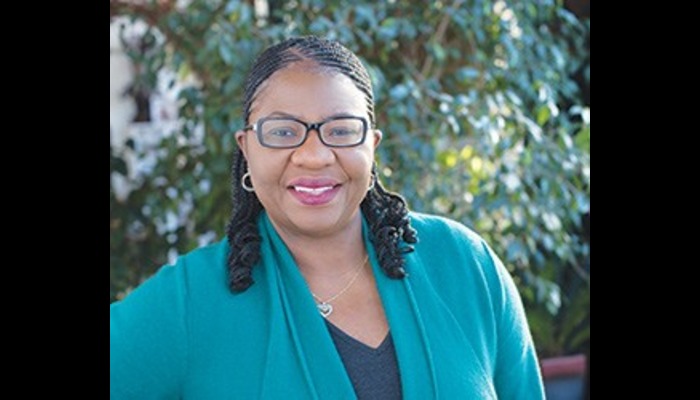
…Nkechy Ezeh founded an organisation to give West Michigan’s poorest children a fighting start. A federal judge has now called her what prosecutors always said she was: a fraud and a thief.
On the morning she was sentenced, Nkechy Ezeh walked into a federal courtroom in Michigan as a former professor, a published educator, and the founder of a nonprofit that had once been celebrated for giving low-income children access to early learning. She walked out in federal custody, bound for a prison term of 70 months.
Chief US District Judge Hala Y. Jarbou did not mince words. She called Ezeh “a fraud and a thief.” She described the scheme as “brazen and widespread.” And she made clear, for the record, exactly who the real victims were: preschool children in some of West Michigan’s most underserved communities, whose meals, transport, and classroom support had been quietly redirected into one woman’s personal accounts.
The sentence, announced Wednesday by the Office of the US Attorney for the Western District of Michigan, caps one of the more striking betrayals in recent federal fraud cases, not because of its scale, though $1.4 million is not a small number, but because of the specific cruelty of its target. The funds Ezeh stole were not abstract government dollars. They were Head Start allocations. Department of Education grants. Private donations from people who believed they were helping three and four-year-olds in poor neighbourhoods get a decent start in life.

Instead, according to court filings, the money went to Hawaii. To Europe. To Africa. To a family wedding. To relatives who appeared on the organisation’s payroll but performed little or no actual work. And, through intermediaries, to family members back in Nigeria.
The organisation she built
Early Learning Neighborhood Collaborative, known as ELNC, was by all visible accounts a genuine effort. Ezeh founded it in Grand Rapids, Michigan, with a stated mission of providing early childhood education and wraparound services to children in low-income communities. The organisation secured funding from major federal programmes, built relationships with local preschools, employed dozens of staff, and delivered services that families in underserved neighbourhoods depended on.
Ezeh was not an unknown figure. She held an academic post at Aquinas College as an Associate Professor of Education and directed its Early Childhood Education Programme. She had the credentials, the language, and the institutional credibility to attract exactly the kind of government and philanthropic funding that ELNC relied upon. Donors and federal programme officers saw a mission-driven leader with an academic pedigree. What prosecutors say they did not see was what was happening inside the organisation’s finances.
The scheme
The fraud, as laid out in court filings, operated on multiple tracks simultaneously. Ezeh diverted organisational funds for personal travel and lifestyle expenses. She constructed a ghost payroll that funnelled hundreds of thousands of dollars to relatives who did little or nothing to earn them. She used intermediaries to move stolen funds overseas. And through it all, she filed tax returns that concealed what she had taken, earning her a concurrent 60-month sentence for tax evasion on top of the 70-month fraud conviction.
Sharon Killebrew, a former bookkeeper at ELNC who was identified as a co-conspirator in the scheme, was sentenced earlier to 54 months in prison. Her cooperation was instrumental in establishing how the financial manipulation operated at the internal accounting level.
Judge Jarbou imposed full financial accountability alongside the prison term. Ezeh was ordered to pay $1.4 million in restitution and a further $390,174 to the Internal Revenue Service. She was remanded into federal custody immediately after sentencing.
What the money could have done
US Attorney Timothy VerHey was direct in his assessment of what the theft meant in human terms.
“Nkechy Ezeh’s greed is beyond reprehensible,” he said in a statement. “She stole taxpayer and private-donor dollars meant for low-income children in our community. Instead of helping kids, she spent that money on herself. The stolen money could have supported hundreds of West Michigan children and their families.”
The numbers bear that out. Head Start, one of ELNC’s primary federal funding sources, serves children from birth to age five in families living at or below the federal poverty line. The programme covers early education, health screenings, nutrition support, and family services. Every dollar diverted from it is a direct subtraction from a child who has no alternative safety net to fall back on.
When ELNC collapsed and shut down in 2023, the consequences were immediate and concrete. Several preschools lost their funding. Thirty-five employees lost their jobs. And the children in those classrooms served lost services that, for many of them, represented the only structured early learning environment they had access to.
The sentence
Judge Jarbou’s language at sentencing was notable not just for its harshness but for its precision. She did not describe Ezeh as someone who had made poor financial decisions or succumbed to temptation under pressure. She called her a fraud and a thief, in those words, on the record, in open court. The distinction matters. It is the language of moral verdict, not just legal finding.
The investigation that brought the case to court was conducted by the US Department of Health and Human Services Office of Inspector General and the IRS Criminal Investigation unit. Assistant US Attorney Clay Stiffler prosecuted.
Federal authorities said the case stands as a warning about the vulnerability of grant-funded nonprofit organisations to internal financial abuse, particularly when governance structures are weak, financial oversight is concentrated in few hands, and the organisation’s credibility insulates it from routine scrutiny.
What remains
The children of West Michigan’s low-income neighbourhoods who were enrolled in ELNC’s programmes did not get a closing statement. They did not get to describe, in a courtroom, what it meant when the meals stopped coming, when the classroom doors closed, when the adults who were supposed to show up for them no longer did.
What they got, in the end, was a judge who said the right words. A prosecutor who called the greed reprehensible. And a sentence that, whatever else it accomplishes, at least confirms that the court understood what was really stolen: not a line item in a federal budget, but a chance: small, fragile, and irreplaceable, at a better beginning.(BusinessDay)
-

 News17 hours ago
Gencos’ Revelation Has Exposed Tinubu’s Power Debt Deception – Atiku
-
Business10 hours ago
Sycamore reacts as CBN revokes its microfinance bank’s licence two months after acquisition
-
News10 hours ago
Gbajabiamila: Four Difficult Questions Tinubu Must Answer – Atiku
-
Business10 hours ago
NNPC profit dropped to N462bn in May, crude oil production hit one-year high
-
Politics17 hours ago
Governors ready for State police, says Oyebanji
-
Politics17 hours ago
Atiku appoints Kenneth Okonkwo as spokesperson
-
Social Media News14 hours ago
India asks Meta to hold WhatsApp username rollout over fraud fears
-
News17 hours ago
Presidency panics as another bribery scandal engulfs chief of staff Gbajabiamila