Opinion
Jim Ovia and the Lagos property market

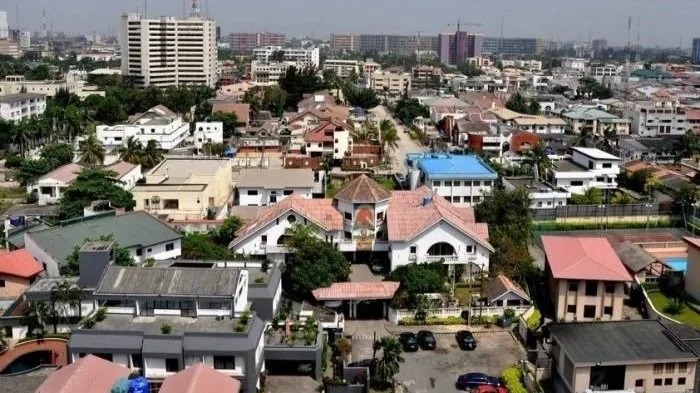
Founder of Zenith Bank, Jim Ovia, is expanding his business portfolio into the luxury end of Nigeria’s real estate business, betting that high-end property offers stronger returns than banking. Not many would be convinced by that, but coming from a man who founded the bank 35 years ago and grew it into one of the biggest lenders in the country, the statement captured attention across sectors. Ovia announced his retirement from banking as chairman of Zenith last month.
His company, Quantum Luxury Properties, is developing two major high-end residential towers in Lagos: the first, Metropolitan Towers, is a 26-floor high-rise where each apartment would sell for $1.85 million; and the second, Quantum Luxury Towers, with 44 apartments, each starting from a $2.8 million selling price.
Two decades ago, Ovia had entered the property business with the development of high-end event centres in Victoria Island. The success of The Civic Centre on the highbrow Ozumba Mbadiwe Road in Victoria Island certainly prepared the 74-year-old for a life in retirement.
The Lagos luxury property market is one of the biggest and most profitable in Africa. According to intelligence firm, Estate Intel, about 135 homes in Lagos are currently priced above $1 million each. The market is projected to grow substantially over the next five years, with nearly 1,400 additional luxury homes projected to enter the market by 2029. The Akwa Ibom state government is adding 32 new apartments to the expected 1,400. Located in Victoria Island and developed by the state government, Ibom Towers is an 18-storey investment that will feature 10 one-bedroom units, 10 two-bedroom units, nine three-bedroom units, and three two-bedroom penthouses and service quarters. I attended the turning of the sod event at the construction site in October 2024. Construction has been progressing steadily since.

Ibom Towers is designed as an income-generating venture for the state, whose IGR has been among the least in the country. Construction started last year and will be completed in 2027. At the current market rate, the government expects to earn over $70 million (about N105 billion) in gross income from the venture. The initial construction cost for the 18-storey Ibom Towers was N50 billion. But an upward review is expected to make up for rising costs. Even if the final cost of the project is N80 billion (my estimation), the state could end up with between N20 billion and N30 billion as net profit – enough to fund some of the administration’s many social and economic programmes.
The government is also planning other property investments in Abuja. Gov. Umo Eno says the main objective is to widen the government’s revenue streams beyond FAAC allocations. Internally generated revenue currently stands at about N100 billion per year, up from N40 billion per year in 2023. The increase is due to plugging of leakages and theft with the introduction of the Treasury Single Account by the Eno administration.
Lagos is experiencing increased demand for premium properties fueled by demand from Nigerians at home and in Diaspora, taking advantage of the weaker naira to acquire assets and build savings. Developers have increasingly focused on affluent districts such as VI, Ikoyi and the newly developed Eko Atlantic, where demand has remained relatively strong despite broader economic difficulties.
Notable investors in the business are Dayspring Property, owned by Mrs Folorunsho Alakija, Nigeria’s wealthiest woman. It built Famfa Tower, Ikoyi and Rose of Sharon Tower, VI, among others. Palton Morgan group, which developed Paramount Twin Towers in Oniru, Lekki, VI and Skyvilla in Ikoyi. There are also Oak Homes, ranked among Nigeria’s top luxury developers. It has Oak Residence in VI, Oak Mews and Hamilton Court in Lekki. Other developers are Sujimoto Construction, Haven Homes, Primewater View, Cadwell Limited and HFP Engineering.
The size of this market, according to some operators, is roughly $7.5 billion (N3.2 trillion) with a 6 – 8% yearly growth rate. Rental yields average 5.5% yearly for luxury properties. Rent for a typical two-bedroom flat could go as high as N36 million/year. Ikoyi, Banana Island, Eko Atlantic and VI are the hot spots with annual appreciation ranging from 20% to 60%.
Overall, the Lagos real estate market is projected to be $2.6 trillion by 2025; $3.4trn by 2029. Luxury is the high-end slice of that. The luxury market stays hot because of limited land and strong capital appreciation, even with rising construction costs. Akwa Ibom is the first state government to go into the Lagos luxury living investment, just as it was the first state to float a commercial airline. The success of Ibom Air has since inspired other states to follow suit. I would imagine that other states would also emulate Akwa Ibom this time around.
•Written By Etim Etim
-

 News22 hours ago
UK universities withdraw admission offers to Nigerians over visa crackdown
-
News23 hours ago
Benue: Suspected herdsmen kill nine in fresh Ukum attacks
-
News22 hours ago
Why kidnappers target NYSC members — Security experts
-
Politics22 hours ago
2027: Protest, relief as INEC releases final candidates’ list
-
Politics22 hours ago
2027: Opposition, APC clash over campaign funding
-
World News23 hours ago
US gunman shoots dead 7 relatives, family friend
-
Business22 hours ago
Fitch revises Nigeria’s outlook to positive, affirms ‘B’ rating
-
Opinion22 hours ago
Did Obi actually win in 2023?