Business
Tony Elumelu’s Seplat test: Can the UBA playbook work in oil?

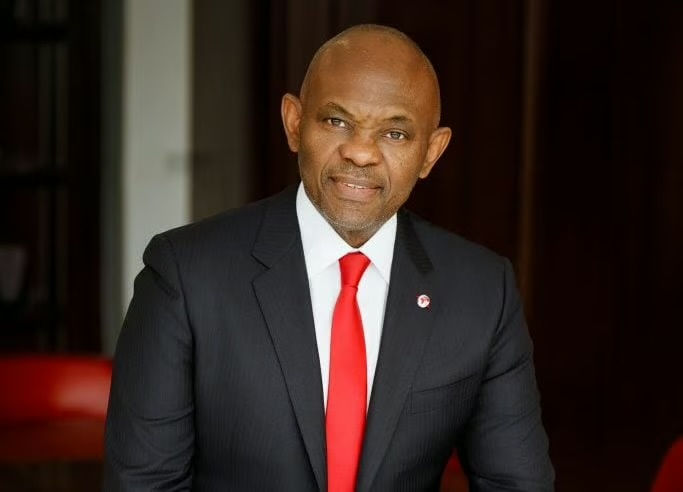
Tony Elumelu built his reputation by transforming a Nigerian bank into a pan-African financial group. Now he is trying to prove that the same playbook can work in the oil sector.
His acquisition of a 20.07% stake in Seplat Energy, followed by his election as incoming chairman, places him at the centre of Nigeria’s post-IOC energy order. Seplat is already the country’s most prominent indigenous upstream champion. It has absorbed ExxonMobil’s Nigerian shallow-water business, laid out a 2030 growth plan, and become one of the most valuable companies on the Nigerian Exchange Group (NGX).
But the comparison with United Bank for Africa has limits. Bank shares can be merged. Oil assets, by contrast, come with ministerial consent, decommissioning liabilities, host-community obligations, pre-emption rights and minority-shareholder scrutiny. That makes Elumelu’s next act both more ambitious and more constrained than his first.
His ambitions in oil and gas date back more than two decades. Tenoil Petroleum and Energy Services, founded in 2005, signed a production-sharing contract with the Nigerian National Petroleum Company to operate the shallow-water block OPL 2008. Transcorp, where Elumelu became chairman in 2011 after becoming its major individual shareholder, later sought oil and gas assets of its own, including a 2012 bid with Midwestern Oil and Gas for ConocoPhillips’ Nigerian assets. The consortium lost out to Oando.

In 2014, Tenoil and Transcorp Energy signed another production sharing contract with NNPC for OPL 281. However, the breakthrough came only in 2021, when Heirs Energy acquired a 45% stake in OML 17 from Shell, TotalEnergies and Eni in a $1.2bn deal, becoming the operator of the block on behalf of NNPC.
“He has tried to use Heirs and Transcorp as vehicles for his oil and gas interests. But none of them have achieved the prominence of Seplat,” says Jimi Ogbobine, associate director and head of consulting at Agusto Consulting. “So, I think the strategic and fundamental question for him was: should he continue to drive his own vehicles or can he make an acquisition of a vehicle that has already achieved scale?”
The Seplat platform
Elumelu’s answer came in the final days of 2025, when Heirs Energies acquired a 20.07% stake in Seplat from the French oil group Maurel & Prom for $496m. On 22 January, he joined Seplat’s board as a non-executive director. Less than five months later, on 9 June, the board elected him as incoming chairman. He will take over from Udoma Udo Udoma on 1 January 2027.
The move placed him at the head of a company that has become a bellwether for Nigeria’s indigenous oil and gas sector. Seplat was among the local operators that acquired assets from international oil companies as the latter began to move away from Nigeria’s onshore and shallow-water fields.
Its 2024 acquisition of Mobil Producing Nigeria Unlimited, ExxonMobil’s Nigerian subsidiary, expanded its asset base across the Niger Delta and raised its ambitions. Under its 2030 roadmap, Seplat aims to produce 200,000 barrels of oil equivalent per day. It plans to drill up to 150 new wells and spend between $2.5bn and $3bn over five years.
“I believe in the critical role indigenous resources play in the economic transformation of Nigeria and Africa, and Seplat Energy’s culture of execution and governance aligns strongly with my own values,” Elumelu said when his appointment was announced. He added that he was ready to “lead the board through Seplat Energy’s next phase of growth”.
The company’s market performance gives the story extra weight. “Seplat is one of the biggest listed entities in Nigeria,” says Abiodun Keripe, managing director at Afrinvest Consulting, noting that its share price has climbed from ₦578 at its 2014 listing to ₦11,363 as of Tuesday. “That’s a very aggressive compounded return of over 1,860%.”
Its market capitalisation stood at ₦6.82trn, making it the seventh most valuable company on the Nigerian Exchange. For Elumelu, Seplat offers visibility, scale and market discipline – qualities that were harder to achieve through Heirs and Transcorp alone.
“His appointment as chairman is a big benefit for Seplat, given Elumelu’s experience in running successful and large businesses over the years,” says Tajudeen Ibrahim, director of research and strategy at Chapel Hill Denham in Lagos.
What the UBA playbook means
Elumelu’s reputation was forged in banking, where he used acquisitions, regulatory change and capital-market discipline to achieve scale.
In 1997, he led a group of investors that acquired the distressed Crystal Bank, which was rebranded as Standard Trust Bank. In 2005, he acquired a stake in UBA, then Nigeria’s third-largest lender, and merged it with STB. The deal became one of the landmark transactions of Nigeria’s banking consolidation era.
UBA has since grown from a single-country lender into a pan-African bank with operations in 20 African countries, as well as in the US, the UK, the United Arab Emirates and France. Elumelu served as group managing director and chief executive until 2010. He returned as chairman in 2014.
The pattern is familiar: buy or build a platform, strengthen the balance sheet, expand across borders, and use one part of the group to reinforce another. Heirs Holdings, his investment company, has interests in financial services, power, oil and gas, hospitality, real estate, and healthcare. Its listed investee companies include Transcorp, Transcorp Hotels, Transcorp Power, UBA, United Capital, and Africa Prudential.
“He has clearly built a very strong balance sheet that has strengthened with the different cycles of the Nigerian economy,” says Keripe. “He has a group of institutions that he could leverage their balance sheets, if need be, to expand his footprint.”
That could matter for Seplat’s growth plans. Ibrahim says Elumelu’s financial-services background “can underpin the ability of Seplat to have access to relatively cheap capital over time”, supporting growth and acquisitions.
Adeola Adenikinju, professor of energy economics and director of the Centre for Petroleum, Energy Economics and Law at the University of Ibadan, sees a possible continental opening. “I think the incoming chairman is a global brand with strong continental and international reach, which will be very helpful to the company,” he says. “With the power of UBA behind him, Seplat will find it easier to access support and capital.”
For now, Seplat operates entirely in Nigeria. But Elumelu’s ambitions have rarely been confined to national borders. At the 2021 launch of Heirs Energies, he said the group had “a very clear vision: creating Africa’s first integrated energy multinational, a global quality business, uniquely focused on Africa and Africa’s energy needs”.
Udoma, Seplat’s outgoing chairman, told The Africa Report last month that the company could one day look outside Nigeria. “Because of our ambition, we will always be looking at where there’s potential. At the moment, we have a lot to chew on, but at some point, we will look outside Nigeria,” he said.
Evolution, not rupture
The immediate task is more prosaic: integrate MPNU, deliver the gas agenda and execute Roadmap 2030.
“The board has signalled continuity: an insider chief executive in Effiong Okon, a staggered handover, and Elumelu sitting first as a non-executive director before taking the chair,” says Ayodele Oni, energy analyst and partner at commercial law firm Bloomfield LP.
That does not mean the strategy will stand still. Over time, Elumelu’s position as an anchor shareholder is likely to shape the company’s direction.
“An anchor shareholder of his ambition will inevitably tilt the strategy, most likely towards more assertive indigenous-led consolidation and tighter gas-to-power integration,” Oni says. “So I read it as evolution rather than rupture, at least at the outset.”
The distinction is important. Elumelu is not taking over a private company. He is becoming chairman of a dual-listed group, with other shareholders, board processes and regulatory obligations. His influence is significant, but not absolute.
The merger question
One question hanging over the company is whether Elumelu’s Heirs Energies or Tenoil assets could one day be folded into Seplat. No such plan has been announced. When contacted, Heirs Holdings said it was unwilling to comment at this time.
Still, the speculation stems from his record as a consolidator. Seplat has a listed platform, market visibility and operating scale. Heirs has its own oil and gas assets. A combination could create a larger Nigerian champion with greater reserves, cashflow and operational breadth.
“Elumelu has walked this road before with STB and UBA,” says Ogbobine. “It’s not out of place to imagine that it will be on his radar. But remember that there are a lot of strategic investors in Seplat that he will have to scale this hurdle with.”
Oni sees “obvious industrial logic” in the idea, given OML 17, gas monetisation and the ANOH platform. But he warns against treating Seplat as a simple repeat of the STB-UBA merger.
“At Seplat, he is an anchor shareholder of roughly 20% and incoming chairman, not a controlling owner of a privately held vehicle,” he says.
Any deal between Seplat and a Heirs-linked entity would constitute a related-party transaction. That would require an independent board process, an independent valuation and a fairness opinion. Conflicted directors would need to recuse themselves. Minority shareholders and regulators would scrutinise the terms.
“A tie-up is conceivable as a strategic option, but it is not something a chairman can simply direct,” Oni says. “It would have to clear arm’s-length scrutiny and survive minority and regulatory examination.”
Why oil is harder than banking
The larger challenge is that Nigerian oil and gas do not have the same mechanics as Nigerian banking.
“The banking consolidation of 2004/2005 was regulator-driven; the central bank’s recapitalisation mandate effectively forced and facilitated mergers, and bank shares are clean, fungible instruments,” Oni says. “Upstream oil and gas have no equivalent forcing mechanism, and the assets are anything but clean to move.”
Lease assignments require ministerial consent and regulatory approval under the Petroleum Industry Act. Deals can be complicated by pre-emption rights, decommissioning liabilities, environmental obligations and host-community commitments.
Seplat’s dual listing adds another layer. On the Nigerian side, Oni says, any related-party deal would fall under NGX rules, Securities and Exchange Commission rules and the Investments and Securities Act 2025. If a share-for-asset injection pushed Heirs above 30%, it could trigger a mandatory takeover offer to minority shareholders. A merger by scheme would require SEC approval and court sanction.
On the London side, the regime is now more disclosure-based than vote-based after the 2024 listing reforms, Oni says. Commercial companies no longer require a shareholder vote for related-party or significant transactions. But disclosure and investor scrutiny would still matter. The UK Takeover Code would not generally apply to a Nigerian-incorporated company.
That is the central test. Elumelu’s record suggests he is most effective when he can combine capital, regulatory navigation and institutional ambition. Seplat gives him the strongest energy platform he has yet had. It also gives him a more complex platform than UBA ever was.
The prize is substantial: a Nigerian oil and gas champion with the capital, governance and ambition to expand beyond its home market. The constraints are equally real: public shareholders, regulators, asset liabilities and a sector where deals move slowly.
Elumelu may not be able to replicate UBA in oil, but Seplat gives him his best chance yet.
(The Africa Report)
-

 News24 hours ago
Sanwo-Olu orders immediate waste evacuation across Lagos
-
News22 hours ago
State Police must align with federalism, citizens’ rights – NGF
-
Politics21 hours ago
Crisis Deepens In APC As Northern Bloc Rebels Over Tinubu‘s Marginalization ’ Threatens Mass Exit Ahead Of Next Polls
-
Metro21 hours ago
Nursing student found dead in Anambra apartment, landlord arrested
-
News9 hours ago
Stop Blaming North For Insecurity – Rtd Generals Tell Nigerians
-
African News9 hours ago
Anti-Migrant Vigilantes Have Destroyed Mandela’s Sacrifice – Bianca Ojukwu
-
Sports16 hours ago
Real Madrid confirm signing of Ibrahima Konate
-
News9 hours ago
FCT: Even With Tinted Permit, You May Be Arrested – Police Warn Vehicle Users