News
How International law shielded the 75-Year-Old Pilot in Delta road landing

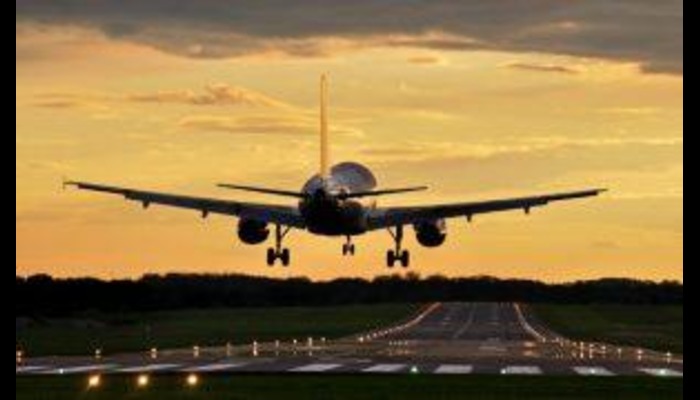
The dramatic landing of a Bombardier Challenger CL-601 on a concrete road under construction in Ogwashi-Uku, Delta State, has triggered intense public scrutiny.
However, the Nigerian Civil Aviation Authority’s (NCAA) subsequent disclosure that the flight crew consisted of a 75-year-old pilot and a 70-year-old co-pilot has exposed a fascinating layer of international aviation law.
While Nigerian civil aviation regulations strictly prohibit commercial pilots over the age of 65 from commanding flights, the NCAA has clarified that the crew of the aircraft (registration N989BC) committed no offence regarding their age under Nigerian law.
Under the Chicago Convention on International Civil Aviation, the “State of Registry” holds primary jurisdiction over the licensing of the flight crew, not necessarily the country whose skies the plane is traversing.

Because the Bombardier Challenger is registered in the United States (indicated by the “N” prefix in N989BC), it remains an extension of U.S. regulatory territory regarding airworthiness and crew compliance, BusinessDay’s findings show.
The pilots hold U.S. Federal Aviation Administration (FAA) licenses and operate under FAA Part 91 and Part 135 regulations. Unlike Nigeria’s rigid cap of 65 years, U.S. regulations do not have a hard upper age limit for non-commercial or certain private charter operations, provided the pilots can pass the FAA’s stringent, bi-annual First-Class Medical certifications.
“The pilot is not overaged in America,” explained Don Spiff, NCAA’s Director of Operations, Licensing, and Training in a recent TV interview.
“These guys are not flying with a Nigerian licence, and because it’s American-registered, the pilots hold American FAA licences. It is not a breach,” he clarified.
“Aviation is a very dynamic field. It is in the Civil Aviation Act, yet to be implemented, that after 65, a Nigerian pilot can actually fly private, as long as he passes his first-class medical,” Spiff added.
He, however, noted that for the pilot to have taken off, it was not allowed because he did not obtain any clearance for takeoff.
“He did a kamikaze (suicide mission) action. There will be penalties. So far, the NCAA has suspended their commercial certificate, which is called a PNCF.”
-

 Metro22 hours ago
US death row inmate survives execution after two lethal injections
-
Business23 hours ago
Refining Battle: Dangote calls for ‘level playing field’ as court deals Lagos refinery a blow
-
Politics4 hours ago
Osuntokun accuses Atiku of affront, disrespect to Tinubu in Oct. 1 speech
-
Entertainment4 hours ago
Diddy thrown into solitary after VIP prison life exposed
-
News4 hours ago
Troops rescue 10 NYSC members, kill 16 terrorists, recover weapons
-
Politics22 hours ago
‘How did you transfer N750bn to people without phones?’ — Atiku tackles APC chair
-
Business23 hours ago
Transport cost pain bites despite Tinubu’s Oct 1 promise
-
Social Media News23 hours ago
WhatsApp introduces parental controls for teens