Business
N5.19trn outside banks despite cashless policy

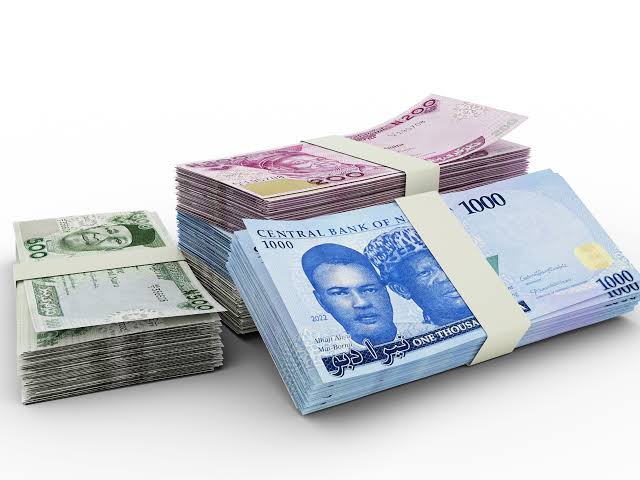
Despite years of implementing cashless policy with the promotion of electronic payments, Nigerians continue to hold a significant amount of money outside the banking system.
Latest figures from the Central Bank of Nigeria (CBN) showed that currency outside banks rose to N5.19 trillion in May 2026, underscoring the persistent dominance of cash transactions across the country.
The development highlights the challenges confronting Nigeria’s cashless policy, which was introduced to encourage digital payments, improve financial inclusion, reduce the cost of cash management, and strengthen transparency within the financial system.
While digital payment channels have expanded rapidly in recent years, cash remains the preferred medium of exchange for millions of Nigerians, particularly those operating within the informal sector.

This is coming amidst a reported move by the federal government to tighten the cashless policy in order to curb widespread insecurity.
According to the CBN’s Money and Credit Statistics, currency held outside the banking system increased from N5.08 trillion in April 2026 to N5.19 trillion in May 2026. This represents a month-on-month increase of N109.34 billion or 2.15 percent.
On a yearly basis, the amount of cash held outside banks rose by N559.16 billion from N4.63 trillion recorded in May 2025, translating to an annual increase of 12.07 percent. The figures suggest that a growing volume of cash released into the economy is not finding its way back into the formal banking system.
The trend persists despite sustained efforts by regulators, commercial banks, mobile money operators, and fintech firms to promote electronic payment alternatives such as bank transfers, mobile wallets, point-of-sale transactions, and agent banking services.
Data from the apex bank further revealed that total currency in circulation increased to N5.69 trillion in May 2026 from N5.65 trillion recorded in April. The N43.59 billion increase represents a monthly growth rate of 0.77 percent.
Compared with the N5.02 trillion in circulation recorded in May 2025, the latest figure reflects an annual increase of N675.19 billion or 13.46 percent.
A closer analysis of the data indicates that an overwhelming proportion of the cash circulating within the economy remains outside formal banking channels.
Currency outside banks accounted for 91.27 percent of total currency in circulation in May 2026, compared with 90.03 percent in April.
This means that more than nine out of every ten naira in circulation were held by households, businesses, traders, transporters and other participants in the informal economy rather than being deposited in financial institutions.
Although the ratio remains slightly lower than the 92.40 percent recorded in May 2025, it nevertheless points to the enduring reliance on cash across large segments of the economy.
Bank reserves fell from N34.603 trillion in April to N33.763 trillion in May, representing a decrease of N840.77 billion or 2.43 percent.
The decline suggests lower liquidity buffers within the banking system during the period, even as more currency circulated outside formal financial channels. However, the reserves position remained considerably stronger than a year earlier.
Compared with May 2025, bank reserves increased by N2.90 trillion from N30.865 trillion, representing annual growth of 9.39 percent.
…Expert links excess cash to election spending
Speaking with our correspondent, a Professor of Finance, Mufutau Ijaiya said political factors could account for it, noting that many politicians might be taking money from the banks to spend on the forthcoming electioneering.
“They are taking money from the banks and they keep the money in preparation for the election. That is one of the major factors that could have caused that,” he said.
Ijaiya noted that the excess cash could also be linked to insecurity, saying, “The money kidnappers collect from people, they don’t take it to the bank. This is another reason why we have a lot of money outside the banking system.” (Daily trust)
-

 Politics15 hours ago
Osun guber: APM, PDP candidates withdraw, endorse Adeleke
-
Politics17 hours ago
I ignored warnings before backing Gbenga Daniel for Senate in 2023 – Abiodun
-
Entertainment19 hours ago
Wizkid To Headline 2026 Detty December Fest
-
African News17 hours ago
Xenophobia: No request yet from S’Africa on repatriation costs — FG
-
Sports19 hours ago
Super Falcons Miss Out Of 2027 World Cup After Defeat To South Africa
-
Politics19 hours ago
Osun Polls: INEC Records 1.9 Million PVC Collections
-
News20 hours ago
Government official smuggles 14 family members into salary payroll, another collects 13 salaries
-
World News19 hours ago
US sets up task force to end birth tourism, revokes over 600 visas worldwide