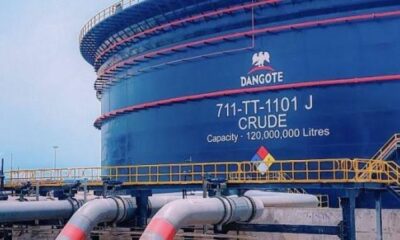
Nigeria’s aviation fuel market has undergone significant changes over the past year, driven by the emergence of domestic refining capacity, shifting global Jet A1 market dynamics, and geopolitical tensions that have reshaped aviation fuel pricing.
While the commencement of supply from the Dangote Refinery has improved domestic availability and eased the scarcity that once disrupted airline operations, pricing remains closely linked to international fuel benchmarks, foreign exchange dynamics, and local distribution costs.
As airlines continue to contend with volatile operating costs, understanding how Nigeria’s Jet A1 market functions—from supply and pricing to distribution and demand—has become increasingly important for industry stakeholders.
To provide deeper insight into these issues, Nairametrics sat down with Toyin Leo-Olagbaiye, General Manager, Aviation at Ardova Plc, for an exclusive interview on the country’s Jet A1 market, discussing the evolving supply landscape, pricing dynamics, market structure, logistics, and the outlook for aviation fuel in Nigeria.

Nairametrics: What does Jet A1 consumption typically look like in Nigeria, especially in Lagos, and what does a “single uplift” usually represent in terms of volume or aircraft refuelling?
Toyin Leo-Olagbaiye: Lagos is the dominant hub — it accounts for between 60 and 70 percent of all Jet fuel supplied into-plane across Nigeria.
As for a single uplift, the range is striking. It varies enormously depending on the aircraft type, destination, fuel on arrival, and weight considerations. To put it in perspective: a Boeing 747 freighter flying a direct route to Rio de Janeiro can take as much as 130,000 litres in a single uplift. At the other end of the spectrum, a Phenom 300E heading to Abuja might uplift as little as 1,000 litres. That range — 1,000 to 130,000 litres — captures the complexity and diversity of fueling operations we manage daily.
Toyin Leo-Olagbaiye: The most significant recent development in Nigeria’s Jet A1 supply landscape has been the Dangote Refinery as against imports in the past. It is now the main source of Jet A1 in the country, and its impact has been transformative — particularly in resolving the scarcity problem that once plagued the market.
Before Dangote came on stream, the Nigerian market was susceptible to two compounding challenges: the price problem and the scarcity problem. Today, while price pressures remain because Dangote still sources part of its crude from the global market, the availability crisis that previously disrupted airline operations has been significantly addressed.
Nairametrics: How would you describe the structure of the Jet A1 market in Nigeria in terms of how the industry is organised and the number of players involved?
Toyin Leo-Olagbaiye: There are a high number of players involved in jet fuel supply in Nigeria, and that level of competition is ultimately beneficial — it keeps the market honest and works in favour of the airlines and the flying public.
The current structure is transparent and allows players to maintain full value chain control, which is an important efficiency driver.
Scale and integration matter in this business, and that is why Ardova plc, we have invested heavily in structures that allow us to manage the full chain from vessels and tankers to bowsers for wingtip sales to deliver the best outcome for end users.
Nairametrics: International benchmarks like Platts play a major role in Jet A1 pricing—how accurately do they reflect pricing realities in Nigeria and surrounding markets?
Toyin Leo-Olagbaiye: They are highly relevant. The Northwest Europe (NWE) Platts reported prices trend closely with pricing realities in Nigeria because the same market is referenced for Jet A1 sourcing locally. So, when NWE prices move, Nigerian prices follow. There is a direct correlation, and any operator or airline finance team that tracks NWE Platts will have a reasonably accurate forward-looking view of what to expect in the Nigerian market.
Nairametrics: How does access to foreign exchange and dollar liquidity shape Jet A1 pricing and supply in Nigeria?
Toyin Leo-Olagbaiye: We still need FX to buy Jet fuel, pricing is basis international benchmarks in USD, the difference between then and now is the availability and stability.
In the past, you would issue an LC to the international traders for your cargo and deal with sourcing the FX to pay the liquidate the line this LC is issued on, because of the instability in FX prices, many times cargoes you assumed you sold at a profit goes negative because margins were eroded by growing interest payments on the line due to unavailability of FX or an unexpected spike in the FX price. However, while we still have to pay with FX for jet fuel, the stability in FX rates means less surprises in the economics of your cargoes.
Nairametrics: The tensions in the Middle East have driven a sharp increase in global Jet A1 prices. How does pricing in Nigeria compare with other African markets, and what factors account for any differences?
Toyin Leo-Olagbaiye: Reduced supply and increased demand are primary drivers globally, but the Nigerian context has its own structural cost layer. One of the most important is logistics infrastructure.
In Nigeria, we rely on road tankers to move Jet A1 to various airports across the country. When diesel prices rise — as they have — trucking costs increase, and that feeds directly into the final price of aviation fuel at the point of delivery.
Some of the African markets we are often compared to have the advantage of pipeline infrastructure for moving Jet fuel to airports. Pipelines are significantly more cost-efficient than road transport at scale, and that structural advantage can account for meaningful price differences between markets. It is not simply a question of crude prices — it is about the full cost of getting fuel safely and reliably to the wing of an aircraft.
Nairametrics: Since the escalation of tensions in the Middle East, what changes have you observed in Jet A1 supply in Nigeria in terms of availability, pricing pressure, and distribution efficiency?
Toyin Leo-Olagbaiye: Availability and distribution have not been as severely affected as they would have been in the pre-Dangote era. The refinery has provided a crucial domestic buffer that insulates the Nigerian market from the worst supply disruptions that geopolitical tensions would otherwise trigger.
Pricing pressure has been considerable, we are in a world where prices have more than doubled (2.5X – 3X) from $600 – $700 per MT before the US-Iran war to over $1800 per MT on some days, also premiums have also grown considerably. While the supply is available, there is a big price pressure that needs to be dealt with.
Nairametrics: With the ongoing US–Iran–Israel conflict, what is your outlook for the Jet A1 market in Nigeria and globally in terms of supply stability and pricing direction in the near term?
Toyin Leo-Olagbaiye: Nigeria can continue to rely on Dangote for supply security, but we are still subjected to global geopolitics and its influence on prices. Hopefully, the war ends and prices can relax to pre-war times.
Prices are a subject of Demand and supply so while you may have your local supply, you need to understand that when there is an event affecting the global supply, there is a demand pressure on your own product as well. Those who cannot access their own supply will come for your own local supply and offer even higher prices because they can and because they need the product. In summary, we are always going to be at the mercy of global events in terms of pricing. Everything goes back to demand and supply economics.
Nairametrics: What international standards and requirements guide Jet A1 handling in your operations, and what specific controls and infrastructure do you have in place to ensure compliance is maintained across the supply chain?
Toyin Leo-Olagbaiye: The nature of aviation demands absolute consistency. An aircraft can uplift fuel from three different continents within a 24-hour window, which means the same specification of fuel must be supplied regardless of location. That reality is why Jet Fuel specification and handling requirements are determined on the global stage.
Our Jet Fuel specification is in line with the latest issue of the UK Ministry of Defense Standard (DEF-STAN 91-091). Beyond that, Ardova Plc follows all Jet Fuel handling requirements as furnished by the Joint Inspection Group (JIG) and the International Air Transport Association (IATA), alongside domestic NMDPRA/NCAA regulations. Compliance is not optional in this industry — it is the foundation of every operation we run. (Nairametrics)