News
Tinubu silent on audit reforms five months after NASS’ passage

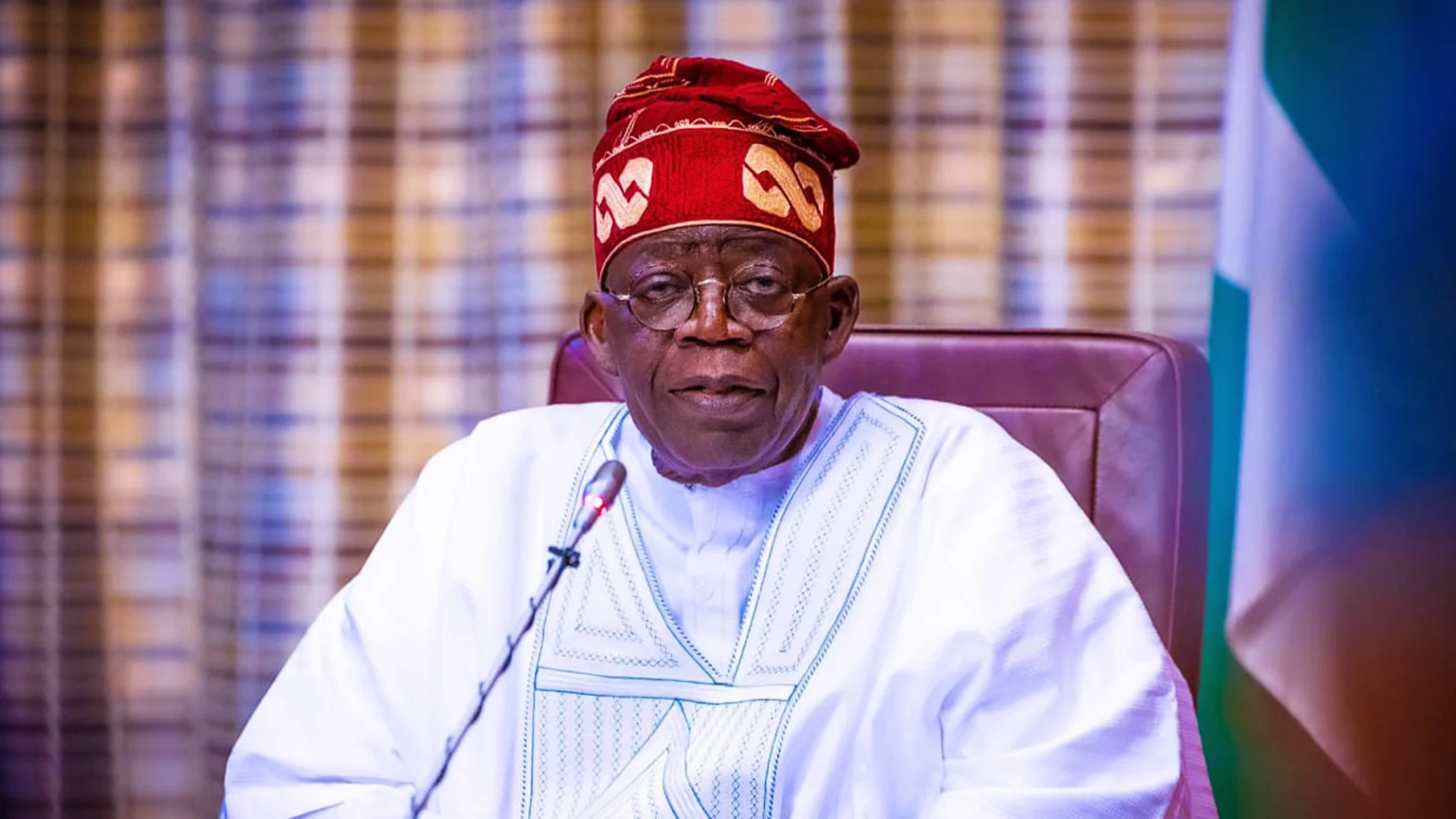
Five months after the Federal Audit Service Bill was transmitted to his office, President Bola Ahmed Tinubu has neither assented to the bill nor vetoed it, leaving one of the much-desired reforms in the audit industry in limbo.
According to section 58(4) of the 1999 Constitution (as amended), the President has 30 days from the date a bill is presented to him to either assent to it or withhold assent and communicate his reasons to the National Assembly.
But it has been almost five months since the Bill was submitted to him and there has been no word from him.
Efforts to get any of the President’s spokespersons to comment on why the Audit Bill has been ignored were unsuccessful, as Bayo Onanuga, Daniel Bwala, and Sunday Dare did not respond to messages sent to them or pick calls.

The President’s silence leaves many wondering what has gone wrong, given the swiftness with which he signed previous key legal documents.
The Electoral Act Amendment was signed the same day it was passed by the National Assembly, for instance.
This silence has seen different civil society groups raising the alarm, questioning the President’s claim of commitment to accountability and transparency in governance.
The Centre for Social Justice (CSJ) urged the leadership of the National Assembly to override the President and go ahead to enact the law if it is clear that the President’s silence is unfounded.
The bill, which spent almost 10 years at the National Assembly, was finally passed by the two chambers last year and subsequently transmitted to the President for his signature.
The Federal Audit Service Law, if fully implemented, grants the much-needed independence to the Office of the Auditor General for the Federation (OAuGF), entrenching transparency and accountability in public finance management as well as putting to rest the perennial delays in the publication of federal government audited reports.
The law gives timelines for the submission of the financial statement of the federal government by the Accountant General of the Federation to the Auditor-General for the Federation. Experts say this has been the missing link; as it stands now, there is no hard statutory deadline binding the Accountant General of the Federation to submit federal government financial statements to the Auditor-General.
While the 1999 Constitution (as amended) has no specific time frame when the Accountant General must submit the financial statement to the Auditor-General, the Fiscal Responsibility Act 2007, in Section 49(1), only mandates the Federal Government to publish audited, consolidated financial statements not later than six months from the end of each financial year. It is silent on when the Accountant General must submit the financial statement to the Auditor General.
This has been a major cause of delay in the publication of audited, consolidated financial statements. As at the time of filing this report, the latest published audited, consolidated financial statements before the National Assembly is that of 2022. The Auditor General has yet to receive the financial statements of the federal government for 2023, 2024 and 2025.
In February this year, irked by the continued delay in publishing the audited consolidated federal government financial statements, the Public Accounts Committee (PAC) of the House of Representatives directed the Accountant General and the Auditor General to unfailingly submit the audited consolidated financial statements for 2023, 2024 and 2025 not later than October 2026.
However, almost three months after that directive, specifically on May 8, 2026, the Accountant General, during a meeting with World Bank representatives, promised that he would submit the 2023 federal government financial statements to the Auditor General within two weeks.
As of the time of filing this report, that has not been done, meaning that the Auditor General has nothing to work with. This is what the new law seeks to end. According to the new audit bill, the financial statements of the federal government shall be submitted to the Auditor General not later than June 30 of the following financial year. It also said that the accounting officers of all MDAs and public institutions shall submit their financial statements to the Accountant General not later than 90 days following the end of the financial year.
The Bill goes further to direct that the accounting officers of all statutory corporations, parastatals, authorities, commissions, agencies, including all bodies established by an Act of the National Assembly, shall submit their audited financial statements to the Auditor General for audit not later than 90 days following the end of the financial year.
It also prescribes a fine of N500,000 for anyone who fails to adhere to the timeline.
For the first time, the Bill explicitly empowers the AuGF both financially and with the power of sanction. It authorises the AuGF to surcharge public officers for expenditures not duly brought into account and, more importantly, to withhold the emoluments of any person who refuses to reply to audit queries within 30 days.
The current audit system in the country is merely an annual ritual, with the Auditor General serving as a toothless bulldog, barking without biting.
As of today, there are many unresolved audit infractions. For example, the 2021 audited consolidated financial statement reported that out of 29 audit recommendations in the 2020 audit report, only six were implemented, one was in the process of being implemented, while 22 were completely ignored. The Office of the Auditor General has no power to enforce anything because it is merely advisory. As a result, an MDA could simply ignore a query with no personal consequence. But under the new Bill, silence carries a direct financial penalty, providing the legal teeth necessary to compel compliance with financial discipline.
The bill also empowers the Auditor General for the Federation to issue a warrant of arrest on any official of a federal ministry, department or agency (MDA), or a public entity that fails to honour his invitation to give evidence as a witness in an audit investigation.
Reacting to the continued silence of the President, the Executive Director of Paradigm Leadership Support Initiative (PLSI), Olusegun Elemo, said in an interview that the President would have speedily signed the Bill to demonstrate his commitment to transparency in governance.
While urging the President to sign it, he said the new law will provide the Auditor General with significant powers to prosecute and sanction anyone found guilty of financial irregularities.
A professor of accounting and financial development at Lead City University, Godwin Oyedokun, said there is a need to strengthen the legal framework to ensure that audit findings lead to mandatory sanctions or consequences for identified infractions. This includes enforcing laws that require accountability for financial mismanagement.
He said the Auditor-General’s Office should report not only on findings but also on the actions taken (or not taken) in response to previous reports by implementing a system for regular follow-up on audit recommendations.(Guardian)
-

 Business23 hours ago
Dangote Petroleum Refinery Set for Landmark IPO Following SEC Approval
-
 News22 hours ago
BREAKING: Explosion As Boko Haram Targets Convoy Of APC Gov’ship Candidate In Borno
-
Business20 hours ago
BREAKING: Nigeria’s external reserves cross $54 billion, highest level in 18 years
-
Metro21 hours ago
Ghanaian government launches app for lovers to verify each other’s marital status
-
News7 hours ago
Outcry as fake products flood markets
-
Celebrity Gist7 hours ago
Okoye really sweet, Cardi B says after third sighting
-
News8 hours ago
N33.75bn Cash Transfer Mystery: FG Failed to Prove Millions of Vulnerable Nigerians Received Funds — Auditor-General
-
Business7 hours ago
Airport policies didn’t drive Uber out of Nigeria, says FAAN