Opinion
Going back to petrol subsidy is not the answer

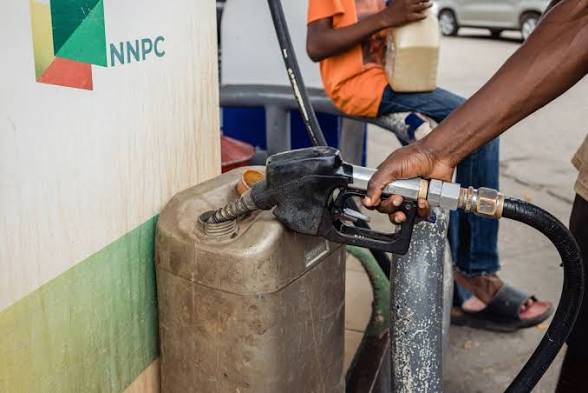
Nigerians are hurting. Petrol is expensive, transportation costs have risen sharply, food prices have followed, businesses are struggling with operating costs, and millions of families have watched their purchasing power decline.
So, when people demand the return of fuel subsidy, I understand the frustration.
But frustration should not drive economic policy.
Nigeria should not return to the old subsidy regime. We already know where that road leads. Instead, we should confront the more difficult question: Why is petrol still so expensive in an oil-producing country, and what can we realistically do to bring the price down?

The distinction is important.
Cheap petrol created by government paying part of the bill is not the same as petrol becoming genuinely cheaper to produce, refine and distribute.
For decades, Nigeria confused the two.
Someone Always Pays for Cheap Petrol
There is no such thing as free petrol.
When government fixes the pump price below the economic cost of the product, somebody must pay the difference. Under subsidy, that somebody is ultimately the Nigerian taxpayer.
Consider a simple illustration.
Nigeria’s average daily petrol consumption was reported at approximately 47.4 million litres in June 2026.
Suppose the market price is ₦1,300 per litre and the government decides Nigerians should pay ₦700.
Government would have to absorb a difference of ₦600 per litre.
Multiply ₦600 by 47.4 million litres and the potential exposure becomes roughly ₦28.4 billion every day.
Over one year, that is more than ₦10 trillion.
If the government attempted to push petrol back toward ₦200 while the economic cost remained around ₦1,300, the theoretical exposure could approach ₦19 trillion annually.
These are illustrations, not forecasts. Consumption, crude prices, exchange rates and market prices change constantly.
But the calculation demonstrates the fundamental problem.
Where would the money come from?
More borrowing? Higher taxes? Reduced infrastructure spending? Less money for security, education and healthcare?
The subsidy does not eliminate the cost. It simply moves the bill from the petrol station to government.
And government eventually sends that bill back to Nigerians.
We Have Tried This Before
Nigeria did not abandon subsidy because Nigerians suddenly stopped deserving affordable energy.
The system had become increasingly difficult to sustain.
Government finances were exposed to international oil prices, exchange rates and consumption volumes. The system also created opportunities for inefficiency, questionable consumption figures and cross-border leakage.
Returning to exactly that structure because petrol is expensive today would address the symptom while recreating the underlying problem.
There is another issue.
Nigeria is finally developing significant private domestic refining capacity. An investor spending billions of dollars building a refinery cannot reasonably be expected to compete against imported petrol whose price government has artificially reduced far below its economic cost.
We could end up destroying the domestic refining industry we desperately need in order to reduce our dependence on imports.
But Subsidy Removal Is Not Above Criticism
Rejecting a return to subsidy does not mean pretending the reform has worked perfectly.
It has not.
Nigerians were told that removing subsidy would free enormous resources for government. They therefore have every right to ask a very simple question:
Where is the money?
The IMF’s 2026 assessment of Nigeria acknowledged that reforms since 2023 strengthened macroeconomic stability and reduced fiscal vulnerabilities. But it also raised concerns about whether the expected savings from fuel subsidy removal had fully appeared in government finances.
That question deserves a transparent answer.
How much has actually been saved?
How much went to the federal government?
How much went to the states?
How much went to the 774 local governments?
And, most importantly, what did Nigerians receive in return?
The federal government says its reforms generated approximately ₦15.8 trillion in additional resources for the federation between June 2023 and December 2025, with roughly ₦5.4 trillion going to the federal government, ₦6.5 trillion to states and ₦3.9 trillion to local governments.
If those figures are correct, accountability cannot stop in Abuja.
Governors must answer questions.
Local government chairmen must answer questions.
Legislators must answer questions.
Nigerians endured the consequences of reform. They deserve to see its dividends.

Make Petrol Cheaper Instead of Hiding Its Price
This is where I believe Nigeria’s energy policy should now concentrate.
Instead of spending trillions hiding the true cost of petrol, reduce the cost itself.
Start with crude supply.
It makes little sense for a Nigerian refinery to face unnecessary difficulties obtaining Nigerian crude oil.
Recent proposals would allow producers to supply nearby domestic refineries more directly. Industry representatives estimate that intermediaries can add several dollars to the cost of each barrel.
Remove unnecessary middlemen.
If Nigerian crude can move efficiently from a Nigerian producer to a Nigerian refinery, the government should make that transaction as simple, transparent and competitive as possible.
Every unnecessary dollar added before crude reaches the refinery eventually finds its way into the price Nigerians pay at the pump.
Domestic Refining Changes the Equation
Nigeria is no longer discussing domestic refining merely as an aspiration.
It is happening.
The Dangote refinery has dramatically changed the country’s downstream petroleum landscape, while other existing and proposed refineries could further expand domestic capacity.
This presents Nigeria with an enormous opportunity.
But one refinery cannot become our entire national energy strategy.
Dangote should compete.
NNPC refineries should compete if they can operate efficiently.
Modular refineries should compete.
Other Nigerian investors should compete.
Foreign investors should be encouraged to build additional refining capacity.
And imports should remain possible when economically necessary to preserve competitive pressure.
Nigeria must not replace dependence on imported petrol with dependence on a single domestic supplier.
Competition is one of the most powerful subsidies consumers can receive, and government does not have to borrow money to provide it.
Tell Nigerians What Makes Up the Price
There is another reform that would cost government very little.
Transparency.
Publish the complete price build-up of one litre of petrol.
Tell Nigerians how much represents crude oil.
How much is refining.
How much is transportation.
How much is storage.
How much represents regulatory charges and taxes.
How much goes to marketers.
How much goes to retailers.
How much inefficient trucking adds.
Then we can stop arguing about petrol prices in the abstract.
If transportation is adding too much, fix transportation.
If regulation is adding unnecessary costs, remove them.
If margins are excessive, competition should expose them.
If exchange rates are driving the price, Nigerians should know that too.
You cannot manage what you refuse to measure publicly.
Fix How We Move Petroleum
Nigeria cannot achieve genuinely cheap petrol while moving enormous quantities of petroleum products inefficiently across the country.
Pipelines matter.
Depots matter.
Storage matters.
Roads matter.
Ports matter.
Security matters.
Repair and protect pipelines. Improve storage capacity. Reduce unnecessary port charges. Expand efficient coastal transportation. Use rail where commercially viable.
Every ₦10 removed from unnecessary distribution costs matters when multiplied across tens of millions of litres consumed every day.
That is how sustainable price reductions are created.
The Naira Is Part of the Petrol Price
We also need to confront an uncomfortable reality.
Nigeria cannot completely separate petrol prices from the value of the naira.
Crude oil is an internationally traded commodity. Even Nigerian crude processed inside Nigeria has an international economic value.
A weak currency therefore eventually affects domestic energy prices.
That means the long-term solution to expensive petrol extends beyond the petroleum industry.
Nigeria must produce more.
Export more.
Increase crude production.
Stop oil theft.
Expand non-oil exports.
Attract productive investment.
Increase foreign exchange earnings.
And build an economy that earns dollars instead of constantly searching for them.
A stronger and more stable naira would eventually help reduce pressure on fuel prices.
Subsidise Nigerians Who Need Help, Not Every Litre
None of this means government should abandon Nigerians to market forces during periods of severe economic hardship.
Government has a responsibility to provide relief.
But relief should be targeted.
Expand reliable mass transportation.
Support buses and commercial transportation.
Accelerate viable CNG infrastructure.
Help farmers move agricultural products more cheaply.
Provide transportation assistance to vulnerable workers and households.
And when extraordinary international events create temporary energy shocks, government can consider clearly defined and temporary interventions.
But subsidising every litre consumed by everybody is poorly targeted.
A wealthy Nigerian filling several luxury vehicles should not receive the same government assistance per litre as a minimum wage worker trying to get to work.
If government has ₦1 trillion available for relief, the question should not simply be how many naira it can remove from every litre of petrol.
The question should be:
How can that ₦1 trillion reduce the cost of living for the Nigerians who need help the most?
Nigeria Deserves a Third Option
Our political debate increasingly presents Nigerians with two choices.
Return to subsidy and artificially cheap petrol.
Or accept permanently expensive petrol.
I reject that choice.
There is a third option.
Nigeria can demand the lowest economically sustainable petrol price that an efficient and competitive petroleum industry can deliver.
That means increasing crude production.
Supplying domestic refineries efficiently.
Removing unnecessary intermediaries.
Encouraging more refining capacity.
Restoring pipelines and depots.
Reducing transportation and regulatory costs.
Protecting competition.
Strengthening the naira through production and exports.
Publishing the complete price structure of petrol.
Accounting publicly for the financial benefits of subsidy removal.
And directing government assistance toward Nigerians who actually need it.
We can support reform while demanding accountability.
We can reject the old subsidy system while insisting that today’s petrol prices are unacceptable.
We can encourage Dangote and other domestic refiners while refusing to tolerate monopoly.
And we can demand that an oil-producing country relentlessly pursue cheaper energy for its citizens.
The answer is not to reverse the reform.
The answer is to complete it, correct its weaknesses and make it work for ordinary Nigerians.
Nigeria should not subsidise its way back to cheap petrol.
We should produce, refine and compete our way there.
Yinka Ogunsanya, a US Army veteran, is a security and public policy analyst and a TheCable contributor
-

 News14 hours ago
UK universities withdraw admission offers to Nigerians over visa crackdown
-
Politics13 hours ago
2027: Protest, relief as INEC releases final candidates’ list
-
News14 hours ago
Benue: Suspected herdsmen kill nine in fresh Ukum attacks
-
News13 hours ago
Why kidnappers target NYSC members — Security experts
-
Politics13 hours ago
2027: Opposition, APC clash over campaign funding
-
World News14 hours ago
US gunman shoots dead 7 relatives, family friend
-
Opinion13 hours ago
Did Obi actually win in 2023?
-
Business14 hours ago
Fitch revises Nigeria’s outlook to positive, affirms ‘B’ rating