Politics
2027: How President Tinubu is wooing northern elites by giving their children key roles

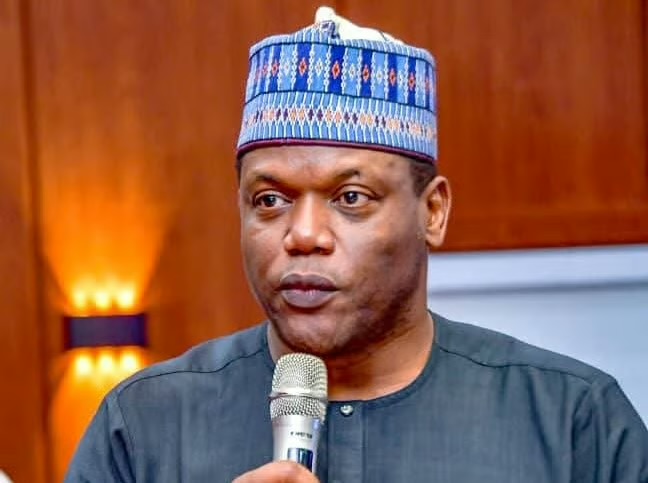
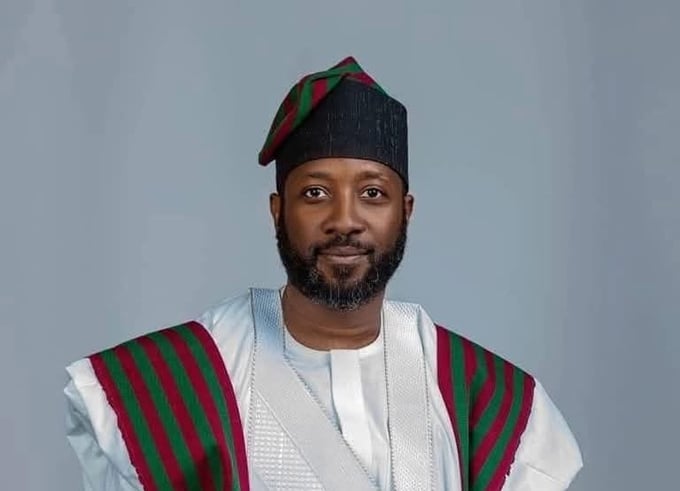
At a packed gathering in Jos on 1 August, Nigeria’s Vice President Kashim Shettima announced the appointment of Yakubu Jang, son of former Plateau State governor Jonah Jang, as a senior special assistant in the Office of the President.
The occasion was the elder Jang’s 80th birthday celebration and the launch of his autobiography.
Shettima, representing his principal, President Bola Tinubu, gave a long and colourful speech.
As he began to round off, he paused before the audience, unfolded a large envelope and announced: “I have a small gift for the Jonah Jang family from President Tinubu – the appointment of his political son, Yakubu Jang, as a senior special assistant in the Office of the President.”

The hall, packed with northern political elites and other dignitaries from across the country, erupted in applause. The specific portfolio awaiting the younger Jang was not disclosed. But the timing is striking.
In the final year of Tinubu’s first term, months before the president seeks reelection, the appointment looks less like a routine government posting than a political overture to an influential northern patriarch.
Wooing a stubborn PDP old guard
The senior Jang is a northern power broker in his own right. He has straddled Plateau State politics for nearly two decades. He is the political godfather of incumbent Governor Caleb Mutfwang, who was elected on the Peoples Democratic Party (PDC) platform in 2023.
A retired Air Commodore in the Nigerian Air Force, Jang belongs to a generation of former military officers who traded khaki for agbada as Nigeria returned to civilian rule in 1999. During military rule, he served as governor of Benue State (1985-1986) and then the now-defunct Gongola State (1986-1987).
With the return to democracy, he was elected twice as Plateau State governor, serving from 2007 to 2015. He subsequently moved to the Senate, where he served one term between 2015 and 2019. He lost his reelection bid that year and did not return to elective office.
His political influence declined between 2015 and 2023, when All Progressives Congress’ (APC) Simon Lalong held sway as Plateau governor. Jang recovered lost ground in 2023, helping PDP’s Mutfwang defeat Lalong’s preferred successor, Nentawe Yilwatda.
When Mutfwang defected to the APC in December 2025 to align with Tinubu, Jang, the PDP leader in Plateau, said he was not perturbed, dismissing suggestions that the governor’s departure would weaken the PDP in Plateau. That posture, taken with the timing of his son’s appointment, suggests a calculated attempt by Tinubu to win over the influential PDP stalwart.
Plateau, a Christian-dominated northern state with 2.7 million registered voters, has traditionally been strategic for the presidential poll. In 2023, despite incumbency, the APC was defeated by Peter Obi, who ran on the Labour Party platform.
Therefore, bringing Jang’s family closer to the presidency ahead of 2027 could be an attempt to open a channel to an influential PDP network without requiring the former governor to formally defect.
Tinubu’s northern calculus
Jang junior’s appointment comes at a time when Tinubu’s standing in the North in 2027 has become a subject of debate. In an early-August viral video, members of Kannywood – film actors from northern Nigeria – vowed not to support Tinubu in 2027, claiming that “northern Nigeria has not benefited from his administration, apart from worsening insecurity”.
The sentiment may not represent northern opinion as a whole, but it highlights a perception burden Tinubu may have to deal with.
Gombe-based political analyst Cliff Stanley tells The Africa Report that the economic fallout of Tinubu’s reforms and perceptions of imbalance in federal appointments may be fuelling resentment against his government in the North.
“Tinubu’s political standing in the North today is more complicated than it was in 2023,” he says. “Whatever electoral goodwill existed in 2023 cannot automatically be assumed to remain intact in 2027.”
This, he adds, supports the elite accommodation theory. “By bringing influential northern political families and networks closer to the presidency, the administration may be seeking to reduce opposition among powerful political actors, broaden its coalition and strengthen its electoral infrastructure before 2027,” he says.
Babangida and the ghost of Buhari
Jang’s appointment is not an isolated case. In July 2025, Tinubu appointed Mohammed Babangida, son of former military head of state Ibrahim Babangida, as chairman of the newly restructured Bank of Agriculture.
The appointment came amid increased visits by leading opposition figures, including former vice president Atiku Abubakar and Rabiu Kwankwaso, to Babangida’s Hilltop mansion in Niger State.
Babangida senior remains an influential political figure in the North, and major presidential contenders have traditionally sought his counsel and goodwill over the years.
Babangida junior’s appointment also came days after the death of former president Muhammadu Buhari, whose political following had helped shape election outcomes in the North. With Buhari’s death creating a political vacuum, Tinubu and opposition politicians were positioning themselves for the support of Buhari’s estimated 12 million followers.
Children of northern power brokers
The presidency’s statement announcing Babangida’s appointment named eight other appointees, seven of whom are from the North. Among them was Jamilu Wada Aliyu, son of prominent Kano traditional leader Alhaji Wada Aliyu, who holds the title Madakin Gaya and is one of the five core kingmakers of the Gaya Emirate Council.
Other children of northern elites whom Tinubu has accommodated include Abdullahi Tanko Yakasai, son of elder statesman Tanko Yakasai, an outspoken supporter of the president. Ahead of the 2023 election, 100-year-old Yakasai endorsed Tinubu. Months after taking office, the president appointed the son as senior special assistant to the President on Community Engagement (North-West).
Another Tinubu appointee is Mukhtar Shehu Shagari, a member of the family of the late former president Shehu Shagari (1979-1983).
Taken individually, the appointments could be defended as normal political patronage or attempts to broaden representation in government. Taken together, however, they suggest a deliberate effort to cultivate relationships with established northern families.
Can elite support deliver votes?
Stanley says it may be premature to conclude that the appointments of children and relatives of northern elites are part of a deliberate bargain for 2027, but the strategy has a long political history.
“Political scientists have long observed that governing coalitions are often sustained not merely through ideology but through the incorporation of influential elites into structures of power,” he says. Yet the strategy may not be straightforward for 2027 – the crucial question is whether elite acceptance will translate into popular support.
“Nigeria’s electoral history demonstrates that political endorsements by influential personalities do not necessarily guarantee the transfer of voters,” Stanley says. “The North is not a monolithic political constituency like it used to be. It contains diverse regional, ethnic, religious, generational and socioeconomic interests.”
For Tinubu, therefore, the greater challenge before 2027 may not be winning over northern elites but convincing ordinary northern voters that his policies have improved their material conditions. Appointments can consolidate political networks. But they don’t always translate to votes. (The Africa Report)
-

 Metro22 hours ago
Tony Elumelu Forgives, Reunites With Lady Who Called Him By His First Name
-
Metro9 hours ago
UBA Graduate Who Addressed Tony Elumelu By First Name Gets ₦500,000, VIP Trip
-
World News23 hours ago
U.S. condemns suspension of Cofnas over plagiarism claims against Arday
-
News23 hours ago
EFCC arrests, arraigns Brookfield Holdings CEO Olatunji Adebola for alleged N1 billion fraud
-
Sports23 hours ago
Arsenal beat Coventry City 3-0 in Premier League opener
-
Politics9 hours ago
Tinubu’s fuel policy enriches govt, impoverishes masses — Donald Duke
-
Politics15 hours ago
APC Chairman Slumps, Dies During Reconciliation Meeting In Kogi
-
Politics23 hours ago
As Campaign Begins: Billboard Permit Fees Rattle Candidates