
Politics
Electoral Data Exposes Governors’ Influence as Tinubu Allies Pledge 18.7 Million Votes

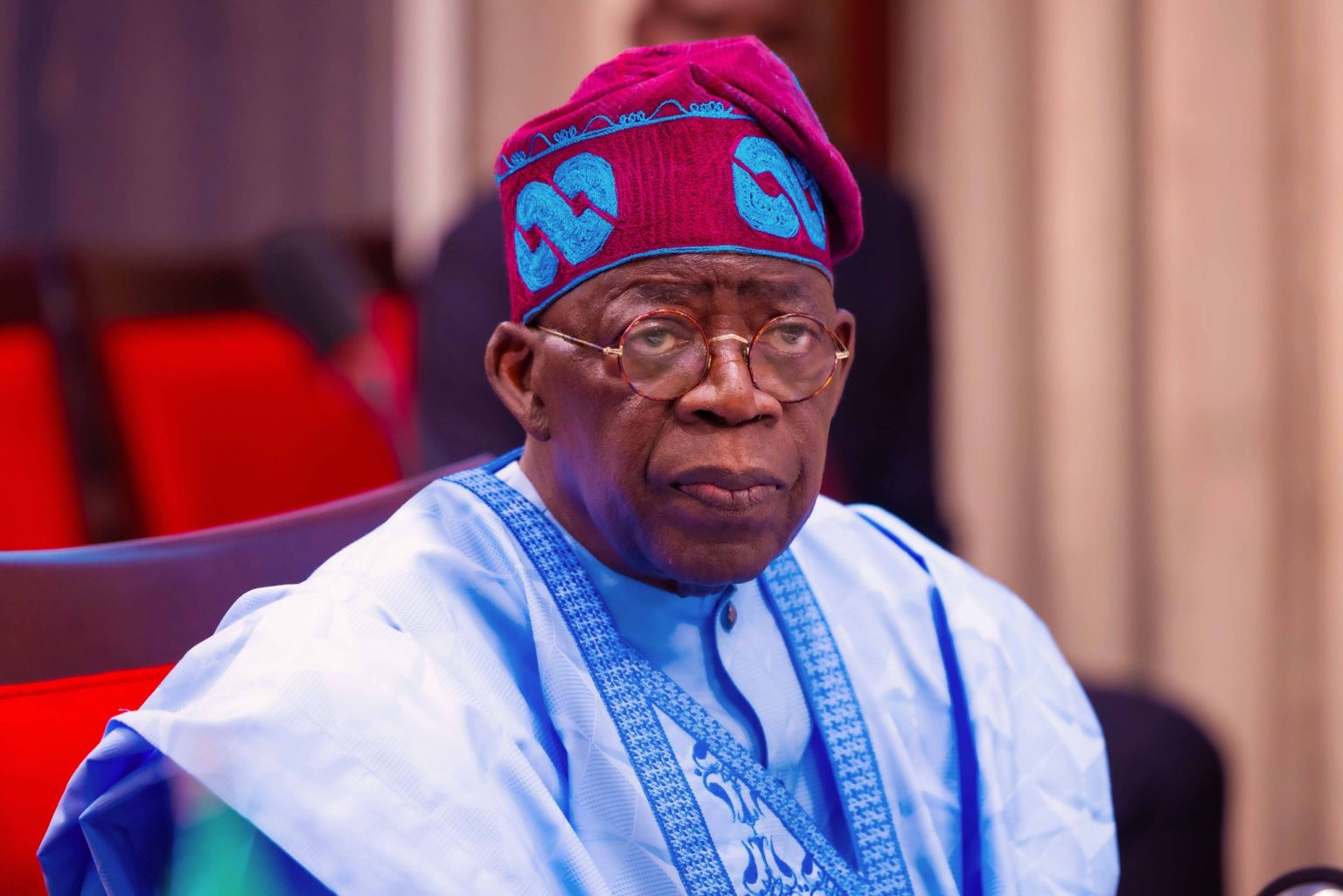
Political allies of President Bola Tinubu have set an ambitious target of 18.7 million votes for his re-election in 2027, but historical electoral data suggests that the influence of governors over presidential voting may be less decisive than the ruling All Progressives Congress (APC) hopes.
The target is more than double the approximately 8.79 million votes Tinubu secured in the 2023 presidential election, reflecting the scale of the mobilisation effort being planned by the president’s supporters ahead of the next general election.
The APC currently controls 31 of Nigeria’s 36 governorships, providing the party with an extensive network of state-level political structures. Two opposition governors have also publicly declared support for Tinubu’s second-term bid.
However, electoral history indicates that controlling a state government does not automatically translate into victory for the governor’s preferred presidential candidate.

North Central Leads Vote Target
According to figures published by StatiSense, political leaders in the North Central region have pledged six million votes for Tinubu, representing the largest regional target.
Akwa Ibom has a target of 3.5 million votes, while Edo State Governor Monday Okpebholo is associated with a pledge of 2.5 million votes.
Ogun State Governor Dapo Abiodun has pledged two million votes, matching the target attributed to Benue State. Osun Governor Ademola Adeleke is associated with 1.5 million votes, while Oyo and Ekiti have targets of 800,000 and 400,000 votes, respectively.
Combined, the figures amount to 18.7 million votes.
Yet some of these targets raise questions about their feasibility. Akwa Ibom, for instance, has approximately 2.6 million registered voters, making its 3.5 million-vote target impossible to achieve from the state’s existing register. Edo’s target of 2.5 million also comes close to its approximately 2.865 million registered voters, before accounting for turnout and valid votes.
These discrepancies highlight the difference between political pledges and the number of votes that can realistically be delivered.
Electoral History Challenges Governors’ Influence
A study by VIISAUS examining five presidential election cycles between 2003 and 2023 found that the party controlling a state’s governorship won the presidential vote in that state in 57.8 per cent of the election cycles examined.
The findings suggest that governors and their political organisations can influence presidential voting, but their influence is neither absolute nor consistent across states.
The analysis classified 19 states as swing states, where presidential voting patterns have shifted across election cycles. These include all six North Central states, alongside Lagos, Oyo, Ekiti, Rivers, Adamawa, Kano and several other states across the federation.
The classification is significant for Tinubu’s campaign because the six-million-vote target in North Central depends on a region where presidential voting has historically been competitive.
The study also identified 11 consistent aligners and six consistent non-aligners, illustrating that voters in some states are more likely than others to follow the political direction of their governors.
The 2023 presidential election provided a notable example of the limits of gubernatorial influence. All five South-East states voted for Labour Party candidate Peter Obi, despite differences in the parties controlling their state governments.
The result demonstrated that candidate appeal, regional sentiment and broader political circumstances can outweigh established party structures.
APC’s Dominance Does Not Guarantee 18.7 Million Votes
With 31 governors belonging to the APC, Tinubu enters the campaign with a substantial state-level political network. Governors can help coordinate party structures, organise rallies, mobilise supporters and strengthen grassroots campaigns.
However, the number of governors supporting a candidate is not a direct measure of that candidate’s popularity among voters.
Political analyst David Omogbemi questioned whether the promised votes were realistic, citing the rising cost of living and the challenges facing governors in their respective states.
He argued that significant improvements in household economic conditions would be necessary for Tinubu to move closer to the ambitious target.
The concern reflects a broader electoral question: whether political machinery can overcome dissatisfaction over economic conditions, particularly among voters struggling with the cost of food, transportation and other essential goods.
The Real Test Will Be at the Ballot Box
Tinubu won the 2023 presidential election with approximately 8.79 million votes. Securing 18.7 million in 2027 would require a substantial expansion of his electoral support.
The announced target therefore represents more than a mobilisation pledge. It is a test of whether the APC can convert its extensive control of state governments into a significantly larger national vote.
For the opposition, the figures also underline the importance of building effective grassroots structures and appealing to voters beyond dissatisfaction with the incumbent.
Ultimately, governors may influence political organisation and voter mobilisation, but they cannot guarantee how citizens will vote in a secret ballot.
As the 2027 election approaches, the decisive question is not how many votes Tinubu’s allies promise, but how many eligible voters actually turn out and choose him on election day.
-

 News1 hour ago
FG approves N70,000 monthly transport allowance for workers
-
Sports1 hour ago
4th-tier Fleetwood Town knock Arsenal out of Carabao Cup after penalties
-
Business1 hour ago
High transport costs undermine food price relief – Report
-
News24 hours ago
FG investigates Peter Obi over alleged offshore assets
-
News1 hour ago
Tackle Hardship Now – Osinbajo Charges Leaders
-
News19 hours ago
BREAKING: Tinubu seeks n’assembly approval for $20.5bn, €1.04bn external loans
-
Metro1 hour ago
Police arrest fake lawyer after 11 years of practice in Ebonyi
-
Business24 hours ago
Nigeria’s portfolio investment inflows surge to $7.09 billion as direct investment lags