
Business
Increasing cost of burials in Igboland: The price of saying goodbye to loved ones

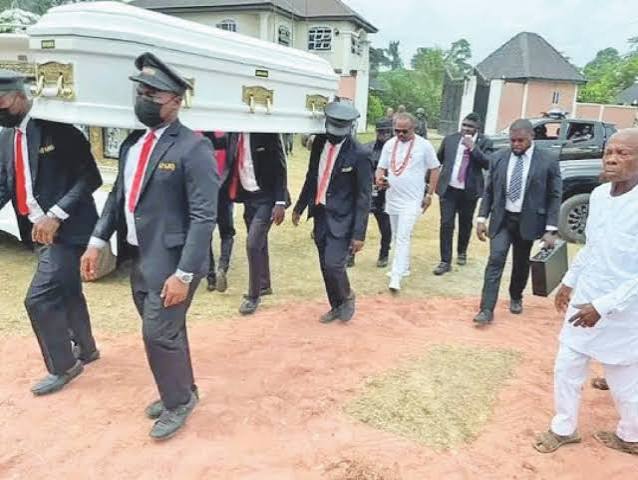
When a person dies, especially an elder, a title holder, a successful businessman or a beloved mother, the entire community watches. How long will the body stay in the mortuary? How big will the canopy be? How many cows will be killed? How many bags of rice will be cooked?
Umuada (female daughters born into that family even though they are married far and near) must attend, they would decide how many days they would sleep over, their feeding, in measured trays and basins, how many cartons of bear and malt, they must drink morning tea, thick one, as long as they stay for the burial ceremony and their items must be taken care of by the bereaved, without a kobo coming from the visitors, but they are the ones to determine what they would eat and the quality of what they eat.
Behind the music, the dancing and the celebration of life lies a painful reality: burial in Igbo land has become one of the most expensive social obligations in Nigeria. For many families, it is no longer just grief. It is debt, conflict, and financial ruin.
A young man from Mbano in Imo State who spoke on condition of anonymity talked about how his people almost shelved his head with demands when he buried his father recently. He said on several occasions both the Umuada and youths threatened to leave the burial due to one demand or the other. “They made it categorically clear to me that what they are demanding is not new, that is exactly how is done whenever any member of the village is buried.”

Much more worrisome is the fact that these youths and Umuada especially have standard which you cannot undermined, otherwise you bury the dead by yourself, and it is believed that in African cosmology, the dead if not well treated would be unhappy, and any wrong in the family is always attributed to the wrong done to the dead.
Three things are mainly involved, the high cost of burials, the culture of keeping the dead in the mortuary for months and sometimes years, and the role of Umuada and community members who demand excessively from bereaved families.
Why burials became so expensive
Traditionally, Igbo burial was simple and dignified. The dead were buried within days, close to home, with family and close neighbours present. The community contributed food, labour and moral support. The emphasis was on honour, not display. That has changed dramatically.
Today, a “befitting burial” in many Igbo towns can cost from N5 million to well over N50 million, depending on the status of the deceased and the ambition of the family. The costs pile up quickly: Mortuary bills: N2,000 to N10,000 per day, sometimes more for embalming, special preservation and private rooms. Six months in the mortuary can easily consume N500,000 to N1.5 million before a single ceremony is held.
Casket and grave: A decent casket ranges from N500,000 to N5 million. Imported caskets, glass caskets and custom-built vaults push the price even higher. Building a befitting tomb, tiling, fencing and erecting a statue or monument can add millions more.
Feeding hundreds or thousands of guests for three to five (sometimes seven) days is a major expense. Rice, cows, goats, drinks, cooks, waiters, plates and tents often swallow 30 to 40 percent of the total budget.
Music and entertainment including Live bands, traditional dancers, DJs, MCs and masquerades are now expected. Some families hire two or three bands, including ‘egwu okele’.
Igbos have also added Aso ebi, then printing and publicity posters, banners, obituary programmes, T-shirts, fez-caps and souvenirs have become compulsory in many places. Social media has made it worse. The burial must look good on Facebook and TikTok.
Logistics comprising transporting the corpse from the city mortuary to the village, hiring of ambulances, ball bearers, providing accommodation for visitors, and fueling generators add more costs.
For wealthy families, this is affordable, even if wasteful. For middle-class and poor families, it is crushing. Many borrow from cooperatives, banks, friends and age grades; some sell portions of land, others create WhatsApp groups to raise funds. Some sell their cars or business stock to bury a parent. After the burial, they start life afresh in debt. The tragedy is that the dead do not benefit. The living suffers.
The mortuary culture: Keeping the dead for months
One of the most distinctive and controversial aspects of Igbo burial is the long stay in the mortuary. It is now common for a body to remain in the mortuary for six months, one year, sometimes two years, while the family “prepares.” In some cases, siblings living abroad cannot agree on a date. In other cases, the family is waiting to raise money, build a house, complete a tomb, or settle a dispute over land and inheritance.
There was a case in Anambra about four to five years ago where a woman raised the alarm that her brother’s body brought out from the mortuary was not her brother’s body, but a moulded dry wood, she feared that their eldest brother had removed their brother’s body for some unexplained activities. Many bodies in the mortuary have become ordinary dry stockfish by the time they are ready for burial.
On the surface, there are reasons that sound reasonable. One is waiting for children abroad. Many Igbo families are scattered across Lagos, Abuja, America, London, Canada, among others, in search of greener pastures. They want all children present to give their parent a final honour.
Some are building a house for the deceased. In some communities, it is considered shameful to bury a successful man in an old or unfinished house. The family feels compelled to build or renovate a house before burial; Fixing a date that suits everyone: With large extended families, agreeing on a date can become a political negotiation; Fundraising: The family needs time to contribute money, levy members and seek donations from friends and well-wishers.
But the costs of delay are enormous. First, there is the financial cost. Mortuary bills keep mounting every day. Embalming chemicals, electricity and preservation add up. The longer the body stays, the more the family pays for doing nothing. Second, there is the emotional cost. Grief is frozen. The family cannot mourn properly and move on because the burial is still hanging over them. Wives, husbands and children live in limbo for months. Some widows are forced to remain in mourning clothes for a year or more, unable to resume normal life until the burial is done.
Third, there is the spiritual and cultural cost. In Igbo cosmology, the dead is believed to need a proper burial to join the ancestors. Keeping the body in a cold room for years contradicts that belief. Many elders now ask: if we truly love our dead, why do we leave them in the mortuary? Fourth, there is the social cost. Long mortuary stays have become a status symbol. “Our father stayed in the mortuary for one year because we were preparing a big burial” is said with pride in some quarters. It has become competition, not culture.
Some states and communities have tried to legislate against this. Anambra State, for example, has in the past attempted to regulate burial expenses. Several town unions have also fixed burial levies and limited the number of days for ceremonies. But enforcement remains weak because families fear being called stingy or disrespectful.
The role of Umuada: From protectors to pressure group
No discussion of Igbo burial is complete without discussing Umuada. Umuada, the daughters of a family, kindred or community married outside, are one of the most powerful and respected institutions in Igbo culture. Traditionally, they were peacemakers, protectors of women, enforcers of morality, and guardians of family unity. When a woman was maltreated in her husband’s house, Umuada intervened. When a family had a dispute, Umuada settled it. When a member died, Umuada came home to mourn, organise and support.
That role remains vital. Many families still depend on Umuada for discipline and order during burials. They ensure that the widow is treated fairly. They ensure that rituals are done properly. They ensure that the family does not fight publicly. But in recent years, a troubling shift has occurred in many places. The support role has, in some families, been replaced by a demand role.
Umuada now arrive with lists. Lists of what would be served to them, rice, wrappers, cash gifts, drinks and other items they expect from the bereaved family. The list ranges from the reasonable to the mundane. In some communities, the list is presented formally as “Umuada requirements” and must be met before the burial can proceed. Failure to meet it can lead to disruption, boycott or public embarrassment.
The same pattern applies to other groups: Umunna, age grades, town union, women’s association, church groups, in-laws, and community youths. Each group expects settlement. Each group has its own levy. Each group threatens to withhold participation if not settled.
What was once voluntary support has become compulsory taxation.
To be fair, Umuada and community groups often argue that they spend their own money to travel home, buy uniform, cook, sing and stay for days. They argue that the family should appreciate them. That is legitimate. Hospitality is part of Igbo culture. A family that receives hundreds of visitors should feed and appreciate them. The problem is excess. When appreciation becomes extortion, when support becomes a price list, when mourning becomes negotiation, the culture has lost its way. Many bereaved families now dread the arrival of Umuada, not because they do not love them, but because they fear the bill. Some families have reported spending N1 million to N3 million alone on settling Umuada, age grades and community groups, separate from the main burial costs.
There are also cases where Umuada themselves are divided. Some want a modest burial. Others want a lavish one to show that their family is “big.” The disagreement often delays the burial and increases the cost.
The wider community also plays a complex role. On the positive side, Igbo communities are famous for solidarity. Neighbours contribute money, food and labour. Age grades dig graves. Women cook. Youths arrange chairs and canopies. This communal spirit is beautiful and must be preserved.
On the negative side, that spirit has been commercialised. Burials have become opportunities for some people to eat, drink and collect money without contributing. Some youths demand “youth levy” before they allow the grave to be dug or the canopy to be mounted. Some masquerade groups demand huge fees. Some neighbours attend not to mourn, but to assess how rich the family is. The pressure is especially heavy on the children of the deceased. In Igbo culture, burying your parents well is seen as the ultimate proof of gratitude. “If you cannot bury your father well, you have failed” is a common saying. That emotional blackmail pushes children to overspend, even when they know they cannot afford it.
Social media has worsened it. Burials are now broadcast live. People who did not attend will judge the family by the videos. Was there a big cow? Was the casket expensive? Was the crowd large? The family is not just burying a parent, they are performing for an audience.
The consequences are clear and devastating.
Debt and poverty
Families borrow to bury, then struggle for years to repay. Some businesses collapse. Some children drop out of school. Some widows are left with nothing; Family conflict: Disagreements over burial costs are one of the leading causes of family quarrels in Igbo land. Siblings fight over who should pay what, who should take the cow, who should control the donations. Some families never recover from burial quarrels; Delayed development: Money that could have been used to educate children, build businesses or support the living is spent on the dead. A family that spends N20 million on burial could have used N10 million to establish a foundation in the name of the deceased.
The bereaved are denied peace. Instead of grieving, they are fundraising, negotiating, and pleasing groups; there is loss of cultural values: The original Igbo value of dignity, simplicity and communal love is being replaced by showmanship.
What must change
The solution is not to abolish burial ceremonies. Burial is important. It honours the dead and heals the living. The solution is to restore balance.
First, families must be bold. The decision to have a modest burial must be respected. A dignified burial does not need to be expensive. A well-organised, prayerful and respectful burial of N2 million can be more honourable than a chaotic burial of N30 million funded by debt. Second, Umuada must return to their original role as protectors, not collectors. Umuada should be the voice that says, “Do not borrow to bury. Do what you can afford. We are here to support you, not to burden you.” When Umuada lead reform, communities will listen. Third, communities and town unions must set and enforce limits. Some communities have already done this successfully by fixing maximum mortuary periods, maximum number of cows, and banning certain levies. Others should follow. Traditional rulers, presidents-general and church leaders must work together. Today, Catholic Church in Nigeria must be commended for giving directive that any deceased member must be buried within one month, that is significant.
Fourth, churches must speak up. Many churches now have burial committees that help families plan modestly. That should be expanded. The church should not be a place where the size of donation determines the honour given to the dead. Fifth, the living must be prioritised over the dead. The best way to honour a parent is not to kill a big cow. It is to take care of the surviving spouse, educate the children, and preserve the family name. A parent who sees his children in debt after his burial would not be happy in the land of ancestors.
Finally, there must be a cultural re-education. Young Igbo men and women must be taught that honour is not measured by money spent at burial, but by the life lived and the legacy left behind. Igbo burial culture was built on love, respect and community. It has been hijacked by competition, pressure and excess.
Keeping the dead in the mortuary for a year does not prove love. Spending millions to satisfy Umuada and community groups does not prove gratitude. True honour is a peaceful, timely, dignified burial that does not destroy the living.
If Igbo land can reform burial culture, families will save money, reduce conflict, mourn in peace, and channel resources to education, business and development. That would be the greatest tribute to our ancestors: not a bigger burial, but a stronger family. (BusinessDay)
-

 News4 hours ago
Canadian agency stops accepting certificates from four Nigerian varsities
-
Politics16 hours ago
BREAKING: Lagos Senator Idiat Adebule Is Dead
-
Politics4 hours ago
How late Lagos senator collapsed during APC campaign
-
Opinion4 hours ago
Six questions seeking answers in 2027 presidential election
-
Politics4 hours ago
Opposition parties no longer exist – Tinubu
-
Politics15 hours ago
UPDATED: Lagos Senator dies after celebrating 56th birthday
-
Business4 hours ago
CBN has achieved $1bn monthly diaspora remittances target… now aiming for $1.5bn – Cardoso
-
Politics4 hours ago
Yiaga Africa flags BVAS glitches, delays, vote-buying in INEC mock election