Business
Can Dangote pull it off? 5 questions over Kenya’s $17bn refinery

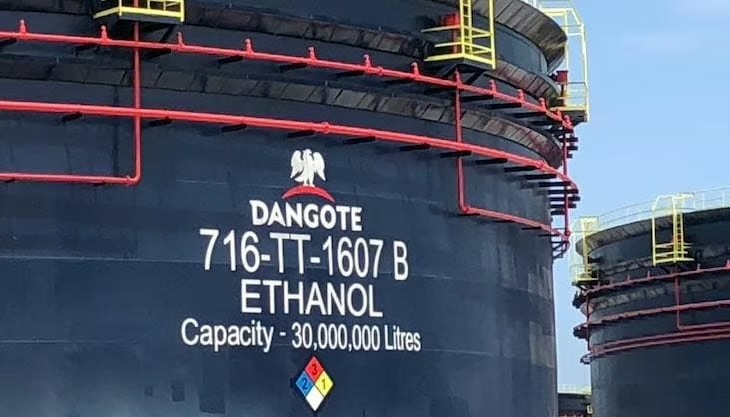
When Dangote Industries unveiled plans to build a 700,000-barrel-per-day oil refinery in Kenya’s Lamu county, the announcement was met with enthusiasm, given its potential to shape East Africa’s energy ambitions.
At an estimated cost of $17bn, the refinery would become Kenya’s largest-ever private industrial investment and rank among Africa’s biggest energy projects, rivalling the scale of Dangote’s Lagos refinery, whose final cost exceeded $20bn.
The refinery, expected to take about three years to build, promises to turn Kenya into East Africa’s refining hub and to supply fuel across the region, which is the only region in Africa without an operating refinery.
But the announcement raises critical questions that could determine the success of the investment anchored by Africa’s richest man, Aliko Dangote.

1. Who are the co-investors?
Dangote has made it clear that the refinery will not be financed solely by debt. Funding is expected to come from a mix of internal cash flows, bonds and proceeds from a planned initial public offering (IPO).
The Kenyan government has also pledged to participate, most likely via the National Infrastructure Fund (NIF), which aims to mobilise KSh5trn ($38.7bn) over the next decade for strategic projects.
Dangote will not build a refinery without tax concessions. He will also seek limits on fuel imports because he needs guaranteed offtake
Other billionaires are also showing interest. Tanzanian billionaire Mohammed Dewji has publicly committed $100m (KSh13bn), while analysts expect more institutional investors and lenders to join the project as creditors as it progresses.
Still, industry insiders believe Dangote prefers to keep the shareholder register tight, with Nairobi as the sole strategic public-sector partner, consistent with the group’s long-standing preference for retaining operational control.
The structure could significantly reduce reliance on costly commercial borrowing.
“It is likely to combine both debt and equity, with the equity portion being larger. On the debt side, we could see a consortium of lenders,” says Churchill Ogutu, an analyst at Capital A Investment Bank.
2. Where will the crude come from?
A refinery is only as good as its feedstock. Unlike Nigeria, Kenya is not a major oil producer, leaving Dangote with the same challenge of securing sufficient crude, a challenge it has often faced in Nigeria.
The planned commercialisation of Kenya’s South Lokichar oil fields, expected to begin in December 2026, with production targeted at about 120,000 barrels per day, could provide an initial source.
But even if the project proceeds on schedule and is fit for the Dangote refinery, it would cover only a fraction of the refinery’s requirements.
Years of regulatory delays, funding shortfalls and investor exits have repeatedly delayed Kenya’s upstream ambitions.
That leaves imported crude the most realistic option.
Potential supplies could come from South Sudan, West Africa, the Middle East, or other neighbouring countries such as Somalia, which also have exploration ambitions.
Uganda offers little immediate relief. Although its production is expected to begin in late 2026 and ramp up over the next three years, much of that crude is already committed to export markets.
Dangote’s refinery in Nigeria has frequently imported crude from the US after domestic supply fell short.
Analysts therefore expect the Lamu refinery to remain highly flexible, buying crude from whichever market offers the best economics.
“Dangote looks for exclusive markets. His strategy is simple but equally complicated,” says Powell Maimba, chief executive of Lexo Energy. “He is going to Lamu because he wants to import crude, refine it and distribute products across East Africa through the LAPSSET corridor,” Maimba tells The Africa Report.
Lamu’s deep-water port provides direct access to international crude shipments, thereby making imported feedstock commercially viable.
3. Will motorists eventually pay less?
Ideally, a domestic refinery should improve fuel security, reduce freight costs and East Africa’s dependence on imported refined products, which have long strained regional currencies.
Unless these cost advantages, together with the anticipated incentives for the refinery, are passed on to consumers, cheaper refined fuel will not be guaranteed.
Pump prices will continue to depend largely on international crude prices, exchange rates, taxes, transport costs, financing costs and retailer margins.
“The average cost will still depend on global crude prices,” says Ogutu. “We have too many unknown variables. The refinery cannot sell fuel below global economics simply because it is located in Kenya.”
Most analysts believe the refinery’s biggest contribution will be reliability rather than lower prices.
It is likely to combine both debt and equity, with the equity portion being larger. On the debt side, we could see a consortium of lenders
Kenya and its neighbours have repeatedly faced fuel shortages caused by shipping disruptions, foreign exchange constraints and geopolitical shocks.
“The country could adopt a hybrid model where locally refined fuel is complemented by imports whenever supply is disrupted. It is part of prudent risk management,” says Ken Gichinga, chief economist at Mentoria Economics.
4. What has Kenya put on the table?
A project of this scale rarely proceeds without generous incentives.
While Nairobi has yet to disclose the package offered to Dangote, Kenya already provides tax breaks, customs relief and long-term investment incentives via its Special Economic Zones.
Lamu, where the refinery is planned, is one of the country’s flagship SEZs, covering more than 5,000 hectares and designed as an integrated industrial and logistics hub.
Analysts believe Dangote secured additional assurances before opting for Kenya rather than competing locations such as Tanzania.
Those incentives are expected to include tax concessions, customs exemptions during construction, infrastructure support, long-term land arrangements, and measures to protect the refinery from unfair competition from cheap fuel imports.
Maimba expects Dangote to push for even stronger guarantees.
“Dangote will not build a refinery without tax concessions. He will also seek limits on fuel imports because he needs guaranteed offtake.”
Dangote himself has repeatedly stressed that policy certainty matters more than subsidies.
“What we need is consistency in government policy and support,” he said while unveiling the project in Nairobi in April, arguing that Africa remains “a continent of import but not export”.
5. Can it survive environmental resistance?
This may prove the toughest battle, with potential litigation likely to delay the delivery timeframe. The proposed refinery sits in one of Kenya’s most ecologically sensitive regions, home to UNESCO World Heritage sites, mangrove forests and thousands of fishing households.
Courts previously halted a proposed coal-fired power plant after sustained environmental litigation, and activists are expected to launch a similarly aggressive campaign against the refinery.
Environmental groups are already raising concerns about marine pollution, carbon emissions, community displacement and the cumulative environmental impact along the Lamu Port-South Sudan-Ethiopia Transport (LAPSSET) corridor.
Government officials insist that no shortcuts will be taken and that the refinery must fully comply with Kenya’s environmental laws before construction begins.
For investors, however, prolonged court battles could prove as significant a risk as financing itself. For investors, however, prolonged court battles could become as significant a risk as financing itself.
(The Africa Report)
-

 Politics17 minutes ago
Tinubu using foreign reserves to create misleading impression of economic growth – Makinde
-
Metro13 hours ago
UK police arrest 15-year-old boy for photoshopping local politician into rabbit
-
Politics15 minutes ago
ADC mocks APC over ‘rented crowds, empty seats’ at Kaduna rally
-
Politics13 minutes ago
2027: It’s Our Turn To Repay Tinubu – Shettima Tells Northerners
-
Sports12 hours ago
Nicolas Jackson’s brace for Aston Villa condemns Man City to first league defeat
-
Metro24 hours ago
Robbers threatened to kill, frame me as cultist — UNILAG student
-
Business16 hours ago
Otedola buying Dangote Cement again as shares jump 10%
-
Politics11 minutes ago
2027: Forget About Social Media News, Nigerians Love Tinubu – Information Minister