Business
Election spending, pre-festive demand drive naira’s steepest weekly loss

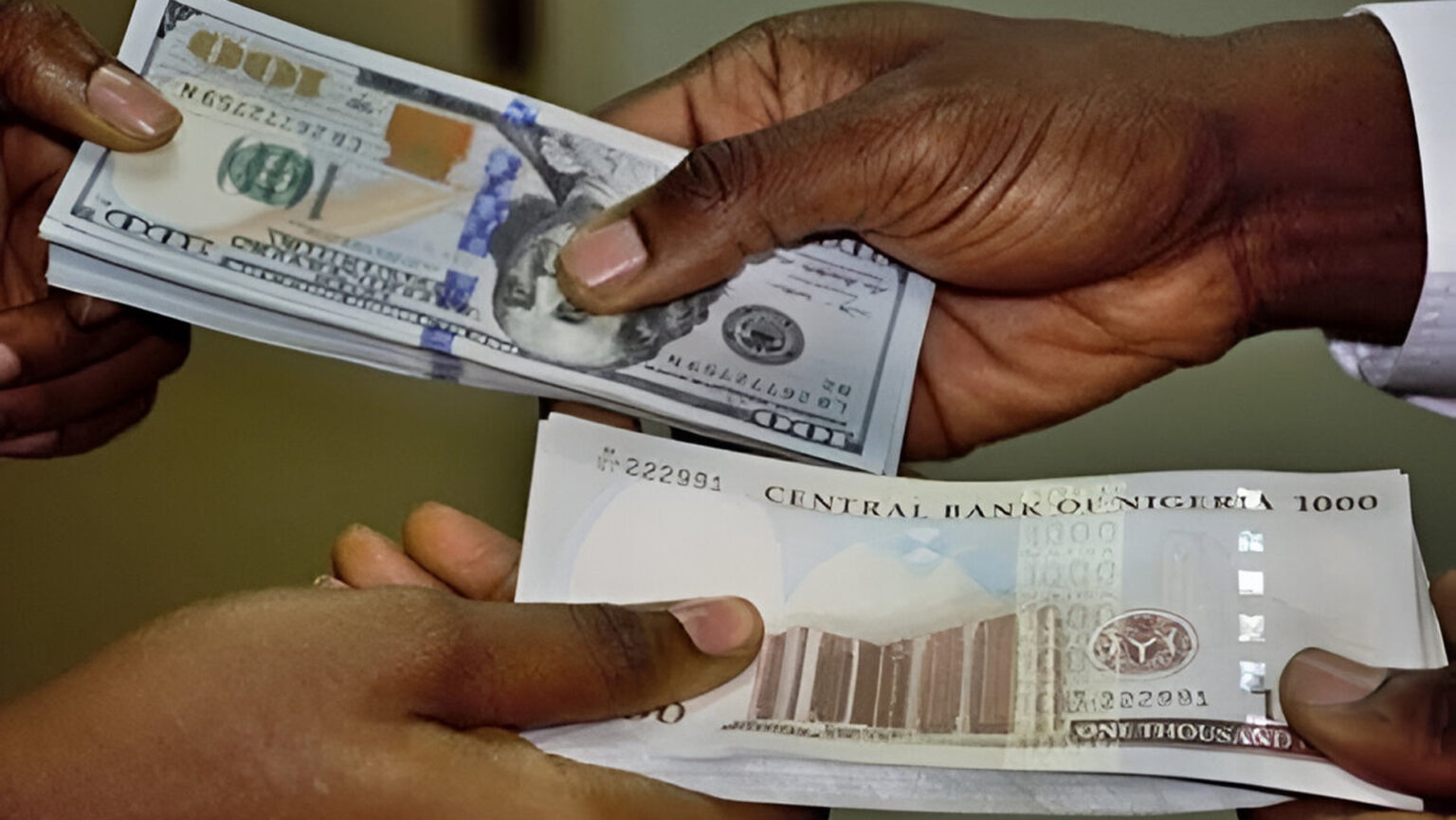
The naira recorded its steepest decline in the parallel foreign exchange market in more than two years as pre-election spending and rising dollar demand ahead of the festive season intensified pressure on the currency.
This is exposing the limits of the Central Bank of Nigeria (CBN) interventions amid tightening market liquidity.
The local currency depreciated by N100 between October 3 and November 18, 2026, as the parallel market exchange rate weakened from N1,360 to N1,460 per dollar, according to data collated from currency traders. This represents a 7.35 percent depreciation over the period.
The decline was considerably sharper than the movement in the official market, where the naira weakened from N1,330.09 on October 2 to N1,363.23 on November 18, according to CBN data.

Consequently, the gap between the official and parallel market rates widened from about N30 to approximately N97, reflecting mounting pressure on the unofficial market as demand for foreign currency outpaced available supply.
The renewed depreciation comes as businesses, importers and individuals increase dollar purchases to meet December travel, school fees, medical bills and festive inventory requirements. Early political positioning ahead of the January 16, 2027 general elections is adding another source of demand.
Verto’s Nigeria Parallel FX Market Update for November 2026 identified increased dollar purchases by Chinese exporters and payment service providers repatriating fourth-quarter proceeds from goods imported into Nigeria.
The firm also identified demand associated with imported election logistics and equipment, alongside politically linked transactions, as additional sources of pressure on the parallel market.
The surge in demand is unfolding alongside a sharp decline in foreign exchange inflows, further complicating the CBN’s efforts to maintain currency stability.
Data from Coronation Merchant Bank showed that total foreign exchange inflows into the Nigerian market fell 67 percent week-on-week to $807.6 million from $2.48 billion in the preceding week, marking their lowest level in at least five weeks.
Foreign portfolio investors contributed $176.9 million, representing 21.9 percent of total inflows, while the CBN accounted for $235.1 million, or 29.1 percent.
Exporters and importers provided the largest share at $246 million, representing 30.5 percent, while non-bank corporates contributed $110.8 million, or 13.7 percent.
The moderation in foreign currency supply has coincided with a decline in external reserves, which fell to $54.76 billion as of November 17 from an October peak of $55.26 billion.
Although reserves remain significantly above their level a year earlier, the decline highlights the distinction between a relatively strong external reserve position and the availability of dollars to meet immediate market demand.
Coronation Asset Management, in its fourth-quarter 2026 thematic report, warned that Nigeria could experience periodic exchange rate volatility through 2027 despite improvements in its external reserves.
The report attributed the naira’s vulnerability to tight market liquidity, uneven foreign currency inflows, changing investor behaviour and rising demand, rather than an outright shortage of foreign exchange in the economy.
It noted that average five-day turnover in the Nigerian Foreign Exchange Market (NFEM), which rose to approximately $1.49 billion in late October, dropped sharply to $384 million by November 6 before recovering to about $730 million by November 13.
According to Coronation, relatively modest dollar transactions can trigger significant exchange rate movements when market liquidity is thin.
The asset manager also identified election-related government spending as a major risk to currency stability in 2027, warning that increased fiscal injections could stimulate domestic demand and intensify pressure on the foreign exchange market.
Analysts at Quest Merchant Bank Limited said elevated crude oil prices and improving production levels should support reserve accumulation. However, seasonal foreign exchange demand could continue to exert pressure on the naira in the near term.
Nigeria’s 2026 budget provides for N68.32 trillion in expenditure against projected revenue of N36.87 trillion, leaving a deficit of N31.45 trillion.
The risk of additional fiscal spending ahead of the 2027 elections had already prompted a warning from Taiwo Oyedele, minister of finance and coordinating minister of the economy in October 2026.
In his presentation to the Federal Executive Council, seen by BusinessDay, the minister urged the government to maintain fiscal discipline through the pre-election period, cautioning against deficit monetisation and unfunded commitments that could undermine inflation-control efforts and economic stability.
Coronation warned that additional election-related spending could undermine the CBN’s efforts to contain inflation and stabilise the naira, particularly if increased domestic liquidity translates into higher demand for dollars.
Foreign portfolio investment movements present another risk. Citing International Monetary Fund estimates, the report said $15.1 billion in non-resident Open Market Operations (OMO) principal falls due in 2026, including $6.8 billion in the fourth quarter.
A decision by foreign investors not to reinvest maturing proceeds could trigger additional dollar demand as they convert their naira holdings into foreign currency for repatriation.
Verto similarly observed that offshore investors were becoming more cautious about maintaining naira exposure amid heightened political uncertainty and year-end risk reduction.
On the official market, the CBN has stepped up interventions to moderate exchange rate movements, with Verto estimating that the regulator injected approximately $1 billion in recent trading sessions.
However, the firm said persistent dollar bids on the Bloomberg Multi-Asset Trading System (BMAT) matching system had exceeded offers by as much as 10 times, while non-deliverable forward implied yields climbed above 20 percent, signalling increased demand for protection against further naira depreciation.
The pressure also comes despite substantial naira liquidity in the banking system, with commercial banks’ Standing Deposit Facility balances hovering around N8.31 trillion, according to Verto.
This points to the challenge of managing domestic liquidity, as excess naira funds could intensify demand for foreign currency even when the country’s external reserve position appears comfortable.
Coronation, however, maintained that Nigeria’s external position provides some protection against a deeper currency crisis, with gross reserves reaching approximately $55.25 billion in September before easing in November.
The asset manager’s most likely scenario puts the naira between N1,400 and N1,550 per dollar in 2027, with a 55 percent probability. This reflects expectations of continued reforms, gradual inflation moderation and periodic exchange rate volatility.
Its bearish scenario projects a weaker exchange rate of between N1,550 and N1,700 per dollar if election spending accelerates, oil receipts weaken and foreign portfolio investors withdraw funds.
In the immediate term, Verto expects upward pressure on the parallel market rate to persist as seasonal and pre-election demand remains firm. However, month-end corporate and remittance inflows could moderate the pace of depreciation.
The developments suggest that the CBN’s challenge extends beyond building external reserves to ensuring that foreign currency reaches the market consistently enough to meet rising demand without triggering renewed exchange rate instability.(BusinessDay)
-

 News20 hours ago
BREAKING: Court restrains Jimmy Odukoya from parading himself as senior pastor of Fountain of Life Church
-
African News21 hours ago
South Africans Demand Total Ban On Nigerians In Fresh Protest
-
Metro20 hours ago
Man accused of AI cheating in South Korean exam found dead
-
Business15 hours ago
Fidelity Bank appoints Stanley Amuchie as new CEO
-
Business19 hours ago
Inside Nigeria’s trillion-naira pipeline security system where oil theft persists
-
Business8 hours ago
Naira slides to N1440/$ as foreign reserves shed $406m
-
Business8 hours ago
Kola Karim’s $10bn ambition: Building Nigeria’s answer to Tata
-
News19 hours ago
Tinubu confers GCON on Wole Olanipekun