World News
US trade court rules against Trump’s global 10% tariff

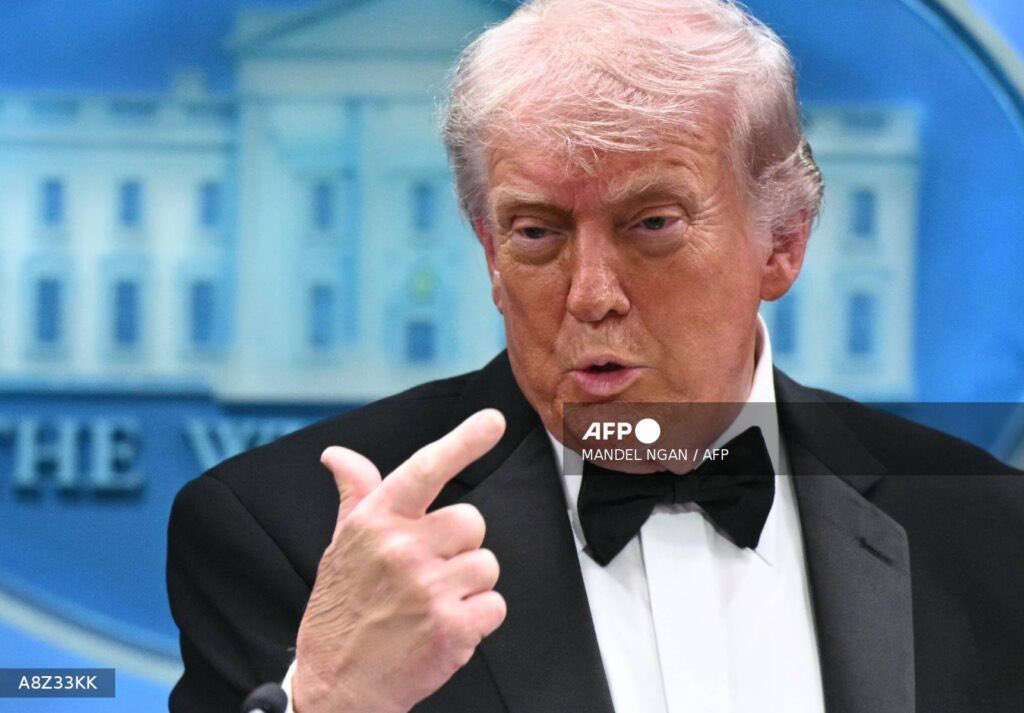
A US trade court on Thursday dealt President Donald Trump a fresh setback, ruling against the 10-percent global tariffs he instituted after the Supreme Court struck down many earlier duties.
The 2-1 ruling by the US Court of International Trade, for now, blocks the tariffs from being implemented against just two companies and the state of Washington — but it could open doors to further such outcomes.
The decision found that the latest duty was not justified under the 1970s law cited in its implementation.
Trump imposed the temporary 10-percent duty in February, shortly after the Supreme Court struck down many of his global tariffs.

The new tariff was meant to deal with balance of payments deficits, citing Section 122 of the Trade Act of 1974.
It lasts only until late-July, unless extended by Congress, but the Trump administration has in the meantime been pursuing more lasting means to rebuild his trade agenda.
To do so, US officials have opened new investigations into dozens of trading partners over forced labor and overcapacity concerns — which could lead to fresh tariffs or other action.
The Court of International Trade ruling on Thursday ordered defendants to implement the decision within five days, and for the importers who sued in this case to receive refunds.
The Trump administration could appeal the trade court’s decision.
“Section 122 was passed in response to a specific historical crisis that resulted in the United States’s currency and gold reserves being depleted,” said Liberty Justice Center senior counsel Jeffrey Schwab after the ruling.
“The United States has a trade deficit, not a balance-of-payments deficit, and does not have international payments problem,” Schwab said in a statement.
Trump’s sector-specific tariffs on goods like steel, aluminum and autos remain unaffected by these legal challenges.
Yet, Thursday’s ruling marks the latest complication in Trump’s tariffs agenda.
Since the high court dealt a sharp blow to Trump’s economic policy, businesses have also rushed for refunds.
US Customs and Border Protection estimated in March that more than 330,000 importers could be eligible for refunds after the Supreme Court’s decision.
The tariffs that were earlier struck down, imposed under the International Emergency Economic Powers Act, collected approximately $166 billion in duties and estimated deposits.
AFP
-

 News19 hours ago
I don’t see the level of hunger Nigerians complain about – Onanuga
-
News19 hours ago
Police arraign 24 suspects for ‘killing woman over child theft allegations’ in Kaduna
-
Sports19 hours ago
World Cup: Ghana shut out England in frustrating goalless draw
-
African News18 hours ago
MTN urges unity amid South Africa-Nigeria tensions
-
Business18 hours ago
Airlines seek meeting with Tinubu over charges, taxes
-
News18 hours ago
NADECO rejects Abdulsalami’s claims on Abiola, military rule
-
Business17 hours ago
N5.19trn outside banks despite cashless policy
-
News9 hours ago
JUST IN: Senate passes state police bill