Business
Nigerian Exporters Embrace China’s Zero-Tariff Policy With Caution

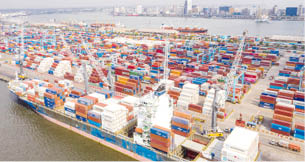
Nigeria’s export landscape is undergoing a major shift as exporters increasingly pivot toward China and begin to take advantage of a zero-tariff regime, which commenced on May 1, 2026, Daily Trust can report.
According to the ambassador of China to Nigeria, Yu Dunhai, zero-tariff measures directly reduce the cost of Nigerian products entering the Chinese market.
Daily Trust reports that bilateral trade between Nigeria and China stands at $15.1bn, with China exporting $12.95bn and importing $2.1bn, creating a significant imbalance.
However, with the zero-tariff policy, China hopes to expand access to a range of goods from Nigeria and other developing countries.

“From sesame, ginger, and cashews to cocoa and other speciality agricultural products, as long as they meet rules of origin as well as inspection and quarantine requirements, they can access the Chinese market more smoothly. This ‘channel effect’ helps translate potential demand into stable orders and convert market opportunities into tangible benefits,” Dunhai said.
The ambassador noted that beyond enabling products to be sold, the removal of tariffs would help them to be sold better, encouraging and incentivising enterprises to improve quality standards, optimise product structures, and strengthen brand development.
“As export volumes expand and quality improves, the international reputation of ‘Made in Nigeria’ will be further enhanced. From a broader perspective, the measure will promote localised value addition, inject new momentum into Nigeria’s industrialisation and agricultural modernisation, create employment opportunities, and improve livelihoods,” he added.
Nigeria’s exports to China
From agricultural commodities to solid minerals and manufactured goods, Nigerian exporters are exploring new channels into China.
Products such as sesame seeds, cocoa, cashew nuts, ginger, and hibiscus flowers are gaining traction among Chinese buyers.
However, exporters stated that while Europe remains a key destination, the stringent quality standards, certification requirements, and logistical bottlenecks often make access difficult, particularly for small and medium-scale enterprises.
China, on the other hand, is perceived as more flexible and increasingly receptive to African goods.
However, the challenge remains in increasing value addition, especially for Nigerian agricultural produce.
Beyond raw commodities, experts believe the shift toward China presents an opportunity for Nigeria to move up the value chain.
Instead of exporting unprocessed agricultural goods, there is growing advocacy for value-added processing, packaging, and branding products before export.
Experts express measured hope
While the policy is expected to boost exports of agricultural produce and solid minerals from countries such as Nigeria, analysts warn that the arrangement could further entrench Africa’s traditional role as a supplier of raw commodities to foreign industries, rather than strive to become an industrialised continent.
A Lagos-based exporter, Alhaji Nasiru Salami, noted that products including cocoa, sesame seeds, cashew nuts, rubber, ginger, lithium, and other minerals are likely to witness increased demand from China under the duty-free framework.
Stakeholders noted that China’s strong industrial base and large-scale processing capacity may enable it to source cheaper raw materials from Africa, convert them into finished products, and export them globally, including back to African markets.
They argued that unless African countries prioritise industrialisation and value addition, the continent risks losing the broader economic benefits associated with manufacturing, including job creation, technology transfer, and increased foreign exchange earnings.
Elizabeth Olanrewaju Nwankwo, Chief Executive Officer (CEO) at Oklan Best Limited, who also doubled as the President, Oyo State Shippers Association, stated that the zero-tariff is very strategic and a timely development with potential to reshape trade relations between Nigeria and China, especially for non-oil exports and agro-industrial products.
According to her, for many years, Nigerian exporters have faced challenges in competing effectively in international markets due to tariff barriers, logistics costs, and quality compliance requirements.
“Therefore, the removal of tariffs by China creates an opportunity for Nigerian products to become more price-competitive within the Chinese market.
“At Oklan Best Limited, we see this as a positive policy direction and an opening for deeper market penetration into Asia. We are already reviewing potential opportunities around our shea, cashew, dried fruit, and other agro-commodity value chains to understand how best to position for increased exports under this framework.
“However, while the tariff removal is commendable, the real work for Nigerian exporters will now focus on: product quality and international compliance standards; traceability and food safety systems; export-ready packaging and labelling; efficient logistics and shipping infrastructure; access to affordable financing for scaling production; strengthening processing capacity to move beyond raw commodity exports,” she said.
Dr Eugene Nweke, Head of Research at Sea Empowerment and Research Centre (SEREC), called for a strategic caution on export expansion under China’s zero-tariff regime.
Dr Nweke, a former President of the Nigerian Association of Government Approved Freight Forwarders (NAGAFF), noted that China’s zero-tariff access for Nigerian exports presents a significant external opportunity.
He, however, stated that, given Nigeria’s current food insecurity, weak agro-industrial base, and fragile oversight systems, premature export expansion may increase domestic food prices, reduce local food availability, deepen commodity dependence, as well as enable export under-valuation and resource leakages.
“Nigeria must adopt a ‘Food Security First, Export Expansion Second’ strategy. Nigeria remains in a food stabilisation phase, not surplus production. Agro-allied value chains are fragmented and underperforming. Post-harvest losses remain significantly high. Export governance systems are weak and porous,” he said.
Also speaking, a renowned exporter, Ikechukwu Charles, at Odogwu Iyke, stated that the tariff removal could bring about expansion in the export trade.
“The zero tax for consignees in China will increase demand for goods, especially the solid minerals, sesame seed, dry ginger, agricultural products, etc., and also encourage local products, and price stability.
“Also, on the other hand, if demands are too much from China, our local suppliers may have shortages and inflation in prices. We may also face high prices for trucking because it becomes hard for trucks to access the port, short shipments of containers because of congestion in the terminal, which can result in high costs of shipping,” he said.
Northern businesses key in
Businessmen in Kano have described the zero-tariff export to China for all African countries as a real opportunity for growth and partnerships, changing their mindsets from local trading to global competitiveness.
Chairman, Greater Kano Business Council (GKBC), Mukhtar Gashash, said the business community—particularly in Northern Nigeria—has already embraced the initiative to ensure they are not left behind.
Gashash said businessmen in Kano have begun to explore export opportunities to China by first creating awareness among traders and farmers, the majority of whom are not fully aware of the scale of opportunities in China.
He said the council has held several meetings, discussions, and engagement with market leaders in places like Dawanau, Kantin Kwari, and major agro hubs, encouraging them to think beyond local and regional markets.
To fully harness and benefit from the zero-tariff policy, Gashash said they are also facilitating connections between local businessmen through export agents, logistics providers, and trade facilitators who understand Chinese market requirements.
Also commenting on the policy, Uba Danzainab, the Deputy Treasurer of Nigeria Chamber of Commerce, Industries, Mines and Agriculture (NACCIMA), said the body’s President, Jani Ibrahim, is currently in China with a very large delegation, fine-tuning ways of utilising the export policy for African products.
Similarly, Miftahun Ibrahim Gwammaja, the CEO of Aisha Global Merchant Enterprises, who imports general goods from China, said he is already studying the development with a view to exporting agricultural produce to China and using the proceeds to import wares for the Nigerian market.
“I am thinking of bringing machinery from China used in processing and packaging agricultural produce, which I will be exporting to China. Already, we are familiar with some of the Chinese products,” said Gwammaja.
‘How zero-tariff policy can benefit Nigeria’
An economist, Dr Muda Yusuf, in a chat with one of our correspondents, said the policy would boost trade between Nigeria and China and expand opportunities for those in the agro-allied businesses.
He said, “It is a positive development for exporters because that means that the ease of entry, market access to Chinese markets, has improved. So, that creates an advantage for exporters, particularly those who want to add value. You know, the current position of the government is to encourage exporters to add value before they export.
“And there are opportunities in China for products that have been processed, rather than exporting primary products. So, it’s a very great opportunity for the primary producers in the export value chain and those who are processors in the export value chain.
“But the government also needs to support those who want to go into processing. Otherwise, what we are likely to see is that it is the Chinese that will now come here again, set up those industries, use the raw materials, and be sending to their country.”
Yusuf, who is the Chief Executive Officer of the Centre for the Promotion of Private Enterprises (CPPE), noted that Nigeria is not doing well in agro-allied exports.
“This is a great opportunity because the Chinese market is a huge market and our advantage will be in organic products and agro-allied products. You can’t be exporting manufactured products to China because you can’t compete; you can’t be exporting cars or exporting electronics, no. Our advantage is in the area of agro-allied products, things that are organic.
“Go and look at the data, you will see that the total value of non-oil exports is more than 10% of the total export value. We are seeing predominantly oil and gas as far as export is concerned. So, we still have a lot more to do. And the bulk of the work is in supporting processing capacity, value-adding capacity,” he said.
-

 Entertainment15 hours ago
Wizkid To Headline 2026 Detty December Fest
-
 News15 hours ago
Government official smuggles 14 family members into salary payroll, another collects 13 salaries
-
Sports15 hours ago
Super Falcons Miss Out Of 2027 World Cup After Defeat To South Africa
-
Politics11 hours ago
Osun guber: APM, PDP candidates withdraw, endorse Adeleke
-
Politics15 hours ago
Osun Polls: INEC Records 1.9 Million PVC Collections
-
African News13 hours ago
Xenophobia: No request yet from S’Africa on repatriation costs — FG
-
Politics13 hours ago
I ignored warnings before backing Gbenga Daniel for Senate in 2023 – Abiodun
-
World News15 hours ago
US sets up task force to end birth tourism, revokes over 600 visas worldwide