Business
Poor grid supply forces estates into costly diesel dependence

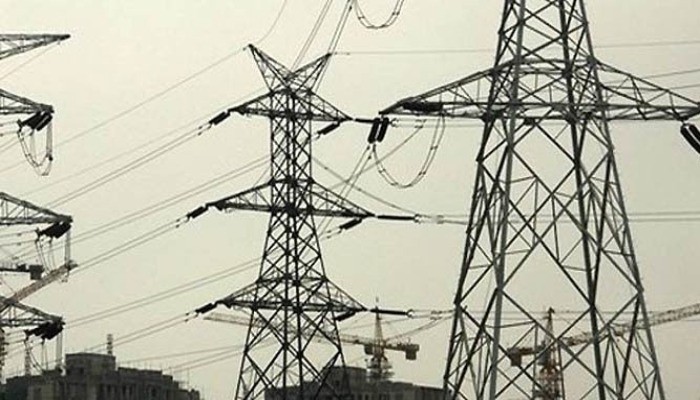
Residents of gated housing estates across Lagos are confronting electricity bills that have more than doubled, and in some cases tripled, in a matter of months, as mounting dependence on diesel alternatives and the chronic failure of Nigeria’s national grid force private power operators into an increasingly costly corner.
Management notices circulating among estate communities in recent weeks tell a consistent story. One letter, addressed to residents of a Lagos estate, announced a blended energy tariff increase from N360 per kilowatt-hour to N462.52/kWh, effective March 30, 2026.
A subsequent emergency communication from the same estate pushed the figure higher still, to N488/kWh, citing diesel prices that had climbed from below N1,000 per litre to N2,020. A third estate, according to resident complaints circulating on social media, has gone further, charging N755/kWh.
“My estate just increased the tariff to N755/kw. This is insanity!!” one resident wrote in a widely shared post.

“Please, who is managing the electricity units for Haven Homes estates? Why is it 50k a day for 24 hours of light?” another resident complained on X, formerly known as Twitter, capturing the mounting anger among Nigerians who moved into private estates expecting stable power, and are now paying a steep premium for it.
The diesel trap
Estate central power schemes, the shared generator infrastructure that supplies electricity to residents through a metered, token-based model, are designed around a blended cost model.
When the national grid, supplied through distribution companies like Eko Electricity Distribution Company, or Ikeja DisCo, contributes a meaningful share of total power, the per-unit cost to residents stays manageable. Diesel generation fills the gap at a far higher cost, but only as a supplement.
That model has now broken down. According to management communications reviewed for this report, public grid availability on one Lagos estate has fallen below 40 percent of required supply levels, forcing estate operators to run diesel generators for the overwhelming majority of hours in a day.
The practical consequence, as one estate management letter explained, is that a larger share of total energy delivered is now being produced at full diesel generation cost rather than benefiting from a lower public supply contribution.
With diesel now trading at approximately N1,900 per litre on the retail market, though some estate operators said they were using a planning figure of N1,600 per litre for short-term budgeting, the economics of private estate power have been turned upside down.
Middle-class households bear the Brunt
The burden lands hardest on Nigeria’s urban middle class, a segment that migrated to gated communities over the past decade partly to escape the dysfunction of public electricity supply.
Having paid premium prices for estate housing, they now face utility costs that rival or exceed those in major global cities, without the income levels to match.
“I was discussing with a friend yesterday, and he told me they revised their electricity tariff to ₦500/kWh for the estate, and I was like, wow, that’s too much,” one Lagos resident wrote on social media. “But I’m seeing testimonies here that some are charging up to ₦700/kWh for electricity. It’s crazy.”
For a household consuming 300 kilowatt-hours per month, a modest figure for a family running air conditioning, a refrigerator, and basic appliances, a tariff of N500/kWh translates to a monthly electricity bill of N150,000, or roughly $95 at current parallel market rates.
At N755/kWh, that same household would pay N226,500.
Some estates have additionally imposed minimum monthly purchase thresholds. One notice seen by this reporter required residents to make an initial monthly token purchase of at least N50,000, regardless of actual consumption, a measure that operators say is necessary to ensure cash flow for fuel procurement, but which residents describe as an additional financial strain.
Operators caught between costs and complaints
Estate management companies say they are not profiting from the increases. Several notices reviewed for this report included explicit commitments to reverse tariff adjustments if market conditions improve. “Should any of the market indices improve and support a downward review,” one notice read, the estate would pass those savings back to residents.
Nigeria’s government has signalled continued deregulation of the downstream petroleum sector, meaning fuel prices remain exposed to international crude and foreign exchange movements.
Eko DisCo did not respond to a request for comment on grid supply levels to residential estates in its coverage area.
The estate electricity crisis is a concentrated symptom of Nigeria’s broader energy dysfunction. Decades of underinvestment in generation and transmission infrastructure have left the national grid incapable of meeting commercial or residential demand reliably.
Distribution companies like Eko DisCo or Ikeja DisCo operate under their own financial constraints, limiting their ability to guarantee supply even to priority feeders.
Private estate operators filled that vacuum with diesel-powered central schemes, an infrastructure workaround that functioned adequately when fuel was cheap, and grid supply partially offset generation costs. Neither of those conditions holds today.
Until grid supply improves or diesel prices fall, estate residents should expect their electricity bills to remain among the most volatile line items in their household budgets, and their management offices to keep sending letters that nobody wants to open. (BusinessDay)
-

 Entertainment15 hours ago
Wizkid To Headline 2026 Detty December Fest
-
News16 hours ago
Government official smuggles 14 family members into salary payroll, another collects 13 salaries
-
Sports15 hours ago
Super Falcons Miss Out Of 2027 World Cup After Defeat To South Africa
-
Politics11 hours ago
Osun guber: APM, PDP candidates withdraw, endorse Adeleke
-
Politics15 hours ago
Osun Polls: INEC Records 1.9 Million PVC Collections
-
African News13 hours ago
Xenophobia: No request yet from S’Africa on repatriation costs — FG
-
Politics13 hours ago
I ignored warnings before backing Gbenga Daniel for Senate in 2023 – Abiodun
-
World News15 hours ago
US sets up task force to end birth tourism, revokes over 600 visas worldwide